
Born into War: The harrowing world of child survivors of Plateau, Benue bloodbaths
- Super Admin
- 07 Mar, 2026

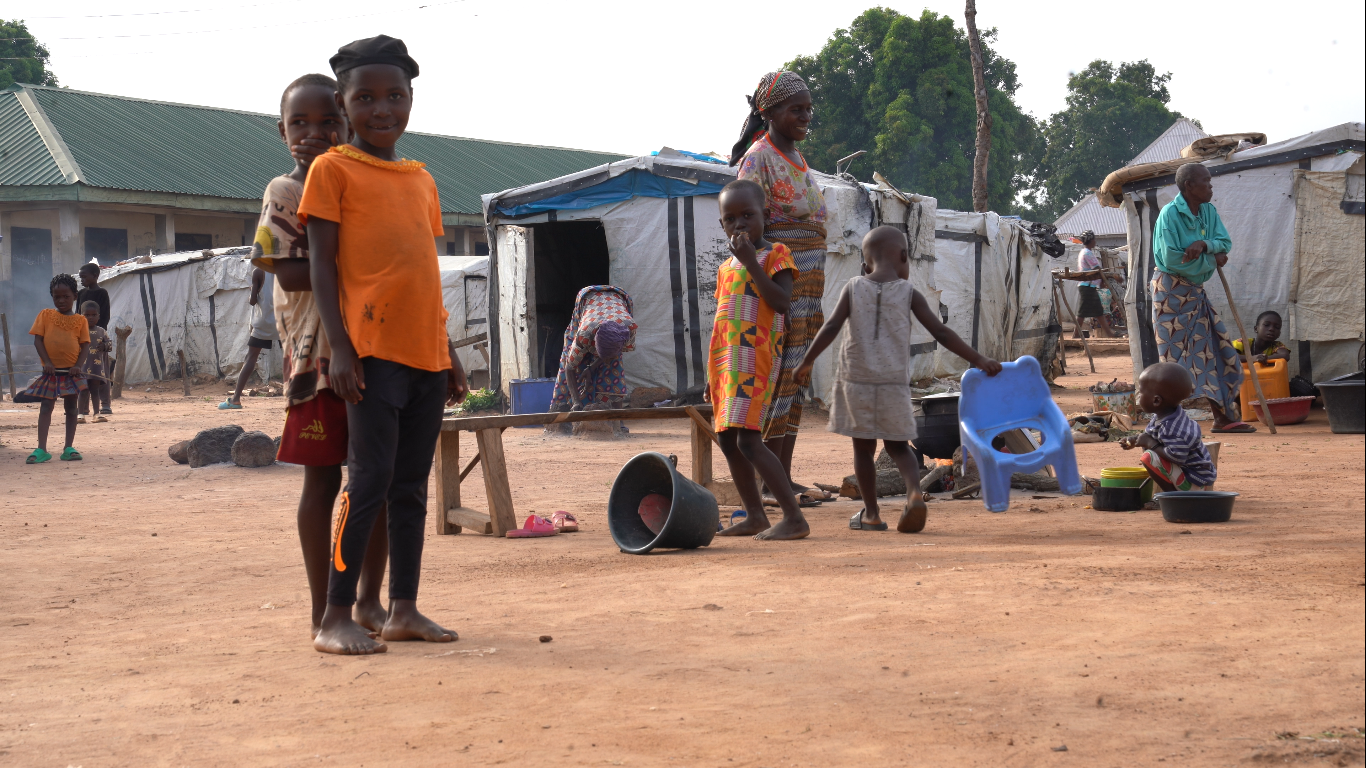
Twelve days before his short life came to a tragic end, Muhammad Usman was about to graze cattle around Maraban Dare in Bassa Local Government Area of Plateau State, on a Sunday morning in early November. Wearing a yellow T-shirt under a navy-blue jacket, the slim young herder cut a forlorn figure of grief and fear. Born in 2008, Usman endured a harrowing childhood marked by recurring deadly attacks in the north-central Nigerian state. Things got worse after his father was gruesomely murdered in an ambush. "He used to provide for the family," Usman recalled. "He was killed in 2017 while riding a motorcycle and his body taken away. My mum used to tell me and my siblings, as little children, that we would see him tomorrow whenever we asked after him." As the first child, Usman picked up the pieces as fast as he could. He went into herding to support his poor mother and siblings. The family was gradually weathering the storm when gunmen struck a grazing field one afternoon and killed all the 30 heads of cattle in his herd. Afterwards, he abandoned school to work for other pastoralists in the community for a pittance. "I wanted to continue my education, but had to quit after primary school due to a lack of support. We used to sell cattle to buy food and pay school fees. My mother, siblings, and I are really suffering because there's no one to support us," he said. "My prayer is to have money so I can enrol my siblings in school," he continued, unaware of the worst tragedy in the offing. Twelve days after this interview in early November 2025, Usman, while grazing cattle on a field, was caught in gunshots fired by soldiers said to be pursuing hoodlums who reportedly burnt harvested crops at Gero community in Jos South. The incident brought a cruel closure to Usman's 17 years on earth. Peace was an elusive privilege he craved until he breathed his last, with his aspirations and hopes perishing with him. Many like Usman have paid the ultimate price for the clashes that have engulfed the state and neighbouring Benue in at least the last two decades. For others lucky to survive the death campaigns, today's trauma, deprivations, unending cycles of threats, attacks, anxieties, and educational disruptions trap them and their futures in uncertainties. Plateau State was jolted by a horrible ethno-religious crisis on September 7, 2001 - seven years before Usman was born - in Jos North. The violence, which claimed hundreds of lives, spread to other local government areas of the state in 2002, triggering decades of unrest that has claimed thousands of lives and property, including houses, farms and cattle. The spread of violence to the hinterlands and villages has further strained relationships between farmers who are largely Christians and herders, mainly Muslims, giving the crisis an ethno-religious slant. The two groups had in the past enjoyed peaceful coexistence particularly in the six local government areas of Bassa, Jos South, Riyom, Barkin Ladi, Bokkos, and Mangu. At least 11,749 people lost their lives between 2001 and 2025, according to a fact-finding committee set up by the government in May 2025 to investigate the remote and immediate causes of the crisis. The committee also disclosed that no fewer than 420 communities were attacked during the period. Like Plateau, its neighbour, Benue, is in the grip of violence over land, water, grazing and ethnic issues. Thousands of lives have been lost to the attacks over the years. One landmark episode is the Agatu massacre which began in 2012, notably in Okokolo and surrounding riverine villages such as Odejo, Odugbeho, Egba and Aila in which over 80 mourners were killed on a single day at Egba. Successive attacks followed in 2013, 2014, 2016, 2018, and 2021. In 2021, for example, armed invaders killed over 40 persons in Odugbeho. In Kwande, at least 6,000 people have been reportedly killed since the crisis started in 2011 while thousands of people have equally been killed in Ado over the troubled years. Statewide, over 900 people were reportedly murdered in the first half of last year alone, including 200 locals massacred at Yelwata in June. "At least we have lost 400 people to the attacks in my village alone," said a community elder, Emmanuel Jacob, of Okokolo village in Agatu. "In the 2013 invasion of Agatu, the attackers raided our village more than three times. The same thing has been recurring." The Benue NGOs Network (BENGONET) identified key drivers of the crisis in Kwande LGA as territorial disputes between the Turan in Benue and the Jukun in Taraba, as well as open grazing conflict. Lazarus Mom, BENGONET Coordinator, noted that a recent field visit to Kwande revealed that over 5,700 lives had been lost since 2011, with more than 150,000 people displaced. And at least 36,844 children are currently living in camps established for crisis-torn communities according to the state's Commissioner for Humanitarian Affairs and Disaster Management, Aondowase Kunde. Mr Kunde, who spoke through the Programme Manager for Internally Displaced Persons (IDPs) at the State Emergency Management Agency (SEMA), Zege Gaius, told our correspondent that the figures were registered by the International Organisation for Migration (IOM) in collaboration with SEMA. Usman's plights bear a striking semblance with the fate of thousands of youths grappling with a broken childhood roiled by unending violence. Thirteen-year-old Sekegh Ahen has hardly known peace all his life. He was about a year old when armed invaders first stormed Tse Uno in Utange Council Ward of Katsina Ala Local Government Area of Benue. One Sunday afternoon in March 2022, Sekegh's father, Mr Ahen, had just returned from a church conference. Still dressed in his church uniform, he stepped into a small provision shop in the community to buy something. As he entered the store, gunshots echoed through the village. Armed men descended on the settlement, shooting anything in sight. He was running for dear life when a bullet hit him from behind. Mr Ahen's murder fractured his family. His wife, Sekegh's mother, struggled alone for years to care for the children. Eventually, she made a painful decision. She handed young Sekegh to a trusted community member, Orsaa Ortserga, and left with Sekegh's siblings for Taraba State to farm and cater to them. When the Orsaa family took in Sekegh, he was 11 years old and deeply affected by the instability he had grown up in. Mercy Orsaa, who now looks after Sekegh, remembers those early months clearly. "It was difficult to handle him," she said. "Sometimes he refused to eat. Other times he would cry. There were days he would not talk to anyone." The family later understood Sekegh was overwhelmed by suffering he could not explain. The loss of his father, the displacement from home and the absence of his mother left deep emotional wounds. Mercy often felt helpless. "Sometimes I was frustrated because I did not know what to do to make him happy," she said. Sekegh lives with the Orsaa family at a settlement along the Zaki Biam Tor Donga road. The camp is filled with internally displaced persons who fled the same violence that reshaped his childhood. It was afternoon on 24 October 2025. The sun was still strong as the ground glowed with the deep red Benue soil. The compound consists of four round mud huts with thatched roofs darkened by years of rain and smoke from cooking fires. The structures sit close together, separated by narrow paths where children run barefooted and women cook in open spaces. The signs of hardship are everywhere, but that is all the Orsaas can afford. Sekegh emerged from the alleyway wearing a fading yellow school uniform and sky blue shorts that hung loosely around his waist. Dark in complexion, frail and smaller than most boys his age, years of poor feeding was written all over him. He stood quietly gazing into space for a moment before he broke the silence. "I miss my home. I used to play anywhere without fear. But here, I can't," Sekegh intoned, reflecting on the terror that wrecked his family. "I miss my father. I want to go to heaven and see him," he said, teary-eyed. Mercy placed a hand on his back; other children watched quietly as he sobbed uncontrollably. Sekegh is not just a grieving boy. He carries the emotional burden of a long and violent conflict, one that continues to shape the lives of thousands of children across Benue State. "Sometimes I dream that my siblings are being killed. Sometimes I am scared of what will happen next." From Benue to Plateau, dozens of war children, some of whom have now grown into adolescents and adults, told our correspondents how a cycle of violence has limited their access to education and confined their career ambitions to mere shadows. Ongoing attacks in severely affected communities have forced many children out of school. Some said the crisis prevents them from working to support their education. Without education and any skill acquisition programme for the children, the system sets them up for an uncertain future, compounding the states' burden of unproductive population. Born at the onset of the Plateau crisis in 2001, Joshua Yakubu of Rim community had dreamed of joining the military, but his ambition was stuck midway at secondary school due to incessant attacks. He was planning to return to school and sponsor himself from the proceeds of farming when gunmen struck again early in 2025, inflicting a life-threatening injury on him and killing five of his friends. "I was shot in the stomach. Luckily the wound had healed after treatment," 24-year-old Mr Yakubu said, pointing at the injury spot. "I am no longer healthy enough to continue farming, which is my source of income that can support my education and enable me to achieve my dream." "This crisis is not strange to me again," he continued, "I was born and grew up in it. There was a period when we were being attacked every week. I've never really enjoyed peace. I am only pained that it [violence] has killed my ambition." Like Mr Yakubu, 23-year-old Yahaya Muhammad, a resident of Maraban Dare, rued what is left of his lofty dream to be a banker after a bullet wound he sustained during grazing sometime in 2020 halted his education. "I used to go to school but since after the incident, I stopped attending classes due to lack of financial support. I left school at SS2. I can no longer feed my family, let alone continue schooling. If not for the fact that I lost my cattle to the attack, I would have almost concluded my degree programme by now. I wanted to read accounting. My prayer now is to have money to go back to school and actualise my dream," he said. The out-of-school children crisis reflects not just the sheer number of school age children that have fallen victim or schools that have been shut or destroyed during the incessant attacks in the areas. The crisis mirrors how much the unending wave of violence has scuttled dreams. Sekegh attends King David Academy in Zaki Biam, where he is in Junior Secondary School 1. He dreams of becoming a medical doctor, but academic challenges are standing between him and his vision. While Mercy's husband, Orsaa Ortserga, teaches to support the family, she engages in small-scale trading. Their income is meagre, but they stretch it to cover not only their four biological children, but also Sekegh and two others who lost a parent or both. At the time our reporters visited the family, it had been more than a month since schools resumed, yet the couple had not been able to pay the children's fees. They attended classes with uncertainty, waiting for the day the school might send them home. "We cannot begin to talk about the relatives we lost in the conflict because they are too many. We struggle to feed the family and pay the children's school fees," she said, her voice tinged with sadness and disbelief. Thirteen-year-old Gloria Jacob's ordeal is close to Sekegh's. She was barely an infant when violence first struck her village in Agatu. Since then, school, home, normal childhood all grew distant. She now lives with his parents at an IDP camp in Wadata, Makurdi. "At a point, we were sleeping in the bush. My siblings and I also stopped going to school. My dad decided to take us away from the village and brought us here (Wadata)," she explained. Though Gloria has returned to school, her attendance is tied to whether she realises enough money from hawking to pay school fees. "Sometimes we don't go to school. They chase us away because of school fees. Other times, we don't even go to school, we help our mother to hawk and many times we don't eat all day until evening," she added. For many in their school age, marriage simply replaced school. Dina Fater is a middle-aged woman from Azege in Tombo Council Ward, Logo LGA of Benue State. She has been living in the Anyiin camp since 2018. She remembers when the first attack began in 2014 and how life steadily deteriorated until they could no longer carry on as they had. "The invaders would come with cattle and arms. At first, they only fired shots in the air," Mrs Fater said, sitting beneath a patch of corrugated metal that keeps the sun off her face. "In 2018 they started killing people." She fled with seven children. Five of her daughters were married while they were still living in the camp. Mrs Fater described those weddings not as celebrations but as decisions born of hunger, fear and a loss of hope. "All of them got married while we were still in the camp because I could not afford to take care of them or pay their school fees," she said. "I always wanted to send my daughters to school. I trained them, but when I was displaced, I left everything behind. My daughters were helpless and so they decided to marry." The family kept moving from one community to another and attempting to return when it felt safe. Each time they thought the danger had passed, the invaders came again. Children began school in new places only to have the term cut short by another attack. "They sewed 10 uniforms for different schools, but they could not finish any because of the repeated attacks," Mrs Fater said. Despite entreaties from a civil society organisation that visited them in the camp, many of her daughters had already made the choice to marry because they could no longer see a future in education. "When they turned 18, they married because they had no hope of going back to school," she said. "I did not force them. They decided on their own because they were hopeless." Aid and scholarship programmes have offered help to a few girls. Mrs Fater acknowledged those efforts but said they remain a drop in the ocean. "Most young girls in this camp will get married if there is no sustainable way to help them," she declared. "The camp school is only for small children. There is no support for grown-up girls. Parents do not have steady work. Some women who go to farm are raped by the attackers. If they are not helped, more girls will be married off just as my daughters were." In Maraban Dare, Aisha Shehu, a 17-year-old girl, said she and her two female siblings gave up on school and were married off in the heat of attacks that continually stoke horror and tension. "The attacks disrupted our studies. We couldn't finish secondary school. Our father married us off due to the constant crisis. I don't have peace of mind, I'm always in fear. In a month, it is either someone is killed or cattle are stolen. There's no peace," she explained. As the Plateau crisis clocks a quarter century, many adults who have rarely experienced peace since birth now bear children of their own into the same grisly violence. At Riyom, Grace Emos, 20, one of the several young parents interviewed for this report, grew up amidst deadly attacks and had given birth to a baby boy. "There is no peace of mind. We can't go to farms. Our husbands can't farm or mine (minerals) to earn a living for fear of attacks. We were born into violence, and today we are giving birth to babies in the midst of the crisis," she remarked grimly. Gloria recalled a day when attackers stormed the community while she was four months pregnant. "We were running helter-skelter, looking for a place to hide. It was God who saved me and my unborn baby." Mr Yakubu, 24, a survivor of the Rim attack, got married about five years ago and has three children. He said it is unfortunate nothing has changed as he and his children still witness violence. "They are also experiencing it, and it will continue to affect us all," he lamented. For Aisha Shehu of Maraban Dare, who got married last year and gave birth to a baby girl, the bloodbath has become the order of the day. "We were told this violence is more than 20 years old, and I'm just 17 with a baby. I was born in it and now my children are witnessing it too. There is nothing more precious than peace," she said, looking downcast. The journey from the abandoned homesteads of Gwer West to the busy edges of Makurdi leads to another phase of the crisis, one found in Guma Local Government Area. Here, the children shaped by violence are not only those who fled with their mothers. Some have grown into adults inside the displacement camp. Others, like 19-year-old Tersoo Ata from Yelwata, Guma, LGA, have spent nearly all their years working for survival. Across George Akume Way, Makurdi, Benue State Capital, opposite the Ultra-Modern International Market, a long row of timber shades stretches under the sun. This is where Tersoo works. At night, he sleeps in the overcrowded makeshift camp that now hosts more than 4,000 displaced people. By morning, he returns to the timber market, moving through the rows of wood in search of his daily wage. He earns between N1,500 and N3,000 daily. It is never certain the amount he will go home with and the difference often decides whether he will have three meals a day or skip one. Dust particles rend the air each time the machine bites into a plank. The grating noise notwithstanding, Tersoo - with a fair-complexioned face coated in powdery sawdust that also stuck to his neck, arms and hair - stays close to the machine to do the work that keeps him alive. He also helps load heavy timber into customer's vehicles. Before displacement became the story of his life, Tersoo lived with his family in Yelwata. The community sits near the boundary between Makurdi and Nasarawa and has experienced repeated waves of violence. He remembered that the conflicts around Yelwata began when he was about nine years old. What he did not know then was how long the danger would follow them. "Life has never been easy for me and my family," he said. "Apart from going to school, I was also running a small phone charging business." In June 2025, he completed secondary school, passed his examinations and was admitted into a polytechnic in Otukpo to study fine arts. His dream was simple. He wanted to become an artist. He loved drawings and designs. But after the Yelwata settlement was overrun by armed men, his dream froze. Tersoo described the night of June 13 and 14. "I was in my shop that night. I suddenly heard gunshots. I could not go home because the attackers were moving very fast. I ran away and everything was destroyed, including people's phones." The next morning, he learned the truth he had feared. His father, Ata, had been killed while trying to escape with his two-year-old daughter, Nadoo. "He carried my younger sister and was running with her, but he was shot from the back. The bullet pierced through his body and hit my sister. Both of them died," he recalled, looking down at the pile of wood shavings at his feet. "Sometimes I dream about how my father and my younger sister were killed. They were killed like they were not human beings. I am very angry and sad about everything." Tersoo now lives with his mother who cannot afford to send him to school. His aspiration to study fine arts remains suspended, tucked somewhere between grief and daily hunger. "This is not what I want to do," he quipped, his eyes grew wet, but he did not look away from the machine. For now, he remains caught in the same rut that defined his childhood - a cycle of violence, fear, and survival that threatens to shape the destinies of thousands of young people in Benue State who have known nothing else other than chaos. Friday Philip, an associate professor and consultant psychiatrist at Jos University Teaching Hospital, said exposure of children to violence affects brain development and behaviour and could lead to depression. He stressed that its psychological effect could significantly distract schoolchildren from paying attention to teachers or details, thereby affecting their emotional stability. "Above all, if the emotions are affected, their behaviour is affected and they may likely become violent to society," Philip noted. A psychosocial therapist at the Federal Medical Centre in Makurdi, Ukeh George, corroborates Mr Philip's standpoint, saying the continued effect of violence on children can make them grow up to become the monsters they dread. "The generational consequences of today's forced and violent displacement on the social and mental health of Benue and Nigerian children are that they grow up to be future agitators, sadist and bandits. This is the danger that must be stopped now to save future," Mr George, who is the Benue State Chairman of Nigeria Association of Social Workers, warned. A clinical psychologist, Joy Enewa, said the prolonged camping and loss of parents or loved ones have more than just the passing effects on the young survivors in the two states. According to her, the situation may be setting up the states for an unending cycle of violence if urgent actions are not taken. "When a child loses their parents, loved ones, especially mother, they lose love, they don't see reasons to love or to be loved and this in turn might affect the society because they begin to see that there is nothing in life to love about, life is about violence, after all my parent or loved ones were violently taken away, they lost their lives in a pool of blood. Then the child sees blood shedding as a normal thing "It is more like a circle, the bandits take these children and keep them away from their normal life, they become vulnerable looking for peace but the bandits keep attacking their peace, and then also recruiting them, luring them with what they have stolen away from them. It is just a circle." She also said prolonged camping of children, restricting them and cutting them off from the normal life they had enjoyed, impairs their development. "When a child is not in a conducive environment that allows them to play and do what they enjoy to do, when you place them with children that are in a conducive environment, the difference will be clear," she added With the children's prolonged sadness, she said, they become vulnerable to the manipulation of ill-intentioned people who can easily influence them with little acts of calculated kindness. Over time, various measures have been taken to address the crisis, with little result achieved. The Benue State Anti-Open Grazing Law of 2017, though hailed as a bold and proactive step, has suffered from poor enforcement and lack of federal support. Several committees have also been set up over the years, including presidential panels and state peace committees, but their recommendations appear to have been left to gather dust, leaving the people to grapple with the same challenges year after year. Several military operations such as the Exercise Ayem A'kpatuma 1& II (Cat Race) and Operation Whirl Stroke (OPWS) were introduced. State-owned community policing outfits, such as the Benue State Civil Guards (BSCG), now rechristened the Benue State Civil Protection Guards (BSCPG), was another attempt to strengthen local security. However, the outfit has remained largely ineffective, as its personnel are poorly equipped to match the sophistication of the armed groups. In Plateau State, the government said it had taken decisive steps to tackle the menace. "One of those steps to start with is the revitalisation of Plateau Peace Building Agency (PPBA)," said Governor Caleb Mutfwang's special adviser on security and homeland safety, Gakji Shipi. Mr Shipi, a retired brigadier-general, added that the agency was established "to intervene when we see those triggers," adding, "They intervene with processes like mediation, dialogue and other sort of intervention to make sure the situation does not degenerate." "In addition to that, we have always interfaced with federal security agencies to ensure that they do what they ought to do to restore law and order." He also said the state government has reactivated the state security agency which intervenes when there is a problem in communities, emphasising that the governor has given all they need to intervene to ensure that the lingering crisis situation is resolved. "The agency intervenes by getting early warning signals in terms of intelligence and getting boots on the ground where there are attacks so that things do not go wrong that could lead to loss of lives and properties. In doing all of these so many things are being done like capacity building, interfacing with people, bringing in technologies, stakeholders meeting," Mr Shipi said. A retired senior officer of the State Security Service (SSS), Orgem Angulum, warned that the situation could worsen if urgent action was not taken. He raised concerns over children who have spent years in displacement camps, saying, "Many arrived as children and are now adults raising families in unstable conditions. "If this trend continues, some of these youths may turn to crime to survive," he added. Mr Angulum urged the federal government to convene a national peace and security summit to adopt practical strategies for tackling insecurity across the country. "We cannot continue like this. Security is too important for lip service. Action must be taken before another generation grows up knowing only fear," he warned. A retired Comptroller of Prisons, Iorbee Ihagh, urged President Bola Tinubu to direct the military to clear the Benue area of bandits for farmers to return to their farms while the internally displaced persons go back to their ancestral homes. Mr Ihagh, who is also President General of Mdzough U Tiv (MUT), an umbrella body of the Tiv people worldwide, said the only way out from the present insecurity in the state was for the federal government to direct security agents to drive invaders away. He insisted that the violence has persisted because the federal government had not paid needed attention to nip the trend in the bud. "I'm also an IDP; our five council wards in Turan land were ransacked and taken over by invaders. For over 10 years now, we have no access to my village in Moon. Even when my wife died recently, we couldn't take her body there. Mr Mom of BENGONET called on the government and all relevant stakeholders to act on the organisation's recommendations which include the need for a high-level dialogue between the Benue and Taraba state governments with the National Boundary Commission to resolve the long-standing boundary disputes. It also called for a review of the anti-open grazing law to ensure better protection of rural communities, establishment of a permanent security outpost within Turan to serve as a deterrent, rebuilding community trust and construction of access roads to improve security logistics and community connectivity. Mr Mom further urged support for community vigilante groups with logistics and training, under the supervision of formal security agencies, to enhance grassroots security. From Usman whose life began and crumbled in violence to Sekegh who endures a broken childhood and helpless teenage mum - Aisha - whose existence and that of her baby are fraught with unrest, the violence has hit really hard, threatening to produce generations stripped of peace, sanity, education and opportunities to reach their potential if left unresolved. Source: https://www.premiumtimesng.com/investigationspecial-reports/862056-born-into-war-the-harrowing-world-of-child-survivors-of-plateau-benue-bloodbaths.html
Leave a Reply
Your email address will not be published. Required fields are marked *