
How to get engineering to work for Nigeria's development
- Super Admin
- 07 Mar, 2026

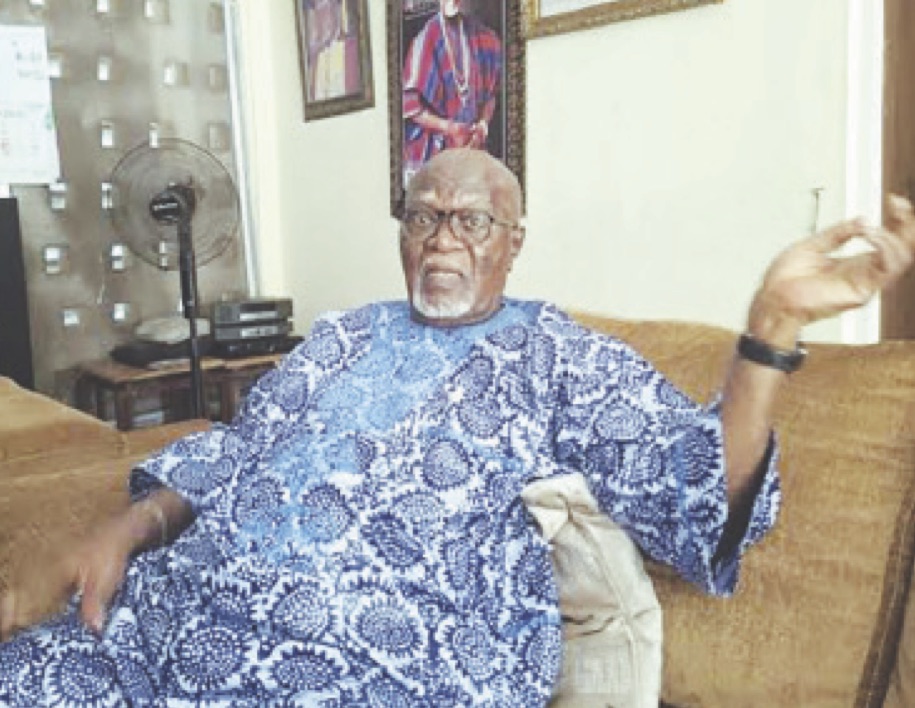
Chief Ebenezer Babaranti Osoba, a civil engineer, is the former President, Council for the Regulation of Engineering in Nigeria (COREN) The two-term COREN boss and ex- President of the Federation of Construction Industries worked at the Nigeria Ports Authority (NPA) from where he retired in 1988 as Director/Head of Engineering to set up his own practice that has today produced two reputable indigenous construction firms -EPCON and FUMBA Construction Company. In this interview, Osoba x-rayed the state of the industry, drawing on his experiences in both the public and private sectors. He submitted that political will power, official encouragement, firm regulation and enforcement of standards, as well as professional integrity on the part of engineers are required for the industry to be globally competitive to take the country to enviable height of development. What's your overview of the state of engineering practice in Nigeria? What is happening now is quite different from what we experienced in our time. I happened to be among the first set of engineering graduates from Ahmadu Bello University, Zaria. We graduated in 1965. Before us, students earned London University degrees through the Nigerian College of Arts, Science and Technology as an affiliated institution to Ahmadu Bello University. We were the first set of graduates when ABU was recognised as a full-fledged university. We went through the rigour and routine. Disciplined training is required to become graduate engineers. After that, we were sent to the field to join establishments where real engineering practice was taking place. That was how you learned. For example, the Nigerian Ports Authority gave me a scholarship. The federal government also offered me a scholarship, but I chose the NPA where I later worked in return for their sponsorship. How do we restore standards to our roads and construction projects which are in deplorable situations? Yes, there are many reasons for the state of engineering products we are seeing today. First, the managers of these projects, that is, the government, have a lion's share of the blame. These days, they don't carry out the basic steps required before going to the site. You're supposed to begin with preliminary studies and proper engineering design. As part of those studies, you conduct soil tests. You take soil samples along the entire route you want to develop to understand the capacity and quality of the soil on which the road will sit. From those tests, you determine the appropriate design; whether it should be rigid pavement or flexible pavement; that is, concrete roads, culverts, bridges, or whatever the project demands. After the design, you complete all the technical details and prepare the contract documents. It is only after those steps that you should invite people to bid for the contract. But today, people simply show up, and the minister awards the contract to whoever they choose, without any detailed studies or proper design. That is why we are seeing so many failures. The other factor, which we all know, is, of course, corruption. You mean like in the case of disparity in the costs of bridge projects of about the same design, size, distance and so on? It's because there is no proper accountability. By accountability, I mean transparency in the bidding process. When funds are allocated for a project, there should be an open bid. They are supposed to evaluate the proposals and pick the best design and the best contractor based on merit. But you'll be surprised: the so-called "best bid" often ends up doing something completely different from what is in the design. This is where collusion comes in, between the employer and their agents, including some engineers. I won't deny that it happens. Some engineers connive with contractors. Where a specific concrete mix is required, they use a cheaper one. They reduce the reinforcement. As a result, the structure stands for only a few years instead of the intended lifespan of 30 or 40 years. After three to five years, you start seeing potholes everywhere because what was built is not what was designed. This, of course, puts people's lives at risk. Many accidents that should never happen occur because of the craters and potholes that develop on these roads. This affects both the vehicles and the people who ride in them. And, in economic terms, we're never going to develop if this continues, because the money that should be invested in other things will keep going back into repairs and reconstruction. In Nigeria, there's a common saying: people don't maintain, they wait for rehabilitation, and then eventually reconstruction. That cycle is a total waste, and it holds back development. The other side is the human impact. The people who should be benefiting from better communication and transport, if we're talking about roads, end up facing hardship instead. Their economic activities are reduced. Where do we situate the blame for rampant cases of building collapse - failure of training, practice, regulation or enforcement? The problem can be multidimensional. You have to engage professional people trained to handle building development project. Those days when someone would say, "I know how people build, so I can also build like that," are gone. Even a bungalow you built in location A cannot simply be replicated in location B. You may have to make adjustments because you find that the soil or the topography is different. If B is waterlogged and you try to build the same structure you put up in A where the ground is firm and the soil is good, it will fail. So, I would say that is where the problem starts. Experts, or rather people who are properly trained, would know the exact details and conditions that must be considered before deciding what to build, where to build it, the type of foundation that should be used, and the materials that are appropriate. Recently, I was in Lagos Island and I was amazed. In the area where many of the Igbo traders have their shops, you see six-storey buildings, some even up to eight storeys, all standing so close, less than one metre apart on what is claimed to be reinforced concrete! Anything could happen. A fire hazard alone could be disastrous because there is no escape route. Those are buildings that should never have been allowed in that space. The town planning authorities are to blame. If they didn't approve, they wouldn't be able to build. I told everybody that if this is how we practise engineering and building engineering in this country, there is no hope for us, unfortunately. But I think it's not as bad as that in other parts of the country. Has the case always been like this? I retired from the Nigerian Ports Authority (NPA). I joined in 1965 and retired voluntarily in 1988. By then, I had become the head of the engineering department nationwide. It was during the military era, and I couldn't tolerate the gimmicks that came with it. There were many things that went against my engineering ethics -- instructions to carry out actions that were simply not acceptable. So, I said, "No, I cannot do that," and they were surprised. If I had stayed, I could have eventually become Managing Director, but the system was highly politicized. Before you rise to that level, they try to make you compromise your principles -- like giving contracts to certain people, even when you know they are not competent. At the time, we had a top military officer at the helm of affairs, and I told him I couldn't follow such directives. Because he didn't want to expose himself, he went behind me to the next officer to issue the instruction. But it reached a point where the director or head of engineering had to sign off on those actions, so I stood my ground and refused. Even if they had decided to sack me, I had nothing to lose, because I knew that as a professional, I could always step out and establish myself. It hastened my decision to go out to set up on my own. But the private sector is also not immune to the malaise. What's been your experience in the industry? The Nigerian element -- trust is one thing I really came to understand is not given. Some friends and I started setting up businesses together, and I found that trust is the key word. Even among people you consider very close, you may discover that some are undermining the effort. Instead of helping the enterprise to thrive, they start giving all sorts of excuses and reasons why things will not move. I tackled that challenge by simply telling the truth. Some of the friends I was working with didn't like that, and eventually the whole thing collapsed. That was when I decided to start on my own. I thought we could team up together and compete with the foreign companies coming into the country to take all the juicy contracts. That was why I encouraged our coming together. But in the end, I was disappointed. In fact, I had written a paper several times on how to move engineering forward. What are the things that must be done to ameliorate the situation? The truth is that our leaders must get properly educated, and by that, I mean they must put emphasis in the right place. Engineering is a profession that cannot be toyed with. Everything possible must be done to produce good-quality engineers. The same applies to builders, town planners, architects, and everyone involved in the construction ecosystem, because that is where the future lies. I've been talking about this for 50 years. I graduated in 1965, so you can imagine how long this conversation has been going on. The government must genuinely recognise this. Some leaders are beginning to see that we need to ensure our engineers are properly trained. But even then, some engineers finish their training and still don't get jobs. Back then, the government wouldn't give Nigerians, people like me, contracts because we didn't have experience or access to certain materials. But how do you gain experience or get the materials if you are never given the opportunity? So, they need to encourage indigenous engineering and construction firms. We've been saying this for years, yet nothing seems to change, and we continue pretending our country is progressing. We will keep suffering if we don't address it. Nigeria is not a country that can be developed individually; development must happen collectively, through the democratic system we have established. Source: https://thesun.ng/how-to-get-engineering-to-work-for-nigerias-development-osoba-ex-coren-boss/
Leave a Reply
Your email address will not be published. Required fields are marked *