
Nigeria's renewed closeness with France did not start under Tinubu -- French Ambassador
- Super Admin
- 08 Mar, 2026

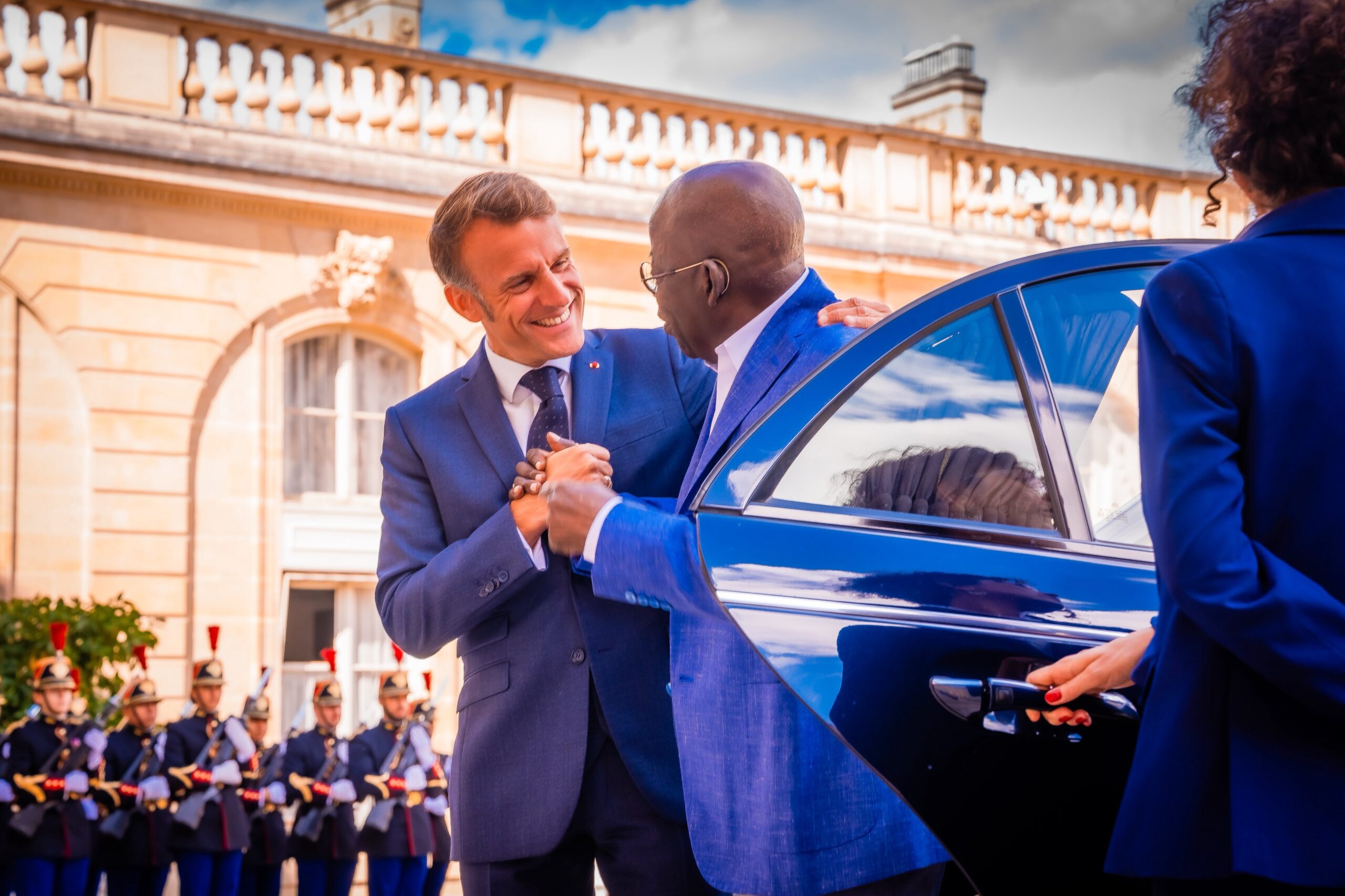
France has been Mr Tinubu's top destination since taking office. Nigeria's renewed relationship with France is not a recent foreign policy decision, but rather predates the Bola Tinubu administration, the French Ambassador, Marc Fonbaustier, has stated. The ambassador said this in an interview with PREMIUM TIMES, in response to a question on the popular assumption in Nigeria that France was shifting its focus to Nigeria as it grew increasingly unpopular among Francophone African countries in West Africa. Under President Bola Tinubu's administration, Nigeria's relations with France appear to be deepening. France has been Mr Tinubu's top destination since taking office, and some of these trips have been to seek bilateral and multilateral partnerships. In an exclusive interview with PREMIUM TIMES, the French Ambassador, Marc Fonbaustier, said the improved relations between the two countries date back to the early years of the Fourth Republic. He said the relations started to improve as France expanded its attention from its former colonies to other countries in West Africa. Mr Fonbaustier said that this shift occurred under the administrations of ex-French President Francois Mitterrand and, later, President Jacques Chirac, between the 1990s and 2000s. "We have been shifting towards English-speaking countries for a long time. It was in the 90s, when we thought we were not sufficiently present in former British or Dutch colonies and that we needed to be more present," he said. Mr Fonbaustier stated that France began pushing to strengthen its ties with Nigeria after Nigeria's return to civilian rule in 2000. He recalled that one of the first high-level visits of Nigeria's first democratic president president of the Fourth Republic, Olusegun Obasanjo, was to France. The diplomatic trip opened the door to renewed engagement between the two countries. Nigeria's relations with France were once tense and distant. France traditionally focused on its former colonies in West and Central Africa (the Françafrique network). At the same time, Nigeria positioned itself as an independent Anglophone power wary of France's influence in the region. France began to improve its relationship with Nigeria in the late 1990s and early 2000s, when it found the need for closer cooperation to be strategic to its interests. Over the years, relations grew stronger. France eventually became regarded as one of Nigeria's key Western partners, particularly after the rise of the jihadist insurgency in the Lake Chad region. Former Nigerian President Muhammadu Buhari made several official visits to France, including a working visit in 2015 with then French President François Hollande to discuss defence, security, trade, and economic relations. About a year later, Mr Hollande made an official visit to Nigeria to attend and support the Second Regional Security Summit hosted by Mr Buhari. In 2021, Mr Buhari was hosted by French President Emmanuel Macron in Paris for a working lunch, during which both leaders discussed bilateral relations, regional security, and economic cooperation. On this, Mr Fonbaustier said, "We have fostered the pace. It's been fostered like this during the term of President Hollande, who came to visit you, and President Buhari made a reciprocal state visit to France." "Now, there was the state visit of President Tinubu. What I want to illustrate is that it has a long history. It did not start at all with anything linked to Francophone countries," he stated. The ambassador reiterated that France's aim remains to expand its presence and relations with "all of Africa." France's relations with its former colonies in the Sahel have been strained over the past few years. Its influence deteriorated with the rise of military rule in Mali, Niger, and Burkina Faso, as successive coups undermined the political frameworks that had enabled strong Franco-Sahel cooperation. The military-led governments perceived France's diplomatic and military presence as a challenge to their sovereignty and a reminder of colonial-era dominance. The states expelled French troops, ending long‑standing military cooperation that had been central to Paris's Sahel security strategy. In 2025, the leader of the Burkina Faso Junta referred to France as an imperialist force that the continent must be rid of. He accused French President Macron of "insulting all Africans" after Mr Macron suggested that some African nations had been ungrateful for French military assistance. He said this remark reveals how France views Africans as "less than human." Nigeria's relations with three junta-led Sahel states -- Mali, Niger, and Burkina Faso -- are also strained. The states have also criticised Nigeria's relations with France. The Niger military leader, Abdourahmane Tiani, had earlier accused Nigeria of colluding with France to destabilise the country. He claimed France, with Nigeria's knowledge, was allying with militant groups in the Lake Chad region to undermine Niger's security. "Nigerian authorities are not unaware of this underhanded move," Mr Tiani had said. The National Security Adviser, Nuhu Ribadu, described the allegations as "baseless" and "false". After forming the Alliance of Sahel states, the West African nations officially withdrew from the Nigeria-led Economic Community of West African States (ECOWAS). This decision followed months of tension between the countries and the regional bloc. The juntas in all three nations had accused ECOWAS of failing to support them in their fight against terrorism and of imposing sanctions that they claim harmed their populations. They also rejected ECOWAS' request to reconsider their decision to leave the bloc. Source: https://www.premiumtimesng.com/news/headlines/862371-nigerias-renewed-closeness-with-france-did-not-start-under-tinubu-french-ambassador.html
Leave a Reply
Your email address will not be published. Required fields are marked *