
West African surgeons unite: Nigeria hosts bariatric forum, launches regional collaboration - Businessday NG
- Super Admin
- 08 Mar, 2026

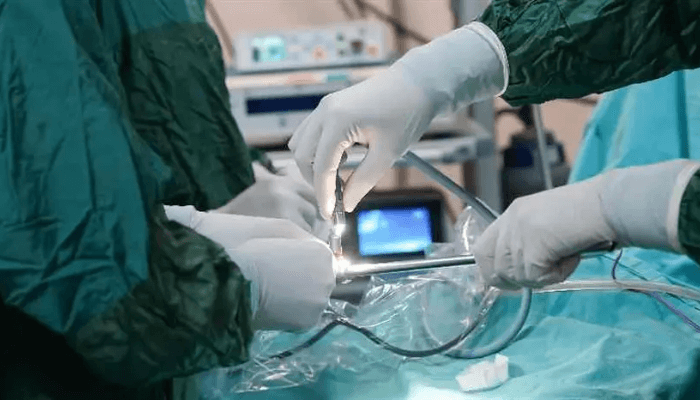
Surgeons from across West Africa gathered at Accra, Ghana for the region's inaugural bariatric and metabolic surgery session, hosted during the 66th Scientific Conference of the West African College of Surgeons (WACS). Led by the Bariatric and Metabolic Surgeons Society of Nigeria (BMSSN), the meeting drew representatives from Benin, Burkina Faso, Togo, Cote d' lvoire, Senegal and Ghana to examine the rising burden of obesity and explore surgical solutions that remain limited in availability across sub-region. Bariatric surgery involves operating on the stomach or intestines to treat sever obesity when exercise and diet fail. It aids weight loss restricting food intake. Reducing and altering gut hormones to manage hunger. Common, often irreversible procedures include gastric bypass, sleeve gastrectomy, and gastric bending. Speaking at the event, founder and President of BMSSN, Abuchi Okaro, explained that the event was held to showcase and highlight what is happening in West Africa, using data, insights and published material, while creating a network of expert practitioners in the field as a platform for closer collaboration going forward. Abuchi, a bariatric surgeon at the Eurocare hospital, Lagos, had Bariatric surgery as a surgical procedure that helps individuals who are obese lose weight by altering their digestive system to reduce calorie intake and absorption, or altering gut hormones that affect appetite. The medical practitioner enumerated conditions associated with obesity to include; hypertension, high blood pressure, type 2 diabetes, diabetic mellitus, sleep amia (which is having a blocked artery while sleeping at night), and high cholesterol levels. "The purpose of the event was to discuss how advancements in modern surgery operations have been shown to help patients control their conditions, and in some cases, actually eliminate or reverse them. "If you have diabetes, high blood pressure or hypertension for a long time, it means you are going to have conditions that in some cases are untreatable, such as kidney disease. "If you have blockage of the arteries of the heart, you can have stroke, bleeding in the brain, loss of function, heart attack as well as problems with your joints such as arthritis," Okaro added. Emphasising the increasing problem of obesity, he said : "The World Health Organisation puts the global incidence of obesity at somewhere between 13 percent and 16 percent of the adult population". But Timi Adenuga, BMSSN's Secretary, who is a Consultant General and Laparoscopic Surgeon at Getslim Bariatric Centre, Abuja, warned that there is an ongoing rapid rise in obesity and metabolic disease in West Africa, even as awareness of and access to bariatric and metabolic surgery remains very limited, regional collaboration and shared learning between practitioners is minimal and there is a scarcity of Africa-specific data on surgery outcomes. In this regard, Nigeria is best positioned to lead West Africa's direly needed capacity enhancement, since it has the oldest and most developed bariatric surgery industry in the sub region. Bariatric surgery has been going on in Nigeria since 2012, mainly in its major cities on Lagos, Abuja and Kano. However, its penetration, as at 2023 of 0.04 per 100,000 people is still poor compared with the 24 per 100,000 people achieved in Egypt and the 0.9 per 100,000 people recorded in South Africa. Yet Nigeria leads by a large degree within West Africa, handling over 100 bariatric surgeries a year. In comparison, for example, bariatric surgeries only began in Burkina Faso in 2016 and since then only 108 cases have been handled. This reflects just how far the industry still has to go in West Africa. According to Okaro,: "West Africa has not been given enough assistance or attention, both internally and externally by our development partners to a standard base that can serve a population of about 470 million people". Although he admitted that this is not surprising since bariatric surgery is a relatively new field in the world. "The surgeries require great skill from surgeons that have become sub-specialist experts and this takes great amounts of time and money. Yet bariatric and metabolic surgery is not yet well appreciated in terms of the techniques applied. But the challenges run much deeper than this. ''One is the sheer lack of awareness by the public - including potential patients about the very existence of bariatric surgery. "The biggest reason for the lack of growth of our industry so far is that among the potential patients only a few know that the procedure exists, "Indeed, it is a field that not many doctors are adequately aware of. Another constraint, and an equally critical one is that there is a lack of acknowledgement on the part of potential patients that bariatric surgery is the best way to treat obesity. "Indeed, many obese people are in denial, insisting that their being overweight is a temporary situation that they can correct without specialist interventions. They are encouraged in this thinking by general practice doctors who tell them to simply adjust their diet in order to shed off their excessive weight. "Then there is the issue of cost; bariatric surgery can cost up to US$5,000 or more in many parts of West Africa and it is generally not covered in health insurance schemes because it is widely but completely mistakenly assumed to be cosmetic surgery which panders to one's self-image rather than actual (potentially life threatening) health issues'', said BMSSN president. A nutritionist with regards to bariatric and metabolic surgery Sherese Ijewere pointed out that nutrition is a key factor even before the surgery itself. "Nutrition is vitally important before the surgery because it needs to be clear how the patient became overweight in the first place. "Furthermore, a patient needs to engage in a pre-operation surgery two weeks before surgery, she continued. "This makes it safe for a patient to be operated upon because it shrinks the liver, which sits atop the stomach. After surgery the patient has to imbibe only liquids for the next three to four weeks, with the density of liquids allowed increasing in stages, and ideally, for the next one year, the patient needs to work with a nutritionist All this actually resets the patient's genes. Sherese Ijewere claimed that it has helped 80 percent of the patients who have stuck to the process to reverse their ailments and achieve healthier, longer lives. This means that while the surgeon is at the head, a patient needs a multi-disciplinary team, comprising a cardiologist, psychologist, nutritionist, endocrinologist and a personal trainer as well. "The purpose of the session therefore was to form collaborations" concluded Okaro. "If we can learn from each other, we can make better decisions, we can do surgery, we can select our patients better and we can offer them better outcomes. We hope that in the years to come we will be hearing positive results from this first of its kind sub-regional interaction on metabolic and bariatric surgery." Source: https://businessday.ng/news/article/west-african-surgeons-unite-nigeria-hosts-bariatric-forum-launches-regional-collaboration/
Leave a Reply
Your email address will not be published. Required fields are marked *