
Renewed call in Niger Delta for 35% women affirmative action - Businessday NG
- Super Admin
- 08 Mar, 2026

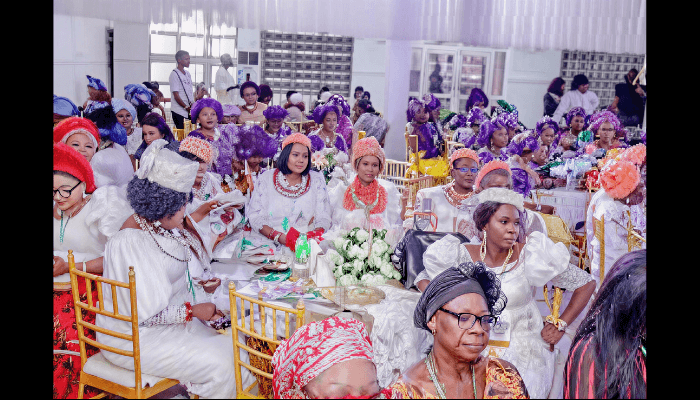
When women under the umbrella of the Pan Niger Delta Forum gathered in Yenagoa for a conference on political inclusion, it was part of the larger push for the implementation of the 35 percent affirmative action. At the Pan Niger Delta Forum's Women Conference in Yenagoa, Bayelsa State, issues surrounding the participation of women in politics and governance came up for discussion as women continue seeking for better representation. Women from across the region representing both state chapters and groups were in full attendance at the conference with the theme: Empowering Niger Delta Women for Enhanced Political Inclusion, Peace and Development. Former First Lady, Patience Jonathan was present and Maureen Etebu, the pioneer Vice Chancellor of the National Maritime University, Okorenkoko in Delta State and one-time Commissioner for Public Utilities in Bayelsa State. It would be recalled that when Nigeria came up with the 35 percent affirmative action policy in 2006, it was thought that by now, 20 years later, women across the country would have taken their rightful place in politics and governance. The 2006 National Gender Policy which was actually a follow up to the Beijing Declaration in 1995, which advocated 30 percent women affirmative action, was reinforced in April 2022 in a ruling by a Federal High Court. In the case which was instituted by the International Federation of Women Lawyers challenged the near zero implementation of the affirmative action and the court, in its ruling, compelled the Federal Government to implement it. In spite of the legal backing, implementation has remained abysmally low, which is why women groups from across the nation are engaged in advocacy efforts for better women representation. The Nigerian Women Trust Fund and other women groups are actively campaigning to make the policy a reality with focus on gender-inclusive governance. In all the three arms of government in Nigeria, from the federal to state and local government levels, the under representation of women is evident, which calls for the need to address it. Governor of Bayelsa State, Douye Diri, who declared the conference open, described the agitation for special seats in the National Assembly as 'tokenistic' and rather urged them to call for full inclusion. Diri also urged women in the Niger Delta region to demand for total freedom to participate in politics saying that they did not deserve to be treated as second-class citizens. He referenced Gill Lever, the British Deputy High Commissioner, who was of the view that the agitation for special seats in the National Assembly is good, but he disagreed because he saw it as a temporary solution. To him, such agitation for special seats makes women to look like second class citizens and that it was better for them to fight for full inclusion in politics and governance. His words: "I was told that the British High Commission is a major sponsor of this programme. I had the opportunity of meeting with the Deputy High Commissioner when she visited Bayelsa last week, and we discussed women participation in politics. "She believes that the agitation for special seats for women in the National Assembly is good. While I agreed with her, in part, as a temporary solution, I however largely disagree with the idea. My point is, I do not want our women to be treated as second class citizens. "The women in Britain do not have special seats in parliament just as in America. The system flows and recognises them, and they participate fully in politics. Nobody talks about special seats or women being under-privileged there. We can do it in Nigeria. "Our women are very intelligent and are active in politics. They are also very active in various professions. So, why are we asking for special considerations for them? "Women across the world participate and become members of parliament, governors and presidents. Nigeria should not be an exception. Our structure is wrong. There is a structural deficiency in Nigeria. "Here we have women that are professors, doctors, engineers, and lawyers even in the Niger Delta. I just celebrated my daughter of 26 years with a PhD in law. Women should ask for their freedom and I encourage you not to accept the second-class citizens treatment in this country." Recounting efforts to get more women integrated in politics of Bayelsa State, Diri said he has consciously tried to bring more women into governance. "In Bayelsa, I have consciously tried to bring in more women into governance either in the state executive or the House of Assembly. In 2023, I thought we would have about five women in the assembly but when we went for the election, only two succeeded. "So, I know what you are facing and I am happy that you are coming together. Sometime, the problem is even women versus women. My dear women of Niger Delta, I will always support you and encourage you as governor of this state." But, Patience Jonathan expressed the view that Nigeria should emulate other African countries like Angola and others, where women enjoy affirmative action in politics. She said that in those countries, they implemented the affirmative action without the need to sit at any roundtable to discuss it. According to her, in advanced nations the system works smoothly to accommodate women in politics and governance, and that the same can work in Nigeria. Hear her: "Our father in this state told us something. What he said is a reality but Nigeria, that is Africa is not like that. They are not practicing what the developed countries do. "In developed countries, the system works smoothly, everything moves accordingly, but in Nigeria, it's not like that; you have to sit in a roundtable to discuss it. "If you go to Angola today, 35 per cent is given; you go to some other African countries, 35 per cent is given to women, but it's discussed on the roundtable. "But what I have to say here, we the women of the Niger Delta, women of Nigeria irrespective of political parties, must come together and put party aside, and now talk in one voice. That is the only way we can achieve success in our struggle". PANDEF National Women Leader, Grace Ekong, said women require education, skills, experience, and exposure to actively participate in politics, charging them not to be passive as they have significant roles to play in societal development. PANDEF National Chairman, Godknows Igali, said women of the Niger Delta region should be united in their resolve in ensuring that women are included in governance in the country. Available statistics show that though they make up about half the national population, women participation in Nigerian politics is very low, about 6.7 percent which is far below the global average of 22.5 percent. In the 10th National Assembly, women held only three out of 109 seats (2.7percent), and in House of Representatives, they held 17 out of 360 seats (4.7percent). The grim statistics was also reflected in the state Houses of Assembly where 10 put of the 36 states had no elected women representatives and no woman has ever been elected governor or president. Within the same period, female candidacy fell from 12.9 percent in 2019 to 10.1 percent in the 2023 general elections while patriarchal societal norms, high cost of nomination forms, violence, and limited funding have been identified as hindrances. Source: https://businessday.ng/life/article/renewed-call-in-niger-delta-for-35-women-affirmative-action/
Leave a Reply
Your email address will not be published. Required fields are marked *