
Nwagboso: From Public Policy Studies to farming
- Super Admin
- 08 Mar, 2026

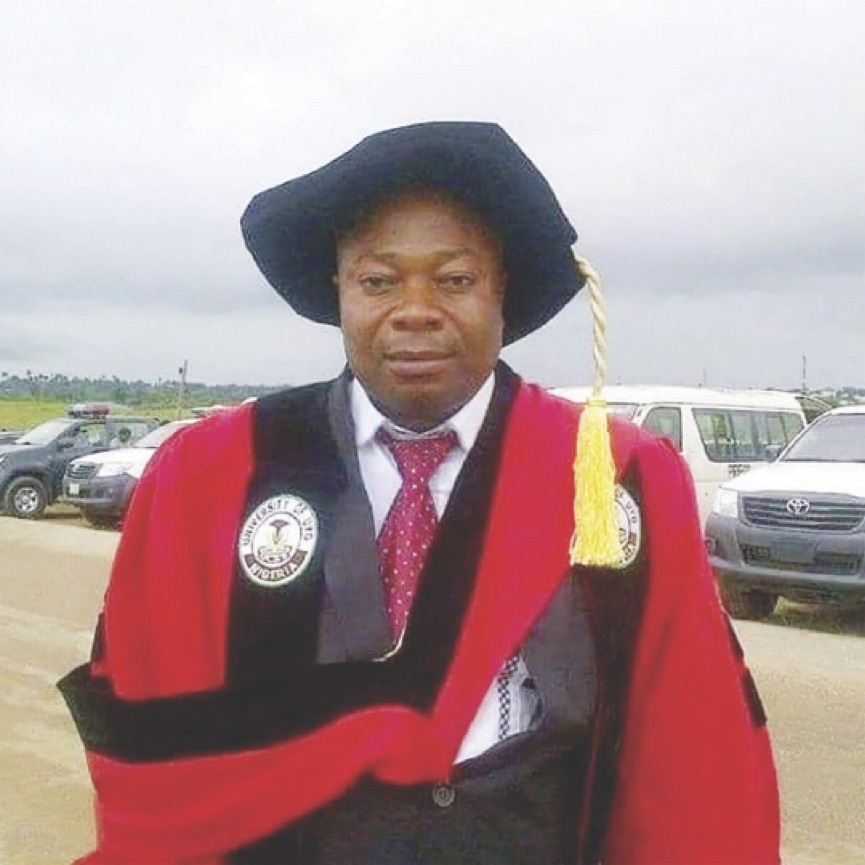
* How UNICAL don with no formal training in agric is revolutionising agricultural practices across regions Across the South-East and South-South regions of Nigeria and beyond, a name is making great strides in agriculture. Dr Chris Nwagboso is an Associate Professor of Public Policy and Development Studies in the Department of Public Administration, University of Calabar. He doesn't have any formal education in agriculture. Yet, he is currently redefining the industry, and contributing amazingly revolutionary ideas to practical agriculture, following his innovations in livestock, improved seedlings, nursery plants, fishery, fruit production and more. He is everywhere giving lectures that leave experts in agriculture bewildered. He is setting up farms and improving lives. In this encounter, Nwagboso maintains that the future of agriculture is great. What's the motivation behind your agric revolution? I will say that my driver is God. My next passion is agriculture and food production. I have this passion to address hunger and food insecurity in the society, to create jobs and to curb unemployment in the society. I would say that God is helping me to identify the core areas of human needs and to assist to redress the current challenge of food insecurity we collectively face. I tell you that what is driving me has nothing to do with my discipline, which is Public Policy and Developmental Studies. This is because what I currently do in the field of agriculture is plainly practical; there is no theory there. In our tertiary institutions today, much of what is going on are theories. But I use bare hands to grind out concrete results. I'm using my God-given talent to redefine the basic agricultural practices we were used to in order to guarantee food in our society. How did this passion begin? My grandparents were subsistence farmers. But I first developed a passion for livestock early in life. I started at a tender age keeping birds. At age five, I was gathering palm nuts from the bush; we were processing and selling the oil and palm kernel for profit. My mother sold them at the local market. I requested she used the proceeds to buy chickens which I reared. They grew and laid eggs; I reared the chicks to maturity and my mother sold them for profit. At a time, I had more than 50 birds. Some of them were sleeping in the vegetation in the compound. At Christmas, we killed some for meat. Some were sold to raise money for my school fees. At some point, the proceeds from my chicken were being used to pay my school fees. Then at some point, my father gave me goats which I also began rearing. They were mine. There were also guava trees in our compound and pawpaw trees too. By eating them, I developed a love for fruits. Sometimes, I would be living on pawpaw and other fruits in the compound for days. Right now, I grow every type of fruit anyone can think of; I plant them in nurseries and replant when they are mature. I raise livestock of all types. I'm also into fishery. Did you have formal education in agriculture? I have never attended any formal training in agriculture. Rather, I now train people and communities in agriculture; I conduct online training for people across the world. So how did you develop yourself? I specialise in Public Policy and Development Studies. You can see that we have agricultural policy. I have read it over and over again and saw that I too can research it. As an expert in public policy matters, I can also contribute meaningfully in every sphere of agriculture. I look at the national policy on agriculture and then I ask questions - whether the objectives have been achieved, or they have been achieved and what led to the achievement. So in terms of research, I'm now contributing to both policy and practice. Last year, I attended a conference at the Faculty of Agriculture, Niger Delta University Yenagoa, Bayelsa State and presented a paper on economic trees and wealth creation. After the paper, some professors of agriculture besieged me for my contact. Last year, I attended the first NUJ Agric Show in Umuahia, Abia State and presented a paper too. At the end of the day, people were convinced I have the expertise. A year before the last, I spoke to the Committee of Vice Chancellors of Nigerian Universities during its executive retreat programme. The members invited me to present a paper on agriculture. In March, the University of Calabar Alumni Association invited me to train over 1,000 final year students on practical farming. They want the students to learn practical agriculture irrespective of their discipline. In 2014, I was appointed by the then Governor of Abia State, Senator T A Orji. Then, the university granted me leave of absence. Then I started asking myself questions: now that I would be out of the university for one or two years, what would I be doing? So I started asking God what to do and he directed me to my life-long passion: agriculture. So I started with rearing broilers, turkeys. Then I built a fish pond and went into the fishery. From there, I graduated into mini plantations. I began planting African chery (udara nwannu), avocado, soursop, pawpaw - name it. Do you have a farm or space where you now ply your trade? I don't just have a farm, I have farms. I have a cattle farm at Umuikaa junction in Abia State. I have an integrated farm at Itigha along the express road also in Abia State. At Ubakala, Umuahia, I rear birds. I also have units for goats and pigs; within the farm, I have a large portion for plantain and banana plantation. In Umuahia, I use a part of my large compound to prepare nurseries for assorted fruits plants: udara, ogbono and bitter kola, oil palm, raffia palm, guava, orange, mango, soursop and several other plants. Now, we are getting them ready ahead of the planting season. So I have three physical farms with workers. I have also gone into training and consultancy. I set up farms for people. Days ago, I submitted a proposal to resuscitate the moribund University of Calabar farm. I have also submitted a similar proposal to the South East Development Commission (SEDC) to revive agriculture in the region. I have also prepared a research proposal for the revival of agriculture in the South East to ensure food sufficiency. I'm committed to bringing back all the livestock the Igbo used to have in the past: native goats and cows if SEDC approves my proposal. How do you market your products? People see what I have online. They also visit my farms and see what I have. So they try to reach me. My products are everywhere: Whatsapp groups, Facebook. People marvel at what we are doing and call me for inquiries. They place orders for our seedlings and we deliver at their locations. At the moment, we are toiling with the idea of converting some of our products into herbal formula for people to drink and get healed. We are looking at developing soursop and ginger tea to cure ailments. We are looking at producing herbal detoxifiers too. How do you marry your two jobs? I'm still a lecturer in the Department of Public Administration, University of Calabar. I major in Public Policy and Development Studies. Every human endeavour - whether it is health, aeronautic, has to do with policy. The policy scientists will go there and investigate it. That is not different from what happens in agriculture. How do experts in agriculture see you? Naturally, some of them feel I have taken over their field. But what will I do? Mine is a calling. I didn't call myself. Some of them also want to learn from what we are doing so as to augment their knowledge. The reality is that trends change with time. What one studied in 1980 may no longer be trendy in 2026. So, I read everything under the moon to be able to get the best to augment my natural talent, the same way I read everything in public policy, political science and public administration and development studies. Sometimes, I'm on top of some people who formally studied agriculture. What's the future of agriculture in the country? In the past five years, I have been setting up farms across the country. What I'm doing now is revolutionary and enduring. This has brought unprecedented progress in agriculture across the globe. The whites see them and call me. That, to me, is very encouraging. I develop improved species for our people. Take for instance; there is a specie of cassava now called Cassava 419. Its maturity is in six months. When you harvest a few stems, you have a bag of cassava. That is a big improvement on the natural one we used to have whereby one whole plot of land will yield just two bags of cassava. A lot of people have gone into agriculture because of me. I set up farms; I train people. People have lands but they don't know what to do with it. I encourage them to go into farming; stop wasting lands planting flowers; plant fruit trees. I have a platform called Abia Livestock and Integrated Farm Association. Some people who hitherto didn't want to go into agriculture are there. Now, one of my latest innovations is the sack farming which I started some years ago. With that, you can plant cassava, yams inside a bag. I planted 1,000 sacks of yams last year, and reaped bountifully. We also plant vegetables in bags. Agriculture guarantees food security. But sadly we don't appreciate what we have. Source: https://thesun.ng/nwagboso-from-public-policy-studies-to-farming/
Leave a Reply
Your email address will not be published. Required fields are marked *