

Transcorp's Record-breaking Performance Underscores Resilience of Service Sector
- Super Admin
- 08 Mar, 2026

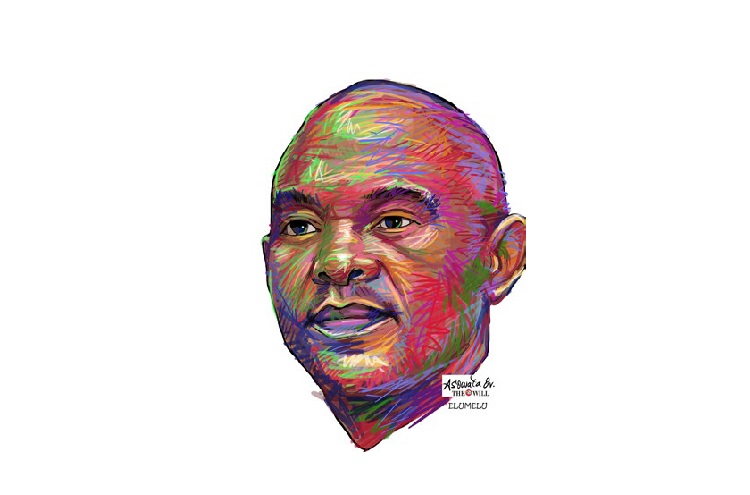
March 08, (THEWILL) -- Transnational Corporation (Transcorp) PLC's 2025 performance, featuring 31 percent pre-tax growth to N175.9 billion and assets crossing N1 trillion, highlights the resilience of the service sector. This success, driven by power and hospitality, showcases robust growth amid an expanding Nigerian economy which the group tapped into. Nigeria's real Gross Domestic Product (GDP) experienced a year-on-year growth of 4.07 percent in the fourth quarter of 2025, marking the highest quarterly growth rate since Q4 2024, as per the most recent data published by the National Bureau of Statistics. This growth was bolstered by widespread activity across essential economic sectors, with the services sector continuing to be the largest contributor to overall output, expanding by 4.15 percent. The GDP growth in Q4 2025 surpassed the 3.76 percent growth recorded in Q4 2024 and the 3.98 percent observed in Q3 2025, indicating a sustained momentum in the non-oil sector, of which services constitute a significant part. Transcorp, regarded as Africa's leading listed conglomerate with investments in power, hospitality and energy, reported a 33 percent increase in revenue to N544 billion for the year ended December 31, 2025, up from N408 billion in 2024 supported by the clement economic weather to the service sector. Profit before tax rose by 31 per cent to N179.5 billion from N136.7 billion, while profit after tax climbed 44 percent to N135.9 billion compared with N94.1 billion in the previous year. A closer look at the group's financial statements for the period revealed that revenue from its power subsidiaries increased by 38 percent to N483.97 billion, driven by improved generation capacity and enhanced gas supply. Similarly, revenue at Transcorp Hotels Plc also rose 38 percent to N97.04 billion, supported by sustained demand for rooms, conferencing, food and beverage services, and premium guest experiences. The group's balance sheet strengthened during theperiod, with total assets rising 33 percent to N1.002 trillion. Shareholders' funds grew 47 per cent to N353.4 billion, while total borrowings declined by 15 per cent to N75.5 billion, resulting in a gearing ratio of 13 percent. A key success factor for the group was the high level of liquidity occasioned by the nature of its subsidiaries' businesses (power and hospitality) which are basically cash-based. These resulted in improved financial indicators that mirror the performance of the hospitality sector such as the liquidity ratio, debt-to-equity ratio, profitability ratio and net profit margin. Chairman Tony O. Elumelu said the 2025 performance underscored the portfolio and its confidence in Nigeria's long-term strength of the group's diversified prospects. "Our 2025 results are not just strong -- they are decisive. They reflect the power of a deliberately diversified portfolio, disciplined execution, and our unwavering belief in Nigeria's long-term potential. Across power, hospitality and energy, we are building platforms that deliver both commercial returns and social impact," he said. He noted that within the power segment, Transcorp Power increased available capacity to 625MW, while TransAfam Power tripled peak generation capacity to 270MW, describing the improvements as structural contributions to Nigeria's energy security and industrial competitiveness. In hospitality, he said the Transcorp Centre Abuja was redefining the country's capacity to host large-scale global events and positioning the group for future growth. President and Group Chief Executive Officer, Dr Owen Omogiafo, said crossing the N1 trillion asset milestone marked a defining moment for the conglomerate. "Transcorp Group's FY 2025 performance reflects disciplined strategy execution and operational excellence across our portfolio. Crossing the N1 trillion total assets milestone is a defining achievement -- a validation of the strength of our platform and the confidence of our investors. With 47% growth in Shareholders' Funds and sustained profitability, we have closed the year with strong momentum," she said. She added that the group remained committed to delivering sustainable returns while advancing economic development, guided by its purpose to improve lives and transform Africa. The influence of the hospitality sector on the growth of the services industry is evident in the practice of backward integration, which includes job creation and an improved supply value chain. Backward integration refers to a strategy where businesses are motivated to source their own raw materials by either purchasing from their suppliers or establishing their own farms, for example, to cultivate produce for their manufacturing facilities. Hospitality and consumer goods companies, in particular, have embraced this initiative and have made significant progress in its execution. This has proven advantageous for micro, small, and medium enterprises (MSMEs), particularly those involved in the agricultural and transportation value chains that support the hospitality sector. "One can envision the quantity of food products that hotels in Nigeria consume daily. Most of these establishments do not operate their own farms, thus they rely on suppliers and transporters. Consequently, they depend on a robust value chain that encompasses numerous micro, small, and medium enterprises, especially in agriculture, agro-business, and transportation services," stated Pascal Obidigbo, an economist. In light of the recent GDP statistics, Obidigbo noted that the contributions from various sectors indicated that the non-oil economy constituted over 97 percent of real GDP, demonstrating resilience in agriculture, trade, telecommunications, finance, construction, and manufacturing. He remarked that the upward trend of the services sector contributes positively to agriculture, despite the ongoing security challenges that impact many food-producing regions in Northern Nigeria. With a combined market capitalisation of N4.78 trillion ($3.54 billion) on the Nigerian Exchange, the group recorded growth across all major indicators. Transcorp closed its last trading day (Friday, March 6, 2026) at N51.00 per share on the Nigerian Exchange (NGX). The stock began the year with a share price of N45.40 and has since gained 12.3 percent on that price valuation. Source: https://thewillnews.com/transcorps-record-breaking-performance-underscores-resilience-of-service-sector/
Leave a Reply
Your email address will not be published. Required fields are marked *