

'Nigeria not facing fiscal collapse' - Edun - The Nation Newspaper
- Super Admin
- 07 Mar, 2026

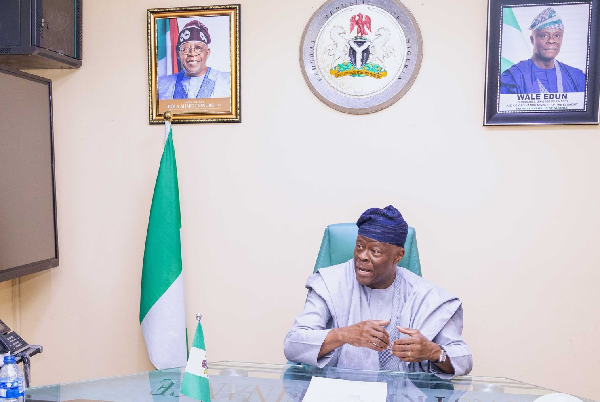
The Minister of Finance and Coordinating Minister of the Economy, Mr. Wale Edun, has said Nigeria is not facing a fiscal collapse but is undergoing a period of fiscal correction driven by economic reforms introduced by the federal government. In a brief released on Saturday in Abuja, the minister said the country's current economic adjustments are the result of structural reforms designed to promote transparency, enforce fiscal discipline, and support long-term economic growth. Edun said the government deliberately chose policies that focus on long-term sustainability rather than temporary measures that could create the illusion of stability. "Nigeria is not experiencing fiscal collapse. It is undergoing fiscal correction. The reforms are structural, transparency-driven, discipline-enforcing and growth-enabling," he said. He explained that available economic data show positive trends in several key areas, including revenue growth and the continued implementation of capital projects. According to him, the government has also stopped the practice of financing budget deficits through direct monetary support from the Central Bank of Nigeria. "The evidence shows revenue is rising, capital projects are ongoing, debt growth is largely transparency and exchange-rate driven, and monetary financing has ended. The administration has chosen long-term sustainability over short-term illusion," he said. The minister also addressed public concerns about the performance of government revenue collection, particularly regarding the Nigeria Revenue Service. He explained that misunderstandings sometimes arise because of how federal revenue is collected and distributed within the government system. "The Nigeria Revenue Service collects a large share of federal taxes and sets internal collection targets," Edun said. "However, NRS does not collect all revenue sources. Allocation ratios are applied after revenues reach the Budget Office and the Federation Account Allocation Committee, and meeting an NRS collection target does not automatically mean Federal Government revenue targets are met. This technical sequencing often leads to confusion in public commentary." Edun also responded to claims that federal capital projects are not being implemented due to low capital releases to government ministries, departments and agencies. According to him, such conclusions do not reflect the full picture of how capital spending works in the federal budget. He explained that federal capital expenditure has two main components. The first component involves capital projects funded directly by the Federal Government from its cash revenues. This type of spending is handled through ministries, departments and agencies and depends largely on government revenue performance. "MDA-funded capital is funded directly from Federal Government cash revenue. It is dependent on revenue performance and sensitive to oil shortfalls and debt service pressures," he said. Edun explained that when government revenue falls short or when debt servicing obligations increase, releases for these projects may slow down, which can affect performance ratios. The second component involves capital projects funded through loans from international development partners. These funds are disbursed directly by multilateral institutions and are tied to specific infrastructure or social programmes. "Multilateral and project-tied loans are disbursed directly by development partners. They are not cash inflows to Federal Government accounts though captured in the budgets and they are tied to specific infrastructure and social projects," he said. According to the minister, such projects continue to move forward even when cash releases to government agencies appear limited. "Capital projects are ongoing. Execution continues. The financing mix differs. The misunderstanding arises from focusing solely on MDA cash releases rather than total capital execution," he added. Edun also explained that increases in Nigeria's debt service payments in recent years do not necessarily mean the government is borrowing recklessly. He noted that debt servicing rose above budget projections in both 2024 and 2025. In 2024, debt service was projected at ₦8.56 trillion but the actual amount reached ₦12.63 trillion, creating an overshoot of about ₦4 trillion. For 2025, the budget projected ₦13.12 trillion for debt servicing, but the actual figure rose to ₦14.57 trillion, resulting in an overshoot of about ₦1.45 trillion. The minister said these increases were largely caused by economic factors rather than excessive borrowing. One of the key factors, he said, was the depreciation of the naira. He explained that much of Nigeria's external debt is denominated in foreign currencies. When the naira weakens against these currencies, the naira cost of servicing the same debt automatically rises. "When the naira depreciates, the naira cost of servicing the same dollar debt rises automatically. This is a valuation effect and not evidence of new borrowing," Edun said. He added that higher domestic interest rates also contributed to the increase in debt servicing costs. According to him, interest rates were raised as part of efforts to control inflation and stabilise the currency. "To stabilize inflation and the currency, monetary policy was tightened, interest rates increased, and domestic debt servicing costs rose," he said. Despite these pressures, Edun said the government prioritised key obligations including debt servicing, payment of salaries and pensions, and the continued implementation of capital projects. He added that these commitments were met without returning to the practice of monetary financing. "This reflects fiscal discipline under strain, not fiscal collapse," he said. The minister also addressed concerns about Nigeria's rising public debt, noting that a large portion of the increase is due to accounting adjustments and exchange rate changes rather than new borrowing. He explained that about ₦30 trillion previously owed to the Central Bank under the Ways and Means facility was formally recognised and added to the public debt record. "Previously off-book liabilities are now transparently recorded. This is not new borrowing, it is formal recognition," he said. He also pointed to the impact of exchange rate adjustments. According to him, when the naira depreciated, the naira value of Nigeria's external debt increased significantly. He said about ₦70 trillion of the nominal rise in public debt can be attributed to exchange rate valuation effects. "Thus, much of the increase is accounting and currency-driven, not borrowing-driven," he said. Edun said Nigeria's debt sustainability should be assessed using broader economic indicators such as the debt-to-GDP ratio, the debt service-to-revenue ratio, the fiscal deficit level and trends in government revenue. He noted that recent policy reforms, including fuel subsidy removal and improvements in non-oil revenue, are gradually strengthening the country's fiscal position. The minister also pointed to strong growth in government revenue in recent years. According to him, Federal Government aggregate revenue increased from ₦12.48 trillion in 2023 to ₦20.98 trillion in 2024. By November 2025, revenue had already reached about ₦22 trillion. He said the increase reflects improvements in tax administration, stronger remittance discipline by government agencies, efforts to block revenue leakages and improved performance from non-oil sectors of the economy. "The direction is upward and structural," Edun said. The minister acknowledged that the economic pressures experienced in 2024 and 2025 reflect the transition from previous fiscal practices to a more transparent system. He said the country is moving away from an era characterised by hidden deficits and heavy reliance on monetary financing. According to him, the current reforms include the removal of fuel subsidy, exchange rate liberalisation, the end of Ways and Means financing, tighter monetary policy and improved debt transparency. He noted that such economic transitions can be difficult in the short term but tend to stabilise over time. Edun also explained that the implementation timeline of capital budgets has contributed to some of the confusion around government spending. According to him, the capital budget approved for 2024 was largely implemented in 2025, while a large part of the 2025 capital budget will now be executed in 2026. Despite the short-term pressures, the minister said the reforms are aimed at building a more stable and sustainable fiscal system for Nigeria's economy. Source: https://thenationonlineng.net/nigeria-not-facing-fiscal-collapse-edun/
Leave a Reply
Your email address will not be published. Required fields are marked *