
Our Lives, By Psychiatric Nurses - Daily Trust
- Super Admin
- 07 Mar, 2026

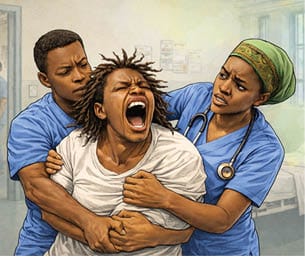
The world of a psychiatric nurse is often an emotional rollercoaster. Psychiatric nurses often hold the mental health care system, balancing medical expertise with deep emotional labour. Their world is characterised by high-stakes clinical responsibilities and the management of complex human emotions in often volatile environments. They are specially trained nurses who care for the psychological and physical well-being of people with mental health conditions or behavioral problems. Psychiatric nurses face significant challenges, primarily driven by high levels of patient aggression, violence and unpredictable behaviour, coupled with severe staff shortages and inadequate facilities. They also face high stress rates, frustration and compassion fatigue due to the intense nature of psychiatric care. From navigating societal stigma surrounding mental illness and dealing with prejudice from other health professionals, psychiatric nurses traverse a wide range of challenges in their day-to-day lives. Weekend Trust spotlights the interesting but challenging lives of psychiatric nurses. Across the country's overstretched mental health facilities, psychiatric nurses stand at the forefront of care for patients battling depression, schizophrenia, bipolar disorder, substance dependence and other mental health conditions. Yet, beyond hospital walls, little is known about the realities of their daily work, the emotional toll of managing complex cases, and the challenges of operating within a system constrained by stigma, manpower shortages and limited resources. At first sight, the psychiatric ward is quiet. The gates are locked, the corridors calm, the air heavy with routine. But behind those walls, a different kind of emergency unfolds on a daily basis, one that does not bleed, yet leaves scars just as deep for most patients and caregivers. For psychiatric nurses in Nigeria, every shift is a delicate dance between compassion and caution, empathy and endurance. They are caregivers, counsellors, mediators and often the last line of defence between patients and self-harm. There are about 10 major federal neuro-psychiatric hospitals in Nigeria, supplemented by psychiatric units in around 12 teaching hospitals, alongside a few state-run and private centers. Speaking with Weekend Trust, Haruna Hauwa, who works in a psychiatric unit in Abuja, said the hardest part of her job is not the aggression or the long hours but the stigma. "People think we only restrain violent patients. They don't see the counselling, the listening, the patience. We treat wounds you cannot see. "I remember holding the hands of patients battling severe depression through the night. Sometimes, all they need is someone who will not judge them," Hauwa said. For Olusegun Badmus, the emotional burden often follows him home. "You hear stories of abuse, abandonment, addiction. Sometimes I sit in my car after work and cry. But you learn coping mechanisms: prayer, talking to colleagues, supervision sessions." He maintained that mental health professionals also need mental health support, noting, "We absorb so much pain. If we don't decompress, it affects us." In Benue State, psychiatric nurses battle stigma and poor remuneration amid daily risks of aggression from caring for patients. Some of them who spoke to our correspondent in Makurdi explained how they cope in a system weighed down by stigma both from within and outside despite inadequate remuneration to compensate for their speciality. At the psychiatric unit of the Federal Medical Centre in Makurdi, located beside the Aper Aku Stadium, Nurse Maannem Zaki said she began her shift knowing that anything could happen; but whatever it was, she was already trained to handle such professionally. "Our patients are sometimes suicidal. They are people who need help. Sometimes they come in aggressive, confused or withdrawn. We must first win their trust before we can administer treatment; and when they refuse to eat or communicate, it becomes very difficult," she said. Zaki, who admitted that managing the different shades of depressed or other forms of mentally ill patients could be tasking, recounted days when patients relapsed without warning, lash out in frustration, or sink into deep depressive episodes that require constant reassurance. She explained that despite such difficulties, in the long run, patients usually recover and become grateful for the care received, pointing out that such moments were always memorable to her. "I feel good that I could help to care for these special people," she added. Zaki expressed concern about people stigmatising her for being a psychiatric nurse, just as she shared how her brother reacted years ago when she opted to train for the speciality. "My brother had said that of all the specialised roles in nursing, why would I want to become a psychiatric nurse? I was then a general nurse, but I enjoy working here. If we don't care for them, they can easily kill themselves." For Nurse Rebecca Yahaya, the major risk attending to patients is usually noticed during their initial admission because they are often brought to the facility when their cases become life-threatening. "We face the worst hazards in the hospital system because our patients, when brought in, don't even know that they are sick. We risk being raped by violent patients. They are in high libidos. So some of us - male or female - are sometimes harassed," she narrated. Rebecca noted that sometimes she feels unsafe. "There are moments a patient becomes violent. We have had instances of nurses being pushed unexpectedly or almost attacked. You must stay at alert at all times," she noted. She added that despite the hazards, psychiatric nurses like her who have spent years in the specialty face greater challenges, which often come from the society's perception of their profession. "People don't see psychiatric nursing as prestigious. Some even ask why you would choose to work with 'mad people. We face stigma from family members, the society and even within the profession. But mental illness is like any other illness. It deserves care and compassion. "In fact, there is a weird belief that those of us specialised as psychiatric nurses will eventually become mentally ill like our patients. I have spent 9 years as a professional psychiatric nurse and I can say that coping with this kind of job requires political, social, environmental and economic support to thrive in Nigeria," she said. Yahaya, however, summed up that people experience mental health-related issues unknowingly, while their relatives live in denial until the patients become suicidal, and then they are brought to the hospital, making it challenging for them to handle at that stage for a period of time. "Despite these challenges, it gives me joy to see my patients on their feet again after being brought here helpless. Just two weeks ago, a relative of my husband came to the hospital to see me and asked why I chose to become a psychiatric nurse in the entire specialty in the profession. But if people like me don't do it, the society won't be free," she added. Meanwhile, our correspondent gathered that inadequate remuneration remains another pressing concern for many psychiatric nurses who believe that their specialty, which requires additional training and exposes them to higher risks, is not adequately compensated. Another psychiatric nurse in a private facility in Makurdi, who preferred anonymity, lamented poor remuneration. "We undergo specialised training and manage unpredictable behaviours, yet the incentives are not commensurate with the risk. It is discouraging," she said. The nurse, however, maintained that amid the constraints, what keeps her going are the smiles on the faces of recovering and healed patients. "For me, it is the small victories when a once-violent patient begins to communicate calmly; when someone who refused medication starts cooperating; when a discharged patient returns to say 'thank you.' That is fulfillment," she concluded. Similarly, psychiatric nurses at the Aminu Kano Teaching Hospital have raised the alarm over acute manpower shortage, poor welfare packages, and lack of appreciation for their work, warning that the situation is worsening the mental health crisis in Kano and across Nigeria. Muhammad Namadina, who heads the male psychiatric ward at the hospital, told Weekend Trust that nurses are overwhelmed by the number of patients they attend to daily. "Almost all mental health conditions are treated here - schizophrenia, depression, substance abuse and other challenges - but the number of psychiatric nurses in Nigeria is not enough to care for the people with mental challenges," he said. Namadina explained that psychiatric nursing requires balancing medical attention with emotional support, depending on the patient's diagnosis. "The approach for someone with depression is different from that of a patient with mania. Each case demands individualized care," he noted. He lamented that nurses face serious risks without commensurate hazard allowances. "There was a time a patient hit me with a metal on my head. I bled, was treated and that was all. The hazard allowance is not enough to cover the risks we face," he said. Namadina also highlighted inadequate facilities and expensive medications as major obstacles, saying, "Doctors prescribe drugs to contain patients, but many facilities don't have them. Families are forced to buy outside, and most of the drugs are very expensive," he added. The nurse further lamented lack of recognition from government and management thus: "We are not appreciated the way we are supposed to be. There was a circular on social allowance for psychiatric nurses, but it has not been implemented. We have been writing for it to be enforced, but nothing has changed." He recommended regular training and seminars to update nurses' knowledge, especially as substance‑induced psychosis is now more common than conventional psychiatric disorders. "Most of our patients today are drug‑related cases. They require unique treatment approaches, but many nurses lack adequate training in this area," he explained. Salis Ali Kabo, the coordinator of clinical nursing activities at the hospital, painted an even dimmer picture: "Kano has a population of more than 20 million people, but the number of trained and registered psychiatric nurses in the state is not up to 60. The workload is too much." He explained that psychiatric nurses perform routine nursing duties in addition to specialsed care for mentally ill patients. The hospital admits patients in male and female wards, as well as a unit for drug abusers undergoing rehabilitation. Kabo stressed that individualised care is critical, especially for substance‑induced psychosis. "The backbone of treatment is to take patients away from the substances they abuse. But the most difficult aspect is preventing relapse due to cravings. Nurses must treat both the addiction and the psychiatric symptoms," he said. Both nurses acknowledged stigma as another challenge. Namadina said psychiatric nurses are often dismissed jokingly as "mental health workers" whose behaviour is excused as abnormal. Kabo added that even among health workers, misconceptions persist. "Some say if you train as a psychiatric nurse, you may end up behaving like the patients. This is totally false, but it shows the stigma we face," he said. The nurses urged the government to incentivise psychiatric nursing through better pay, allowances and immediate employment of graduates. Kabo noted that psychiatric nurses are in high demand globally. "If a psychiatric nurse applies abroad, within two or three weeks he will get a job. To reduce brain drain, government must train more nurses, employ them immediately and provide incentives," he said. He warned that the current ratio of nurses to patients is dangerous, saying, "In some hospitals, one nurse attends to 50 or even 100 patients. The World Health Organisation recommends one nurse per patient. The gap is too wide." In Lagos, a nurse at the Federal Neuro-Psychiatric Hospital, Yaba (FNPH Yaba), who has spent over 30 years in service, expressed mixed feelings of passionate work despite poor working conditions. "Well, it has been quite interesting. That is my passion and I find it fulfilling. No matter how harsh the weather might be, no matter how supportive and toxic the environment might be, you still derive a safe actualisation in it. "So, basically, on this part of the globe, it is not really encouraging because the environment is not supportive. We don't have things we need to work with. The pay is not comparable to what we put into it. The condition of service is not as sweet as expected. The work environment too; but then we still have to go in because it is a service to humanity," he said. He added nurses encounter different patients: "So we meet different types of patients and clients, ranging from substance abuse those with purely mental health, those that have defaulted, those that have crimes related issue, and those that comorbid that is having two diagnosis together; those that are having body sickness ,plus mental health, and those that body sickness resulted into mental health disappointment losses in life and all that depression mania. "We traverse all through all types and kinds of mental illnesses; and so far, so good. Some are not without hazard. We encounter a lot of hazards at the job. We sometimes receive an attack from the patients and sometimes the relatives might not see the good side of us. Sometimes they may not see the burnout we encounter, yet we still give ourselves to serving humanity. "Many times, we need to forget ourselves. Sometimes you don't even know that you have not taken your breakfast or lunch. You end up carrying your food home," he said. He stressed that there is a disparity in nurse-patient ratio, saying they have suffered from Japa syndrome. "I mean it is not like a profession where everybody doesn't show much interest in mental health. They magnify the general hospital above the mental health institution. We have been affected by the Japa syndrome because we are much more valued over there. "The psychiatric nurse is even more important than any other profession because we work directly with the patient. We are not just like you consult and go. Doctors consult and go, but nurses stay there to ensure that all the departments and faculties of patient needs are well touched," he said. A lead counselling therapist at the Wholenique Co, Rebecca Olumuyiwa, stressed the need for improved welfare for psychiatric nurses, saying they carry the burdens of taking care of mental health issues. "So, even the psychiatric nurse needs a mental health professional; she needs to get her mental health checked regularly. Even the therapist needs a therapist. From interactions and observations, they often work in high stress environments. "The stress is high - managing patients with complex needs while dealing with staff shortage, safety risk and emotional strain. The mental health field generally requires emotional resilience, specialised training, patience and compassion, long working hours in demanding conditions. "Many psychiatric nurses or many mental health professionals face heavy workloads, limited resources, inadequate staffing and burnout risk. So, even the professionals are even still trying to manage their own emotions and stress, and you know all of those things while still taking care of the patient," she said. She raised the concern that many communities have little or no access to structured mental health services, forcing people to rely on informal or unregulated health care. "So, there are existing psychiatric hospitals and mental health care facilities, but they are overstretched; and you know that waiting times for professional health care can be so long - the distance between when you are handling a case as a counseling therapist," he said. She advised the government to create initiatives that could bring in already existing counseling therapists, psychiatrists and clinical psychologists who are practicing privately collaborating with them. "For the government sector to have more human resource rights we need better distribution of professionals across the country. We need to integrate mental health into primary health care," he said. 'Brain drain threatening Nigeria's psychiatric care system' A senior official at the Federal Ministry of Health and Social Welfare who spoke on condition of anonymity acknowledged that psychiatric nursing remains under-resourced. He said implementation gaps, rather than policy absence, are often the problem. "Nigeria's mental health burden is increasing, particularly with rising cases of substance-induced psychosis, depression and trauma-related disorders. Unfortunately, our specialist workforce has not grown at the same pace. "We are working towards integrating mental health into primary health care, but psychiatric nurses remain central to that effort. Without better incentives and structured recruitment, the brain drain will continue. Policies exist on paper. The real challenge is funding, political will and state-level adoption," he noted. Dr Fagbo Oluwabusayo, who works as a Consultant Psychiatrist in clinical and community mental health, stressed that psychiatric nurses in Nigeria operate in one of the most demanding areas of healthcare, saying they face workplace violence as a significant precursor to mental health problems. "They encounter verbal abuse,emotional intimidation, and at times, physical assault from patients, especiallywhen they're having their acute episodes. They can beat, shout and in some cases relatives of patients also direct aggression towards staff. So it's really very tense so when there's misunderstanding about illness progression treatment expectation," she said. She highlighted underfunding, implementation gaps in policy, lack of training and capacity building, and stigma as some of the factors bedevilling psychiatrist hospitals in the country. "For many years, mental health has received a disproportionately small share of the national budget. Despite mental illness contributing significantly to the overall disease burden, funding allocations does not reflect the reality. "Most of our mental health facilities operate with outdated infrastructure, limited medicine, inadequate security, and minimal rehabilitation resources, largely because there has not been a sustained budgetary commitment at the national and state levels. "Also, Nigeria has had mental health policies for many years, but implementation has been slow. Policies are one thing, execution is another. Many states lag in adopting and operationalising all the frameworks, which means that where law exists, services may still be inadequate," she said. The emotional care takes its toll on us. Haruna Hauwa, a psychiatric nurse in Abuja, noted that some of her worst days were the ones that followed suicide attempts or violent psychotic breaks by patients. "One of my toughest shifts was when a teenage boy was brought in after attempting to jump from a bridge. He asked why we saved him and was angry that he was still alive. I stood there as a nurse, but I'm also human. His words stayed with me long after I left the ward," Hauwa recalled. She said another difficult moment involved a patient who suddenly turned violent during a hallucination episode. "He believed we were trying to harm him. He threw a chair across the room. In that split second, you are calculating safety, for him, for other patients, and for yourself. After we managed the situation, my hands were shaking, but I could not show that fear while on duty," he said. Hauwa admitted the emotional toll sometimes follows her home. "There are days I just sit quietly in my car before entering the house. I replay conversations in my head, wondering if I missed a sign. It can be mentally exhausting because psychiatric care is not just physical work, it's emotional labour." Source: https://dailytrust.com/our-lives-by-psychiatric-nurses/
Leave a Reply
Your email address will not be published. Required fields are marked *