
Top strategic CEO's of Nigeria's most transformative companies in 2025

- Super Admin
- 05 Mar, 2026

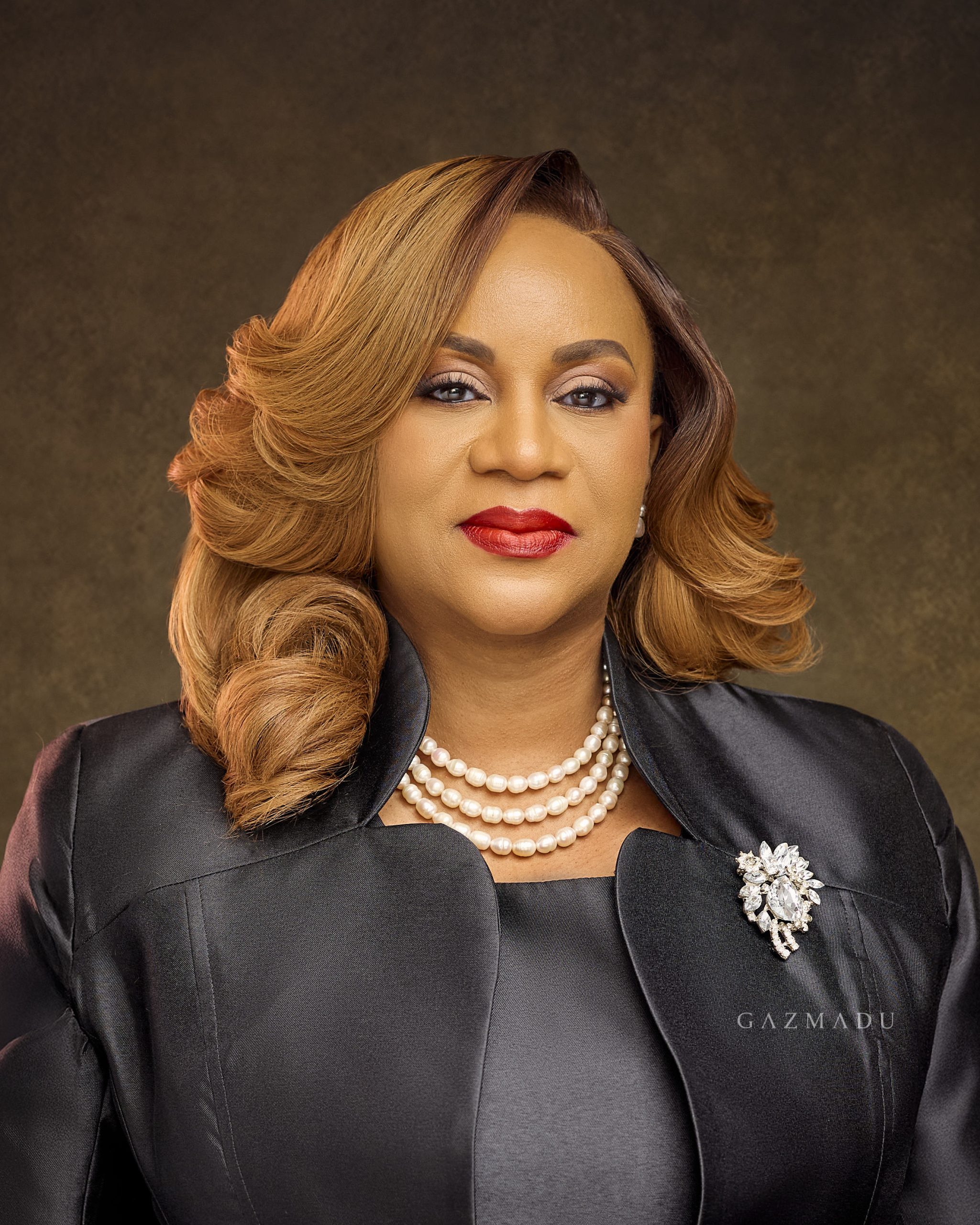
Top strategic CEO's of Nigeria's most transformative companies in 2025 In Wakanow, we focus on customers, their satisfaction, says Group CEO, Adedeji The rich and intriguing story of Wakanow Group will not be complete without the inspiring story of its Group Chief Executive Officer (CEO), popularly known as Bayo "Lion" Adedeji. This is because the enviable results by the company are largely attributable to Mr Adedeji, a result-driven leader renowned for steering transformative turnarounds and scaling businesses across Africa and the United States. He joined Wakanow in 2019 at a defining moment during COVID 19, initially as Chief Commercial Officer and Head of Transformation, and within six months was appointed CEO, charged with revitalising one of Africa's most recognised travel-tech brands. Under his leadership, Wakanow achieved its first monthly profit by late 2019 and secured full-year profitability in 2021, defying the global turbulence of COVID-19. In 2023, Adedeji oversaw Wakanow's restructuring into a group entity, positioning it for continental and global growth. The company regained its No 1 position in Nigeria while expanding its operations to the UAE, US, Sierra Leone, Gambia, the UK, Côte d'Ivoire, Benin Republic, and Liberia. By 2024, Wakanow had entered East Africa: Kenya, Uganda, Rwanda, and Tanzania, democratising access to travel technology across the continent. Under Adedeji's leadership, Wakanow has consistently redefined the customer experience through a suite of forward-thinking, technology-driven solutions. He pioneered a catalogue of innovations as enumerated in the interview, below, with The Guardian. As the GCEO of Wakanow, what is the long-term vision driving your company transformation amid changing travel and tourism landscape? As the group CEO, I look at the business across the world, and Nigeria remains our biggest market. We've seen the ups and downs from the years of taking the business over during the outbreak of COVID in 2019 to the years of boom in 21, 22, 23, to the year of devaluation to now. We've seen the entire ecosystem move across all the spectrums that you can think about. I say that so far in my time at Wakanow, which is about seven years now, I have seen the full spectrum of all the force majeure and the things that naturally can happen and I say that Nigeria is one of the most resilient markets in the world. Resilient in the sense that the Nigerians travel, irrespective of the economy. What strategy has helped Wakanow to stay resilient and competitive in a fast-changing environment, especially with rising competition? If you ever listened to any of my past speeches, I worry only about the customer, I don't worry about competition because competition only makes us better. So, I welcome every competitor, I welcome them with open arms. Instead of competition, we are pre-occupied with how to give value to the customer. I remember when I came into the market in 2019, I remember my first couple of days, I was told we had closed by past seven. I was like, "We had closed? I don't understand". I started looking around, everybody had gone home, and our call centre was down, and I said how can we close. I later found out that there was no travel agency in the whole of Nigeria that opens 24/7. I remember changing that. I said our customer leaves work at five or six, and that is when they would start planning their trips. I said if we must plan with them, we can't be closing now. I remember we first extended to 12, and I think a week later, we extended to 24/7, and now the entire market has responded to that. I think that's the position of innovation, as the market changes, as consumer behaviour changes, as the consumer does things differently, as the market condition changes and disruption comes into play, our ability to innovate on behalf of the customer, our ability to think ahead of the customer, our ability to anticipate the customer's need, to delight the customer better than the competition, better than even the disruption. We don't watch competition, we don't spend too much time understanding the competition, we spend time understanding the customer and innovating on behalf of the customer and that's why Wakanow stands tall. Wakanow operates at the crossroads of travel and technology. How is digital innovation influencing your customer experience and operational efficiency? We sit on that curve where we listen to so many customers demand: I want to travel, how do I get the ticket, how do I get my hotel, how do I get my visa, we sit on that middle curve and that middle curve is super important and is a critical element of what drives Wakanow as an OTA in the whole of Africa. OTA means Online Travel Agency, and being an online travel agency means that number one, transparency is the bedrock of our business and transparency means that I can't hide my price from competition; everybody can go online and see my price, and that's one of the things that allows us to understand that element. Now, I go back to your question. We take everything, we take experience, we take technology, we take travel, we take the customer into decision-making to drive innovation. We balance technology with efficiency. We measure that if humans can do the job that technology can do for a cheaper price, we go with humans. If technology can do the job cheaper and faster and scalability is also a point that we look at, then we go with technology. What measurable impact has Wakanow achieved in broadening access to travel services for individuals, corporations and the wider local markets? The entire travel of Africa is half the size of Spain. The entire travel in terms of segments or flights is half the travel of Spain. I'm talking of Africa, not just Nigeria, the whole of Africa, and if we think like that, that we are smaller than one country from a travel standpoint, we can continue to fight within ourselves as travel agents and online travel agents on market share, but we are just moving money from one party to the other without thinking about customer growth. Wakanow transcended that battle a while back where we stopped to think about just taking more share in the market because if we're taking more share when there's only two people available to fly, the maximum we can ever get to is two. We think about how do we expand the market, and how to expand the market in Africa is through visas. Ease of getting visa is number one critical element of getting people to travel more. So what we do is create programmes that help people acquire visas. We actually even go out and do deals with countries to provide visa services to travellers. That's one way we expand. Then in addition to that, we have a programme called Pay Small Small. We help you get the visa, you buy the package, but you can pay according to what you can afford over time. The way Pay Small Small works is that you pay before you travel, so you can plan your travel in the future. In a tough economic climate, how do you balance your cost pressure, service quality, and sustainable growth? Service is a non-negotiable for us. As you can see, our number one leadership principle is 'customer-focused'. For us, we cannot negotiate service. If there is economic pressure, that means that demand will drop, that means that I have fewer customers, that means that I don't need as many people as I have today, that means that I probably can't scale back on some of the technology that I have for scaling. Those are the things that we touch before we touch the customer experience. We are adamantly reluctant to touch anything that impacts negatively on customer experience. The customer is the reason why our business exists. So we never balance and not take care of the customer. Your staff have roles to play. How do you drive your vision down to your staff to make them effective marketers? Culture is derived from the head. Everybody in this organisation knows that if a customer finds a way to message any of our leadership, it's an immediate escalation. You see, it starts to send a signal to everyone. I believe in bottom-up, and I believe in top-down; I believe that that's how a company works. And I believe in culture. You know, one of the reasons to get fired immediately is to be rude to a customer at Wakanow. If we listen to your call and we hear you shout at a customer, you will lose your job immediately. There is no reason why you should shout at a customer. Also, we treat our workers well. We think how, as an organisation, can we help our employees live better? We have staff buses that drive far. We go as far as Ikorodu to go pick people up. Now, what happens when they get in the bus? Some of them sleep. Some of them take a nap. Some of them get on their laptops and work. Some of them catch up with work. Some of them catch up with friends on social. Some of them at least have a relaxing time. So, by the time they drive that two-hour drive to come to work, you have saved them two hours of stress. Partnership is a very critical thing when it comes to travel ecosystem. How has collaboration with others strengthened Wakanow's market position? Partnership is the new gold. If you want to win, you have to go with people, and partnership is one of our bedrocks. The reason why I was late for this interview was, I was talking with partners, an EV partner just came in to talk about electric vehicles, and how we can use electric vehicles to reduce emissions, and also transport passengers from the airport, transport passengers if they want to go out of town, and we're having that negotiation. Before that, I had a meeting with a GDS (Global Distribution System) partner, who came to discuss how we can partner to grow the market, how we can make strategic investments across West Africa to make increased business. Partnership is the new gold, and in our business, travel is one of the longest tailed businesses that you can ever find. How has your personal leadership philosophy shaped Wakanow's culture, adaptability, and long-term sustainability? I always wish that question goes to the people that work with me, and not to me directly about my leadership philosophy. My leadership philosophy stems from my experience. Of course, my personal life too. I worked for Walmart, I worked for PetSmart, I worked for Amazon. I was a retail guy. Retail was what I spent most of my career doing, whether from a finance standpoint, from a product development standpoint, or from a product management standpoint, or category management, or modular development. What I know in retail is that the customer is number one, and that's why Wakanow is here. What I learned from Amazon is urgency. It's urgency in time. It's one of our leadership principles. Like speed. You need to be able to go to market fast, not slow. My leadership style is hands-on. I am very hands-on. I am in the business, I am looking at what's going on, I'm having discussions with people. I'm having one-on-one discussions. I travel to Ghana, to Liberia, to Sierra Leone to sit down with our business teams. I celebrate our business teams. I spend time with them, I get into strategy meetings with them, and it shows the counterparty that I care about the customer. As a CEO recognised for transformative leadership, what key lessons from your journey would you share with emerging leaders, including technology-driven companies in Nigeria? You can't transform what you don't know. And nobody has monopoly of knowledge. And oftentimes, I see leaders that get arrogant in position without understanding every single thing that happens in their business. When I took over this business, I remember spending a lot of time with our ticketers. People used to wonder why I used to just sit with them. I had on my calendar to spend an hour or two hours a day with them to understand the ticketing process, to understand how they do what they do. Everybody in this business I've at one time sat down with to informally learn from. For you to make decisions and be a good leader, your ability to take lessons, learn, there are always new ways to do things. Based on your retailing background, do you think sales people make better leaders? I think that every leader needs to be a salesman. You are the number one salesman of your enterprise. You can't hire a salesman to sell better than you. And I go back to what I said about knowledge. The more knowledge you have about your business, it's easy for you to sit across the table from someone and educate them about your business. Source: https://guardian.ng/news/top-strategic-ceos-of-nigerias-most-transformative-companies-in-2025-20/
Leave a Reply
Your email address will not be published. Required fields are marked *