
Why Nigerians must vote out Tinubu, APC and enthrone true democrats in 2027 - Atsar
- Super Admin
- 08 Mar, 2026

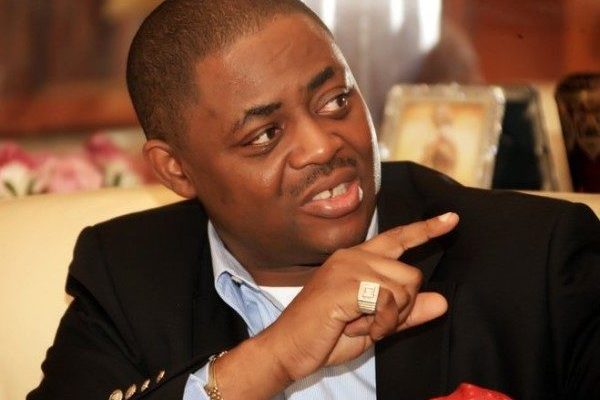
Ahead of 2027 general election, a Chieftain of the African Democratic Congress (ADC) and 2027 Ushongo/Kwande Federal Constituency hopeful, Terver Shirsha Atsar, has reminded Nigerians not to make a mistake again but to vote out shenanigan civilian dictatorship of the All Progressives Congress (APC)-led federal government under President Bola Ahmed Tinubu, and enthrone true democrats who are committed to principled politics, grassroots development, and accountable leadership. Atsar, a Chemical engineer, a safety and environment expert, a grassroots politician, and a good governance advocate, hails from Kwande/Ushongo Federal Constituency of Benue State. He has been actively involved in progressive politics with a strong commitment to accountability, internal democracy, and people-centered governance. He has worked across party structures, mobilised at community levels, and consistently speaks against political opportunism and anti-people policies. In an exclusive interview with AKOMBO AONDONA, the former PDP 2023 governorship aspirant in Benue State said his style of politics was based on convictions and not convenience. Excerpts: Kindly conduct us through your political trajectories? My political engagement has always been driven by conviction, not convenience. As you are aware, I contested for the of Benue State in 2023 but was not favoured by the zoning arrangement of my then party, the PDP, so I stepped aside. After the elections, the PDP became entangled in an endless war of attrition and internal disagreements that did irreparable damage to the image, integrity, and foundation of the party. Some of us who are not wired for this type of political acrimony had to look for a political alternative to continue our political journey. So, I am now a key player in the nurturing and growth of the coalition under the ADC. Despite obstacles put in our way by the APC government, we have built a formidable structure within a very short time to confront the monstrous behemoth that the APC has become. My focus remains on strengthening democratic alternatives and building a credible political platform that truly represents the aspirations of the Benue people. Any political ambition ahead of the 2027 poll or you are still in the Benue State governorship race as you did in 2023? Politics is about service, not mere ambition. As you know, I participated in the 2023 Benue State governorship process because I believed -- and still believe -- that our state deserves visionary, competent, and inclusive leadership. This conviction is intact, and I still want to be given the opportunity to steer the ship of the state in the future. However, timing is key in everything we do. Even the Bible says that the vision is for an appointed time. Though it may tarry, I will wait for it. Therefore, when the people and the political climate align, I will not shy away from contesting again. Now, regarding 2027, I have turned my energy and consultations to the Kwande/Ushongo Federal Constituency seat in the National Assembly. There are ongoing consultations with stakeholders and supporters. So far, the yearning of my people across party lines is that I should represent them in the Green Chamber next year. I have taken a long time to contemplate this call, and it has dawned on me that the glaring lack of adequate representation and visibility of my constituency needs to be urgently addressed if my people are to come out of the woods where they have receded over the past 40 years. I am ready for the task. Why are you aspiring to represent Ushongo/Kwande Federal Constituency in the National Assembly? My aspiration has always been driven by three core concerns: persistent underdevelopment in Benue and my community despite enormous human and agricultural potential; weak institutional capacity and policy inconsistency; and the urgent need for a generational leadership shift anchored on competence, transparency, and inclusiveness. My people must move from politics of survival to politics of structured development. My constituency is too blessed to be grappling with poverty and insecurity. Our situation is artificial, and this must change so my people can live happily and prosperously in their ancestral land. This is my vision. This is my creed. Is it true that Governor Hyacinth Alia of Benue State together with former Benue State governor, Gabriel Suswam, are reportedly working towards collapsing their APC fractured structure into ADC? I don't know. I am not in a position to confirm or deny this widely circulating rumour. But let me be clear: every political party wants more members to join it. So, if Governor Hyacinth Alia and former Governor Gabriel Suswam decide to come to the ADC, the party would not drive them away. However, I must also sound a note of warning: the ADC is not a political rehabilitation centre nor an IDP camp for Politically Displaced People (PDP) and fractured political structures. It is not a dumping ground for political liabilities and crisis promoters. It is a political party with its own ideology and internal mechanisms. So, anyone coming to the ADC should not attempt to import factional crises from other parties into it. As long as anyone is willing to abide by the rules and internal party mechanisms, they are welcome. Do you have an intention of joining APC considering gale of defections rocking the opposition parties? No. I lost hope in the APC during Buhari's first term. Tinubu has taken bad governance to an even higher level, yet he wants Nigeria to become a one-party state. People like me do not subscribe to civilian dictatorship. We believe Nigerians should be allowed to choose their leaders and not be coerced into one man's inordinate ambition camouflaged as "hope." The All Progressives Congress currently represents a political direction I fundamentally disagree with in terms of economic hardship management, democratic space contraction, and governance priorities. The APC has reduced governance to tokenism. Even corruption has been corrupted such that when you move over to the APC, your sins are automatically washed away. Assess the level of opposition politics in Nigeria? Opposition politics in Nigeria is currently very weak, fragmented, and personality-driven rather than ideology-driven. Many parties lack institutional depth. However, opposition remains critical for the survival of democracy. Without strong opposition, accountability suffers and governance declines. The challenge is not merely defeating the ruling party; it is building credible, policy-based alternatives. What can you say about the Nigerian political environment since 1999 to date? Ans: This question is rather tricky. While it would be unfair to dismiss the democratic baby steps Nigeria has taken since 1999, one cannot sincerely say we have made progress in the right direction. On the positive side, since 1999, Nigeria has maintained uninterrupted civilian rule -- that is a major democratic milestone. There has been institutional continuity and electoral reforms over time (even though half-hearted). On the negative side, we have weak party ideology. The parties are further weakened by the ruling party's deliberate efforts to muzzle the opposition in order to maintain a stranglehold on power. Another problem is the monetization of votes and other electoral malpractices, as well as internal party imposition, leading to rising voter apathy due to distrust. Several economic mismanagement cycles have made some people question the value of democracy. The separation of powers is largely lacking. Hence, the National Assembly has continued to be perceived as an ineffective institution known for a bloated cost of governance, with little or no checks and balances on executive power. So, I can say democracy has only survived as a utopian fantasy in our heads, but it has not yet matured into developmental democracy. Your view on the gale of opposition figures' defections into APC? The migration of opposition figures into the APC reflects a crisis of conviction in Nigerian politics. Many defections are not ideology-based but survival-based. A democracy where politicians frequently change parties without ideological justification weakens public trust. Political realignment is normal, but it must be driven by principle -- not proximity to power or an escape route from accountability. Any other political views you deem fit Nigerians should know ahead of the 2027 general election? Ahead of 2027, Nigeria must confront key issues: Electoral integrity. It is quite unfortunate that the National Assembly shied away from taking the bull by the horns and giving us mandatory electronic transfer of election results. It is shameful that these people do not care about leaving any legacy for future generations. Some of them are very close to their graves yet have not outgrown the fear of telling the truth. It is a shame. The youth must fight for political inclusion beyond tokenism and thuggery. Fiscal federalism should be implemented. Let the Local Government Areas receive their allocations and be accountable for the money. It is very ironic that Tinubu, who wasted no time in removing subsidy, is now unable to implement local government autonomy even after the Supreme Court ruled in favor of autonomy. You see the hypocrisy? In Benue, agricultural industrialisation is key to our economic emancipation. We must also improve security through reforms rooted in local intelligence and economic empowerment of our youth. Source: https://businessday.ng/life/article/why-nigerians-must-vote-out-tinubu-apc-and-enthrone-true-democrats-in-2027-atsar/
Leave a Reply
Your email address will not be published. Required fields are marked *