
Lagos APC and 2027 battle - The Nation Newspaper
- Super Admin
- 07 Mar, 2026

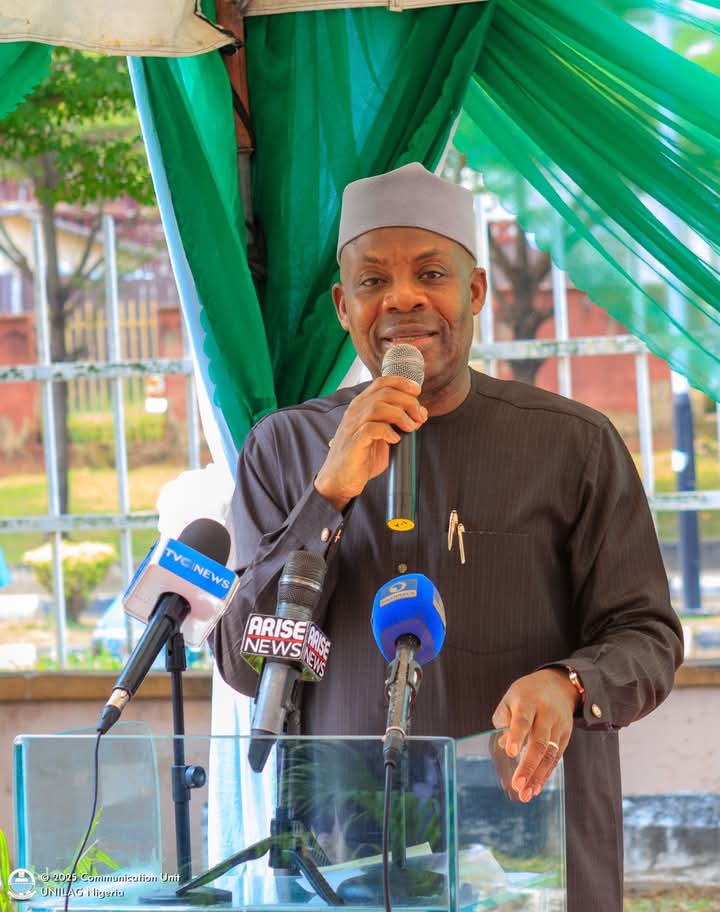
Three years ago, the All Progressives Congress (APC) slept on guard in Lagos State. Its foes succeeded largely in pulling the rug off its feet. In that historical 2023 presidential election, poll-confident Asiwaju Bola Ahmed Tinubu lost for the first time in his base, the stronghold of the progressive bloc. It was a major event, and indeed, an electoral disaster attributed to the leader's absence from home for the first time since he entered party politics in the aborted Third Republic. References would always be made to the lapses and negligence by his Lagos disciples in history books. The lessons are clear and instructive: the law of political behaviour cannot be easily formulated; rivals should not be underrated; over-confidence can spell doom; eternal vigilance remains the price of liberty, and should always be the watchword; no stone should be left unturned in the quest for resounding victory, and power, as the Commander-in-Chief often reminds all and sundry, is never served a la carte. The tragedy hit the chapter at a time the leader was on the ballot and other states expected Lagos to lead by example by polling the highest number of votes for the ruling party. However, in a twinkle of an eye, the chapter recovered lost grounds and forged ahead with confidence. Eyes are on the party leadership, as Lagos APC Chairman Cornelius Ojelabi and other members of the state executive committee begin a fresh tenure at the party's secretariat. Re-elected by consensus at the state congress five days ago, Ojelabi faces some challenges that are not insurmountable. He presides over a large chapter, and the bigger the party, the bigger the headache. Conscious of the tasks ahead, he has called for unity, sacrifice and team spirit in the fold while pledging his commitment towards strengthening the party and deepening internal democracy. He urged party faithful to eschew all forms of bitterness, oppression and rivalry. Generally, others who are also in a position to think for the party are beyond the state executive committee of the party. What is required is synergy, understanding of the mode of operation and strategy, the mechanism for sustaining inclusion and conflict resolution. The Lagos APC and the 58 governments it has midwifed - one state government, 20 local governments, and 37 local council development authorities - should study the changing times. The characteristics of the evolving society requiring in-depth study, comprehension and adaptation are: the changing demography, the factors of ethnicity and religion, which were previously ignored in the Southwest, and the elite hate, rivalry, jealousy, conspiracy and sometimes aloofness. Others include voting fatigue among the electorate in the cosmopolitan setting, the increasing agitation for improved women's involvement, the general tension unleashed by participation crisis, the quest for good governance, the clamour for internal democracy and the dynamics of youth mobilisation. Novel electoral behaviours may not necessarily be a response to governmental performance if other intervening factors are considered. Between 1999 and 2023, the ruling party had produced committed, competent and experienced governors who, driven by the 24-year development plan, worked hard to develop the Centre of Excellence. The foundation of the success recorded was laid by Asiwaju Tinubu. He groomed his successors for leadership. Hugely popular among Lagosians, he was particularly loved by the masses who were the beneficiaries of the welfarist policies and programmes of his administration and his successors. This is why Lagos has been attractive to non-indigenes who have made it big in the state. Many among such people have continued to bring in their kit and kin to feed from the state's huge soup pot. Curiously, some attempted to sneak into the kitchen to steal the pot. In 2006/2007, the Jagaban Borgu forfeited his senatorial bid to enable him personally take charge and concentrate solely on the campaigns that led to the victory of his successor, Babatunde Fashola (SAN). Also, in 2015 and 2019, there were no hitches in Lagos, although there were early signs of voting decline. Taking a cue from 2023, the slippery nature of the political field should not be ignored in the party's calculations ahead of 2027. Challenges should be better and realistically anticipated. Charity ought to begin at home at a time when other state chapters are also showing enthusiasm about the President's re-election bid. Even when victory is certain, the margin should not be too close; it should be very wide. The current hurdle contrasted sharply with the 1999 challenge when the last set of Awoists in Afenifere dictated the tune. Ideological politics had not faded, and the presence of gerontocrats rekindled the memory of the Awolowo days. Mobilisation was easier in the region and victory was assured, at least, across the six states, until the feats were mismanaged by the gerontocrats who could not put the house in order. While five governors were down, the only governor, Tinubu of Lagos, who was rejected, survived and became the cornerstone in the region. In-post Bola Ige era, the former Lagos governor gave serious thought to structure, which he built into a vital and formidable electoral machine, built networks and bridges beyond the Southwest, championed the rescue mission in the zone, part of the old Midwest and the Northcentral, and consummated the understanding between the populous South on the agreed notion of power rotation and zoning. He was the indefatigable opposition leader who motivated the fusion or merger of legacy parties in the APC and led his compatriots from the six geo-political zones to deliver victory to President Muhammadu Buhari in 2015 and 2019. But as he worked assiduously to gain federal power at the centre in 2023, his base, Lagos, suffered a semblance of a father's absence and a curious vacuum when he was busy outside. Commentators in hushed tones insinuated a manifestation of a somewhat succession gap, which should be addressed with the passage of time. Two critical issues are being settled ahead of the polls. President Tinubu is delivering on his promises to the country across the sectors to the joy of many Nigerians. The governor of Lagos, who would be winding up, is not resting on his oars. The ongoing people-oriented projects should be completed to sustain the existing perception about performance and good governance. What is more vital is for the ruling party to focus well, campaign vigorously, persuade more and convince the heterogeneous Lagos deeply about what President Tinubu's second term means for national development. The journey has begun from the party. But how did the party membership registration go? How impressive was the registration across the 20 pre-existing councils and five divisions? The clear picture of greater commitment by wholly indigenous local governments is glaring, inspiring, and reassuring. It is a pointer to zeal and readiness. It is also a sign that more concerted mobilisation efforts are required across the board. The Lagos APC should design a better way of managing the inevitable tensions ignited by nomination battles, particularly during the scramble for state and federal parliamentary tickets. There are usually many chieftains chasing a few slots. Currently, the appointment of secretaries to local government, supervisory councillors and other aides has elicited criticisms by those left in the cold. Even, there were silent protests over the recent congresses. Conflict is an important element of politicking. The onus is on party elders to broker reconciliation and ensure peace in the party. In a complex and plural society, targeting voters requires special skills honed by party leaders; research-based and adaptable. This is because in a mixed society, political behaviour could be influenced by attitudes, beliefs, and values that are deeply personal on one hand and collective on the other. These beliefs and values could also change from person to person. Also, political actions are not always driven by rational or self-interested behaviour because individuals could be swayed by unpredictable psychological, social and cultural reasons. The factor of ethnicity makes the management of diversity more compelling. Yet, it is indisputable that while Lagos has fostered an inclusive environment by implementing policies that promote equity and a sense of belonging across cultures, a certain non-Yoruba ethnic group is perpetually unwilling, due to long-standing tribal consciousness, to reciprocate the glaring gesture of accommodation and integration in metropolitan Lagos. More efforts should be made to court them, even as the adequate mobilisation of the indigenous population is capable of balancing any potential shortfall. Closely related to ethnicity is religion, which was grossly exploited but which has now become a weak factor as the labelled Muslim/Muslim ticket has served Nigeria without discrimination against Muslims and Christians. The exploitation of religion may be repeated in a bid to fuel some sentiments. But the effect may not be as strong as it was in 2023. The state/church/mosque relation is cordial in Lagos. This atmosphere of religious tolerance and unity should always be sustained for peaceful coexistence. There should be an innovative way of courting the elite of Eti-Osa, Victoria Island, and Ikoyi, whose argumentative opinion, objective and subjective analyses and publicised disposition to the political milieu could sometimes be influential on the limited voting population in the axis. Also, more youths should be targeted and recruited as bona fide party members, baptised into the ideas and ethos of the party. They need to be groomed for mobilisation and leadership. Grassroots structures of the party, particularly the local government administrations should work harder by implementing laudable developmental projects dictated by need analysis. Chairman Ojelabi has unfolded a training programme for the categorías of state and local party leaders. It is a right step in the right direction. The purpose is education, which translates into a change in behaviour so that, as he put it, there would be no business as usual. A party is a conglomerate of people, ideas, and ideals. APC stalwarts in Lagos should widen their scope as the dynamics become more taxing. Lagos has always been a progressive state. It is sheer hard work that has sustained its political legacy. No stone should be left unturned to remain on this glorious path. One success requires more work to sustain. Success comes to those who plan better in the race for power. Source: https://thenationonlineng.net/lagos-apc-and-2027-battle/
Leave a Reply
Your email address will not be published. Required fields are marked *