
Escalating Middle East Conflflict Triggers Global Security Alert
- Super Admin
- 07 Mar, 2026

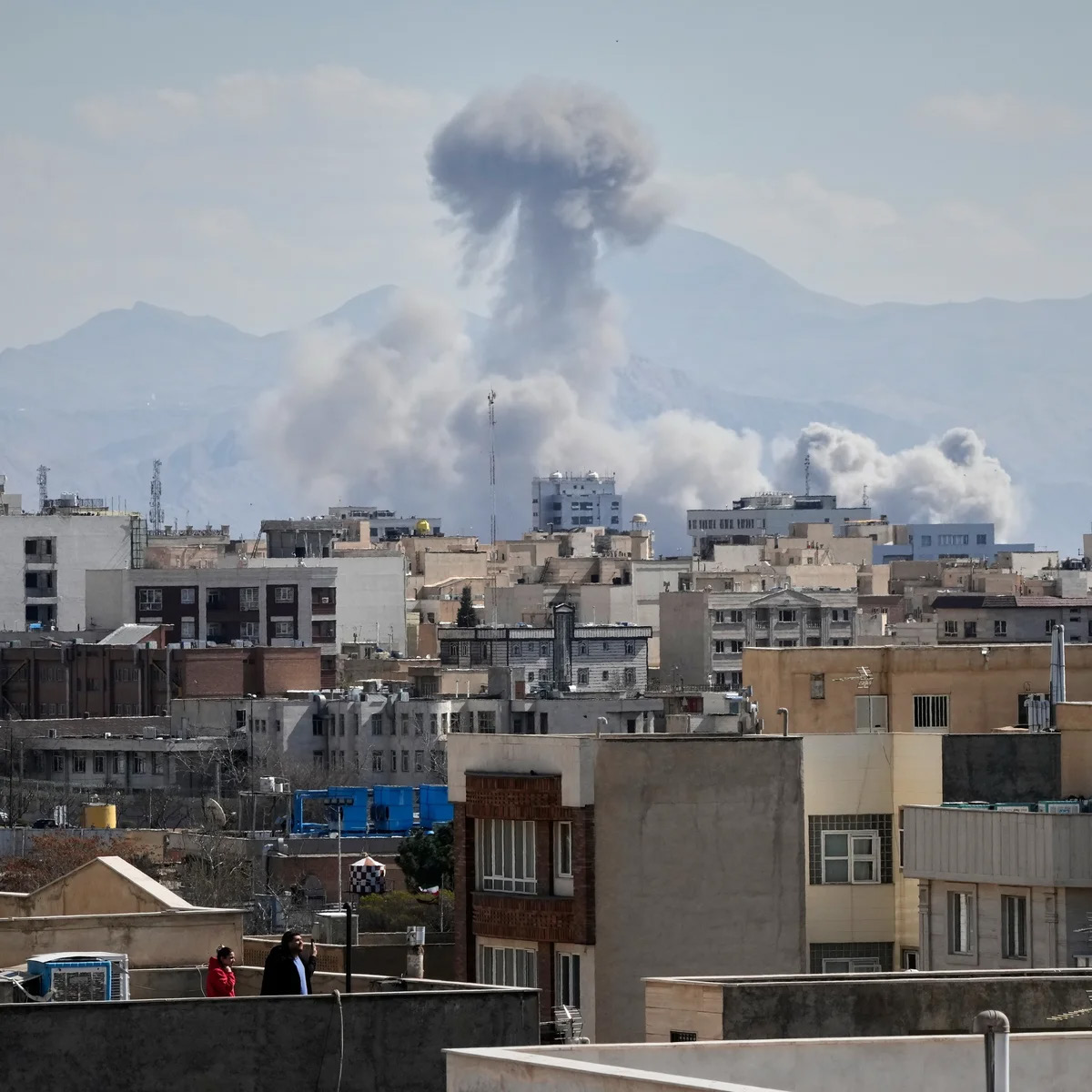
LAGOS - In the past several days, the simmering conflict in the Middle East has sharply escalated into one of the most volatile security crises seen in recent years. What began with targeted strikes on key military and strategic installations has quickly drawn in multiple state actors, prompting a series of cross-border retaliatory attacks and raising grave concerns among global security analysts. The expanding conflict, involving ballistic missile exchanges, drone barrages, air defence engagements, and growing civilian casualties, has put entire regions on edge and underscored how interconnected modern security threats have become. Capitals across Africa, Europe, and Asia are monitoring every development, not just because of the humanitarian toll, but because of the potential for this regional war to trigger far-reaching geopolitical and security consequences. While much of the world's attention is focused on missile launches in the Gulf and fortified air defence networks scrambling to intercept incoming threats, intelligence and security agencies in West Africa are quietly reassessing the implications of heightened global instability. For countries like Nigeria and Niger, already grappling with entrenched internal conflicts and fragile security ecosystems, the specter of a wider international crisis introduces new risks and complicates an already precarious landscape. The opening days of this escalation saw coordinated military operations strike several strategic targets belonging to one of the Middle East's key military powers. This triggered a rapid chain of retaliatory actions and counter-strikes involving allied forces and proxy networks across the region. Both state and non-state actors have engaged in ballistic missile launches, unmanned aerial vehicle attacks, and defensive intercept operations that have extended beyond traditional conflict zones. Several Gulf states have reported interceptions of long-range missiles and drones over major urban centres and military facilities, resulting in infrastructure damage and civilian casualties. Residents in several cities were forced into shelters as air defence systems engaged incoming threats, while emergency services scrambled to respond to explosions in residential and commercial areas. These developments mark a departure from the more localised conflicts of recent years and signal the potential onset of a broader regional confrontation with unpredictable trajectories. Global powers with strategic interests in the Middle East have issued mixed responses, ranging from diplomatic warnings to military posture adjustments. Some nations have moved naval assets into disputed waters, while others have increased aerial surveillance or placed defence systems on heightened alert. The United Nations and a consortium of regional diplomatic entities have called for restraint, but as the number of engagements grows, the risk of miscalculation and unintended escalation looms large. At first glance, the conflict may appear geographically distant and unconnected to security issues in Africa. However, analysts warn that the dynamics of modern warfare, which include proxy alignments, arms proliferation, and ideological contagion, mean that high-intensity conflict in one region can ripple outward in unexpected ways. Disruption of global supply chains, particularly in energy and commodity markets, could drive price volatility, strain national budgets, and indirectly fuel political tensions in countries with fragile economies. The potential for proxy influence and external actors seeking footholds beyond immediate theaters of conflict adds another layer of complexity, as conflict zones often attract transnational militant groups, financial networks, and weapons traffickers who exploit instability to expand their reach. West African states already face complex security challenges, including insurgency, ethno-communal violence, organised crime, and porous border vulnerabilities. Nigeria, the region's most populous nation and a key contributor to regional security frameworks, finds itself at a potential crossroads where internal and external pressures converge. Its internal security environment has been shaped over the past decade by a series of multifaceted challenges that test both state capacity and institutional resilience. In the northeast, militancy led by jihadist networks continues to destabilise communities around the Lake Chad Basin. Boko Haram and the Islamic State West Africa Province have conducted mass attacks, kidnappings, and ambushes, forcing thousands of families from their homes and compelling ongoing counter-insurgency operations by Nigerian and multinational forces. In the northwest, organised criminal networks have carried out raids on villages, school kidnappings, and cattle rustling, resulting in significant loss of lives and deep insecurity in rural districts. The Middle Belt region is frequently rocked by clashes between farming and pastoralist groups, often framed along communal or ethnic identities but rooted deeply in competition for land, water, and economic survival. The Southeast has recently seen a resurgence of unrest linked to the Indigenous People of Biafra and its militia affiliate, the Eastern Security Network. Once largely associated with political agitation for secession, some elements of the movement have reportedly shifted toward more violent tactics, including attacks on police facilities, enforcement of shutdown orders, and clashes with federal security forces. The cumulative effect of these simultaneous conflicts is a staggering demand on Nigeria's security apparatus. Resources including personnel, logistics, intelligence capabilities, and budgetary allocations are stretched thin. Decision-makers face the unenviable task of prioritising where military pressure is most urgently needed without creating exploitable vacuums elsewhere. Nigeria's strategic role in West African security extends beyond its borders. It is a leading contributor to regional peacekeeping and counter-terrorism initiatives, most notably the Multinational Joint Task Force. This coalition, comprising Nigeria, Niger, Chad, Cameroon, and Benin, has been at the forefront of operations against jihadist groups in the Lake Chad Basin. Should Nigeria's internal security burdens intensify, analysts warn that resources devoted to international collaborative efforts could be diminished, which has direct implications for Niger, sharing a long border with northern Nigeria and confronting its own security vulnerabilities. Niger's security environment is shaped by threats from multiple directions, including insurgency spillover from Mali and Burkina Faso, cross-border raids, smuggling networks, and the proliferation of light weapons. Its landlocked position and limited infrastructure make it dependent on external partners for military coordination and logistical support. A diminished Nigerian role in joint operations risks creating operational gaps along shared borders. In a region where militant groups are adept at exploiting weak governance zones, such gaps can translate into emboldened terrorist networks, increased cross-border incursions, and expanded criminal activity. One of the central lessons of contemporary international security is that local conflicts can have global repercussions. Conflicts in one region can attract transnational fighters, catalyse refugee flows, and draw in competing external powers, with effects that reverberate far beyond the initial theatre. Similarly, analysts warn that an intensifying Middle East war, if prolonged or expanded, could strain resources and diplomatic capitals in ways that diminish the global community's capacity to address other hotspots. For West Africa, where fragile states grapple with intersecting security threats, this could mean reduced prioritisation, slower response times from international partners, and increased vulnerability to transnational networks seeking to exploit disorder. Nigeria's influence as a major economic power and diplomatic leader in West Africa means that its internal stability is closely tied to regional confidence. A perception that Nigeria is preoccupied or constrained could embolden separatist or extremist elements, complicate mediation efforts, and undermine collective security frameworks that have, to date, shown resilience in the face of adversity. Beyond kinetic military developments, modern conflicts are fought on the terrain of information and perception. Social media platforms, international news cycles, and diaspora communities amplify narratives that shape local sentiment and political mobilisation. In Nigeria's southeastern unrest, online discourse has at times linked external political figures or foreign governments with the aspirations of separatist movements. While there is no verified evidence of direct support for secessionist causes, the circulation of such narratives influences local perceptions and can radicalise segments of the population. In the current Middle East conflict, misinformation and competing media narratives have compounded uncertainty, sown confusion, and made it harder for ordinary citizens to distinguish verified developments from speculation. Information warfare has become an integral part of contemporary conflict, affecting recruitment, morale, and public opinion long before physical battles occur. For national security planners in Nigeria and its neighbours, the current moment represents a critical juncture. The intersection of internal unrest, regional security commitments, and global instability demands a recalibration of strategy. Addressing these challenges requires comprehensive approaches integrating intelligence sharing, community engagement, legal reforms, and socioeconomic initiatives aimed at tackling the root causes of insecurity. Protecting critical infrastructure and civilian populations, while maintaining regional and international security cooperation, is central to preventing localized conflicts from cascading into wider crises. The escalating conflict in the Middle East has captured global headlines, but its implications extend far beyond the immediate theatre of war. In a world where security challenges are increasingly interconnected, distant clashes can influence local theatres in profound ways. For Nigeria and its neighbours, including Niger, the unfolding international crisis represents a potential stress test for existing security frameworks. The stability of nations like Nigeria will play a defining role in the security of entire regions. As missiles streak across desert skies and international dialogues attempt to chart a path toward de-escalation, West African security analysts and policymakers face the task of preparing for a future where local conflicts cannot be disentangled from global pressures. Nigeria's ability to manage internal tensions while fulfilling regional security commitments will be closely monitored, as its decisions may determine whether existing conflicts remain contained or evolve into broader crises affecting the Sahel corridor and beyond. Source: https://independent.ng/escalating-middle-east-conflflict-triggers-global-security-alert/
Leave a Reply
Your email address will not be published. Required fields are marked *