

Food security: FG reports major drop in food prices - Blueprint Newspapers Limited
- Super Admin
- 06 Mar, 2026

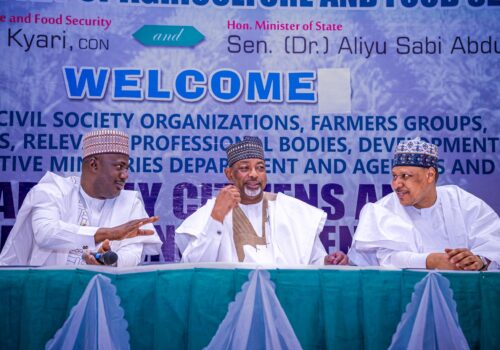
The Minister of Agriculture and Food Security, Abubakar Kyari, has said the Federal Government's renewed focus on agriculture is beginning to yield results, with food prices reportedly dropping by 50 percent across the country. The Minister made this known at a quarterly citizens stakeholder engagement session on Friday in Abuja that the administration has placed food security at the centre of its national agenda, recognising its importance in sustaining economic stability and protecting national sovereignty. According to him, the government's strategy focuses on boosting local food production and reducing dependence on imports while ensuring that Nigerians have access to affordable and nutritious food. "Our administration has made food security a top priority because of the critical role it plays in maintaining national stability and sovereignty," the minister said. "We are strengthening local production and reducing reliance on imports to ensure that affordable food is accessible to all Nigerians." He noted that the government's interventions are beginning to reflect in the cost of food commodities across the country. Kyari said, "In fact, prices of essential food commodities have dropped by 50 percent nationwide compared to previous years when prices rose beyond what many Nigerians could afford, adding that the government is working to sustain the trend by addressing high production and input costs. The minister explained that the government has also intensified efforts to develop strategic agricultural value chains in order to position Nigeria as a major player in the global agricultural market. He listed priority value chains to include rice, maize, wheat, millet, sorghum, yam, cocoa, kenaf, cowpea, cassava, soybeans, cotton, onion, tomato and oil palm. Kyari said interventions carried out between 2024 and 2025 including the distribution of improved seeds, agrochemicals, safety kits, pest and disease management packs, as well as capacity building programmes have helped strengthen productivity within the sector. "These interventions have empowered farmers to increase productivity, reduce post-harvest losses and improve the quality of their produce," he said. According to him, the initiative has also helped many smallholder farmers transition from subsistence farming to commercial agribusiness, contributing to national food security, employment generation and economic growth. Providing an overview of achievements within the last two years, Kyari disclosed that the Federal Government distributed more than 1.9 million bags of fertilizers to nearly one million farmers across the country. He added that about 12,000 litres of organic fertilizer were also supplied to promote sustainable soil management practices. The minister further revealed that the government strengthened the regulatory framework within the fertilizer industry and improved monitoring systems to ensure product quality. He said the ministry also expanded international collaborations with countries such as Russia, Turkey, India and Canada to support fertilizer production, technology transfer and agricultural innovation. As part of regulatory improvements, Kyari said 109 fertilizer inspectors were trained and equipped to monitor the sector, while over 329 stakeholders were trained on compliance with industry regulations. He added that authorities have intensified enforcement efforts to remove adulterated fertilizers from the market and prosecute offenders. Speaking, The Minister of Information and National Orientation, Mohammed Idris Malagi, said the citizens' engagement forum aligns with the policy direction of President Bola Ahmed Tinubu, which prioritises keeping Nigerians informed about government programmes while also receiving feedback from the public. Idris highlighted the government's efforts to support vulnerable groups and expand opportunities for young Nigerians. He said the Federal Ministry of Agriculture and Food Security has expanded dry-season farming initiatives, strengthened fertilizer distribution systems, promoted mechanisation and deepened partnerships with state governments and development agencies. These initiatives, he explained, are improving food supply chains and supporting farmers across the country. He added that the government's goal is not only to achieve food sufficiency but also to position Nigeria as a major exporter of agricultural commodities. Idris reaffirming the commitment of the Ministry of Information and National Orientation to ensuring that Nigerians understand the objectives and direction of government policies. Source: https://blueprint.ng/food-security-fg-reports-major-drop-in-food-prices/
Leave a Reply
Your email address will not be published. Required fields are marked *