

Yoruba 'agbo': How gbogbonise has changed the face of herbal therapies - Blueprint Newspapers Limited
- Super Admin
- 06 Mar, 2026

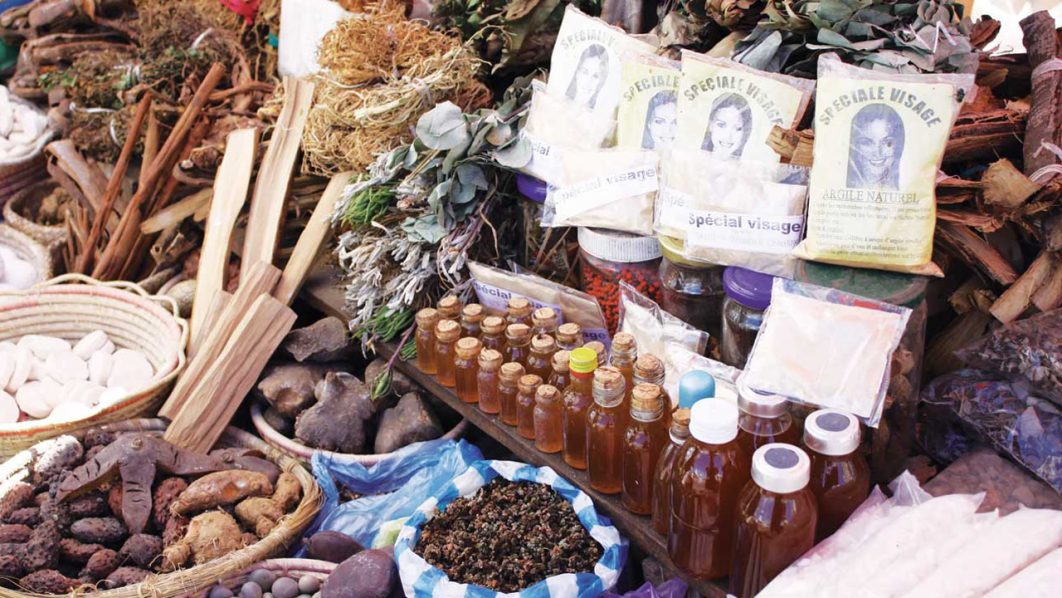
In Nigeria, it seems local herbs have come to stay despite the seeming negative campaigns against their methods of preparation and usage/dosage. This is more so as investigations have revealed that many of such herbs found on the shelves of pharmaceutical stores in major cities passed through the screening lens of regulatory authorities; BARNABAS OLABISI writes in this Special Report. Just after sunrise, the atmosphere in markets and 'joints' across major towns begins to bubble with women laying out their plastic tables. On top of these tables are rows of plastic bottles filled with dark brown liquids ready to be sold. Here, the aphorism, 'liquid content only' holds sway because the containers are still useful. Some of these bottles are sealed with old soft drink corks or caps, while others are tied in cellophanes. The liquid inside looks thick, almost mysterious, like something brewed in secrecy, but they work wonders on many ailments. Soon, a customer approaches quietly and the following conversation would ensue: He pays, uncaps one of the bottles and drinks immediately, grimacing at the bitterness. Around them, this scene repeats itself dozens of times because the place is a beehive of activities. Long before pharmacies open their doors each day, 'agbo gbogbonise' already has begun making its rounds. For many Yoruba families across South-western Nigeria, this herbal mixture is more than a medicine; it is a tradition, a memory, an inheritance passed down in bottles and recipes, often the first line of defence against illnesses; sometimes, the only one. Yet in an age of laboratories, prescriptions and clinical trials, the brew stands at a crossroads between faith and science, heritage and regulation, hope and risk. It thus raises a complicated question: How can something so old still compete with modernity? Medicine before hospitals Long before the first colonial healthcare centres emerged in Nigeria, healing therapies were a common thing, and the Yoruba race never lacked medicine. They simply defined it differently. For them, poor health was not just about germs affecting organs; it was about the balance between the body, the spirit, ancestors, and the community. Whenever someone gets ill, the cause might be physical or spiritual. Therefore, herbs for healing required more than pills; it required plants, rituals and knowledge of nature. Traditional healers known as 'oníègùn' served as pharmacists, doctors and counselors, all at once. They memorised the medicinal value of hundreds of leaves, roots and their barks. Their knowledge was not written in textbooks but etched in their brains; sometimes, carried in stories, apprenticeships and forest walks with elders. "If you followed my grandfather into the bush, he would touch a tree and tell you what it cures... be it fever, stomach pain, infection, etc. Everything had its use," recalls 69-year-old herbalist Baba Karounwi in the Itaogbolu area of Ondo state. Over the centuries, healers began to combine multiple plants into single concoctions. The logic was simple: if one herb treated fever and another fought infection, together they might treat so many illnesses at once. From this philosophy came what people now call 'gbogbonise', which literally means, 'cure for all diseases.' It was medicine designed for real life, where symptoms rarely arrive one at a time. What, therefore, is gbogbonise? There is no universal recipe. Ask five sellers of gbogbonise about what goes into their mixture. One is likely to hear about five different answers, ranging from Neem leaves, bitter leaf, Moringa lucida bark, garlic, ginger, lime, various forest roots, and tree barks. These are not random choices; they contain bioactive compounds scientists recognise today, like alkaloids, flavonoids, and tannins. These are chemicals with antimicrobial and anti-inflammatory effects. Neem, for instance, has documented antimalarial properties, bitter leaf aids digestion, and ginger reduces inflammation. In other words, components of 'gbogbonise' are not superstitious; they are pharmacologically derived from tradition, but because there is no standard measurement, each batch differs. That is why it is common to hear instructions like 'A handful of leaves here, a longer boil there, etc. One seller might add more bark, another more roots. The result is nevertheless unpredictable strength. "One bottle can be mild like tea," says a pharmacist in Akure. "Another can be so concentrated that it upsets the stomach." That is the only inconsistency that worries modern medical professionals. Why do people still chase after gbogbonise? Despite these concerns, demand remains strong. The reason is obvious: modern healthcare is now expensive. For instance, when one considers consultation fees, lab tests, drugs, etc, the costs add up quickly. For many families living on daily incomes, hospital visits are a last resort, not a first, but agbo costs little, sometimes less than the price of a loaf of bread, and can be found on every street corner. No appointment is needed, no long queues, and most importantly, it is trusted. "It works faster than tablets," says Deji, a motorcycle rider in Ado-Ekiti. "When I drink it, I sweat and feel better," he confesses. His confidence is echoed across markets and homes. People rely on personal experiences, not clinical evidence. If a remedy helped their parents and grandparents, that proof feels sufficient. In many rural communities where hospital services are far from reach, 'agbo gbogbonise' is not an alternative; it is simply the remedy. The risks nobody talks about However, behind the comfort of familiarity lie real dangers. Public health researchers have documented several concerns concerning this alternative medicine, ranging from hygiene, as some preparations are brewed in open containers, thus exposed to dust, insects, and bacteria. There is also the issue of contamination. Studies in parts of the country have found traces of heavy metals and microbes in poorly stored herbal mixtures. Also of utmost concern is the right dosage. There are no labels and no instructions. "Drink morning and night is often the only guide," says a regular customer, Rafiu. Delayed treatment Patients sometimes rely on 'agbo gbogbonise' for serious illnesses like typhoid or severe malaria, thus arriving at hospitals too late. A physician in Ibadan, Dr. Funmilayo Adeyemi describes the dilemma. "We see patients who probably have been drinking herbs for weeks. By the time they would come to us, the infection would have worsened. Sometimes, it's avoidable." She is careful not to dismiss traditional/alternative medicine entirely. "But calling anything an all-cure is dangerous. Modern medicine doesn't work that way." Science gradually paying attention Interestingly, researchers do not simply condemn gbogbonise; some are studying it. At several Nigerian universities, scientists are analysing traditional herbs in laboratories, isolating active compounds and testing their effects on bacteria and parasites. The results are mixed but promising. Some plants used in agbo show measurable antimicrobial activities, others demonstrate anti-inflammatory or antioxidant properties. Globally, many modern drugs came out from traditional remedies. For instance, Aspirin from willow bark. Quinine from tree bark. Artemisinin from Chinese herbal medicine. So, researchers ask, "Could African herbs offer similar breakthroughs?" However, a pharmacognosy lecturer said, "The knowledge is there. What we lack is standardisation and funding." The challenge is transforming an oral, flexible tradition into a measurable scientific product without stripping it of its cultural roots. Dr. Olusola Akinyemi, a pharmacognosist, for instance, lifts a small vial filled with greenish extract. "This," he says, "came from bitter leaf." He placed a drop onto a culture plate containing bacteria. "If the bacteria stop growing, we know the plant has antimicrobial properties." For years, researchers like him have been quietly studying plants commonly used in Yoruba herbal medicine. Their goal is not to disprove traditional practices but to understand them scientifically. "When people say herbs don't work, that's not correct," he explains. "Many drugs we use today came from plants. The difference is dosage and testing." He gestures toward shelves lined with dried leaves and powdered bark samples. "The problem with something like gbogbonise isn't that it's useless. The problem is that it's uncontrolled." In other words, the science may already be there, but the system isn't. According to him, some plant extracts used in agbo have shown antibacterial effects, antimalarial activities, anti-inflammatory properties and immune support, but when 10 different plants are boiled together without measurement, it becomes difficult to know which ingredient is helping or harmful. "You cannot prescribe what you cannot quantify," he said. Still, he believes traditional knowledge holds enormous potential. "We shouldn't throw it away. Rather, we should refine it." More than Chemistry It is believed that focusing only on laboratory results misses something essential. That is because gbogbonise is not just about chemicals; it is about identity. For many Yoruba people, preparing herbs connects them to their ancestors. Grandmothers teach daughters. Fathers pass knowledge to sons. The act itself carries meaning. Some healers pray or chant during preparations, believing that spiritual intention strengthens the medicine. "Whether Science accepts this or not, belief influences healing," says a pharmacist, Ayo Adun. In some communities, it is believed that knowledge is primitive, but to others, continued usage of traditional medicine feels like reclaiming dignity. "It is ours; it belongs to us," one seller, Tinuke Ajani, said proudly. The business of herbs The herbal market is huge. From roadside vendors to large-scale producers who are bottling and branding their mixtures, agbo has become an industry. If properly regulated, experts say, it could generate jobs, support local farmers, and reduce dependence on imported drugs, but without regulation, the same market invites exploitation. Some sellers dilute mixtures to cut costs; others exaggerate claims. A few even add unknown substances to enhance color or strength. In all, consumers have little protection, and that is why many health advocates argue against a total ban, but for regulatory control. Finding a middle ground So, what is the solution? Rejecting Agbo Gbogbonise outright is unrealistic because so many people depend on it. Blind acceptance is equally risky, but the answer may lie somewhere in between. Experts, therefore, suggest the testing of common herbal ingredients, setting hygiene standards, labeling dosages, training herbal practitioners, and encouraging collaboration between scientists and traditional healers. Countries like China and India have successfully integrated traditional medicine into formal healthcare systems. Nigeria could potentially do the same. Imagine Gbogbonise capsules tested in labs, packaged safely, and sold alongside conventional drugs. It would remain culturally familiar but scientifically validated. The rise of packaged agbo Meanwhile, agbo gbogbonise itself is evolving as it is no longer exclusive to roadside sellers. In supermarkets across major cities in Nigeria, neatly labeled bottles now sit on shelves with inscriptions such as '100% Natural Herbal Cleanser', 'Detox Bitters', 'Immune Booster'. These products look more pharmaceutical than traditional, with printed labels, expiry dates, and barcodes. Some are registered with regulatory authorities like NAFDAC. This new wave of 'modernised agbo' represents an attempt to make herbal medicine safer and more marketable. For middle-class consumers wary of roadside hygiene, the packaging provides reassurance. But critics wonder whether something is lost in the transformation. "When you industrialise it, you risk turning living knowledge into just another commodity," says a cultural historian. Effects on the environment As demand for herbal medicine grows, so does harvesting. Roots are dug up in bulk, the bark is stripped from trees, and whole plants are uprooted daily to meet market needs. In some areas, certain medicinal plants are becoming harder to find. Conservationists warn that without sustainable practices, popular herbs could disappear. "You cannot keep removing roots without replanting. Eventually, the plant dies. Then what happens to the medicine?" asks Mutiu Oluwa, an environmental officer in Ekiti state. Ironically, the very success of gbogbonise may threaten its survival. If the forests vanish, so does the pharmacy nature is also threatened. To that extent, some herbal associations are now encouraging cultivation rather than wild harvesting. It is hoped to be achieved by turning medicinal plants into farm crops. Even though it is a small shift, it could protect both biodiversity and livelihoods. Between two worlds Today, many Nigerians live in two worlds at the same time. They take paracetamol for headaches and agbo for 'general cleansing and resetting'. They visit hospitals, no doubt, but still keep herbal bottles at home. They trust both science and tradition. It is not one or the other; it is both. Medical sociologists call this medical pluralism: the coexistence of multiple healing systems. In Nigeria, it is the norm. While modern medicine focuses on precision, agbo offers familiarity and cultural belonging. The phrase 'gbogbonise' may be less about literal truth and more about confidence, a linguistic shorthand for versatility. Source: https://blueprint.ng/yoruba-agbo-how-gbogbonise-has-changed-the-face-of-herbal-therapies/
Leave a Reply
Your email address will not be published. Required fields are marked *