
Sad notes on the golden jubilee of FCT - Blueprint Newspapers Limited
- Super Admin
- 06 Mar, 2026

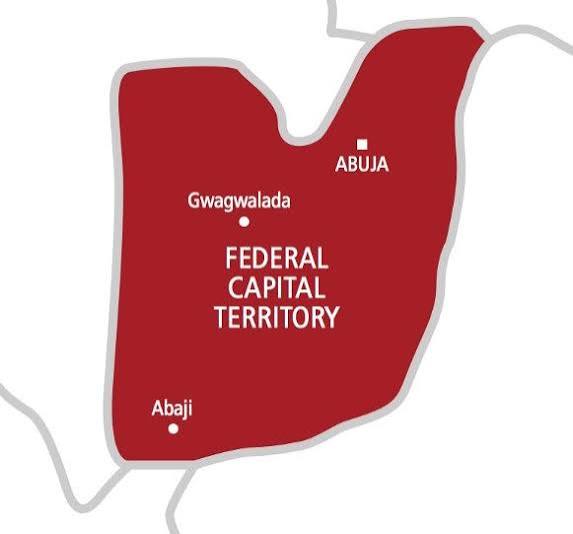
The story of Abuja assuming its present status as the Federal Capital Territory (FCT) effectively began in January, 1976, when the military regime of the late General Murtala Ramat Muhammed issued a decree on the change of the nation's seat of power from the coastal city of Lagos to a more centrally located territory in the hinterland. A seven-member panel under Justice Akinola Aguda was constituted in 1975 to look for a suitable location of the country to serve as the new capital city of the country. Out of the about 33 options examined, the panel concluded on Abuja. Besides its perception of Abuja to be at the heart of the country and, therefore, most suitable for the location of the new federal capital, the panel also took cognisance of what it considered as the sparse population of the area. Hovering over the area without undertaking the painstaking task of on the ground physical examination, Akinola Aguda and others on his panel, concluded that the future federal capital territory was also, more or less, a "no man's land", a virgin piece of land. That was erroneous. Under the alluring, thick forests, hills, mountains and valleys, were several clusters of human communities and settlements that, by their population strength and other demographics, qualified to be identified as towns. Settlements such as Garki, Karshi, Gwagwalada, Gwagwa, Bwari, Nyanya and Kuje were, comparatively, towns that were thriving agricultural and related commercial hubs. However, the fate and fortunes of the indigenous peoples began to change, for the worse, in correlation with progress in the evolution of the new federal capital territory. New infrastructure implied massive displacements of age-long habitats of households and families, traditional institutions and economies. The present day airport, glistening hotels, secretariats, skyscrapers, housing estates, and similar mesmerising architectural spectacles were erected on the ruins of what had been the pivots of a people's social and economic activities for time immemorial. The emergence and development of new districts, Maitama and Asokoro for example, resulted from the uprooting and relocation of entire communities from their ancestral homes, symbols and relics of their history, culture and communal living: markets, cemeteries, shrines, or places of worship. Similar to the experiences of the Amerindians, the native populations of the Americas, the increasing wave of people into the territory has had the effects of obscuring the visibility of the indigenous people of Abuja. They have been receding into oblivion as they are pushed away from the city's limelights. What the government offers as compensation for lands taken from the natives, are paltry and a far cry from the declared purpose of resettlements. The usually poorly constructed resettlement homes are, in their sizes, reminiscent of the "matchbox houses" of Soweto and other ghettos in apartheid South Africa. They are inadequate in number and do not reflect the cultural patterns of residential homes of the indigenes. In other words, through the official policy of government and the actions of settler populations, the coming up of Abuja as Nigeria's capital city, has led to the gradual but, steady obliteration of the Bgagyi, the Bassa, the Gwandara, the Koro and the other indigenous ethnic groups in the territory's demographics. It is paradoxical as it is weird, for instance, that 50 years after, no indigene of Abuja has ever been appointed as FCT minister. In elective positions, the majority of persons that have won elections as the FCT Representatives in the Senate are non-indigenes of the territory. In the extant political scenario in the area, while most of those aspiring to be council chairmen and councilors of the six area councils are non indigenes, the sitting House member of Bwari/AMAC federal constituency, is of the settler community. This is illustrative of the weak economic powers of the indigenous politicians vis a vis those of the settler elements. The inevitable deduction from the unfolding reality is that, slowly but steadily, reminiscent of the fate of the natives of the USA, Canada and Australia, the Abuja indigenous peoples are facing the grim prospects of being completely wiped out in the social, economic and political schemes of the territory. Perhaps, nothing patently illustrates the gloomy fate of the original inhabitants of the FCT as the nonchalance or eerie silence of all the relevant authorities on the recent occasion of the 50th anniversary of the birth of Abuja as the nation's capital city. It was, ideally, a golden jubilee that should have been marked by pomp and pageantry. But it was complete silence from all the quarters that should have rolled out the drums. What turned out as a celebration of the occasion was a poorly attended symposium in the now, nondescript Abuja Centre for Arts and Culture, by an association of the Gbagyi ethnic people. The 50th anniversary of the birth of Abuja should, however, be an occasion that pricks the conscience of the rest of the nation to the plight of the indigenous people of the FCT. They have been wronged. They have been pillaged. They have been severely assaulted. It is time for Nigeria to begin the process of penance and atonement. Conscious political empowerment strategies must be fashioned by the nation's political leadership to ameliorate the level of exclusion, incapacitation and deprivation of the indigenous people of the FCT in the social, economic and political schemes of the country. That is calling for something akin to the restitutive American Marshall Plan in the aftermath of World War II. The succeeding generations of the Gbagyi, the Koro, the Bassa and the Gwandara may not be as complacent or meek as their fore parents. Source: https://blueprint.ng/sad-notes-on-the-golden-jubilee-of-fct/
Leave a Reply
Your email address will not be published. Required fields are marked *