
Lent-Ramadan convergence, memes, and the ballistics of belief - Businessday NG
- Super Admin
- 08 Mar, 2026

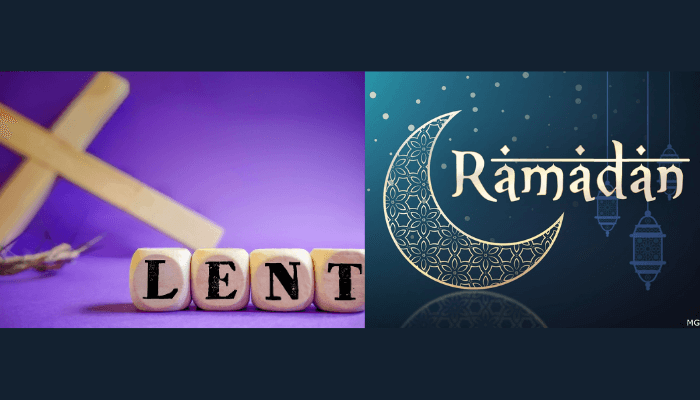
Before drones and missiles streak across skies, memes streak across algorithmic timelines. We inhabit an era increasingly defined by memesis, i.e., the creation, mutation, and circulation of culture through digital memes. In this ecosystem, meaning no longer travels primarily through official statements, scholarly treatises, or newspaper editorials. It travels through compressed images, punchy captions, and shareable irony. Memes have become the vernacular philosophy of the internet age: miniature arguments packaged as humour. Memesis functions as a decentralized form of cultural production. No central authority commissions it. No editorial board curates it. Individuals craft fragments of commentary, i.e., images, captions, jokes, and release them into the digital commons where they are replicated, modified, and 'forwarded many times'. What emerges is a collective act of interpretation. Through memes, communities define themselves, reveal their anxieties, signal their loyalties, and negotiate global events in the language of satire. In this sense, memes are the digital descendants of folklore: proverbs, riddles, anecdotes, jokes, and streetwise commentary. They distill complex realities into symbolic shorthand. A single meme may perform what once required an entire editorial column. The recent circulation of three viral memes around the US/Israel-Iran conflict illustrates this memetic culture with striking clarity. Three memes. Three jokes. One geopolitical conflict refracted through Nigerian digital wit. The first arrives in pidgin rhythm: "Israel Dey throw missile during Lent. Iran Dey throw missile during Ramadan. They don't even respect the month they told you to respect..." The second stages a generational dilemma, thus sharpening the satire: "How do I explain to my children that Israel is protected by Advanced Aerial Technology while Africa is 'protected by God of Israel'?" The third compresses theology, geopolitics, and wordplay into a layered satirical volley: "Israel: Missiles during Lent. Iran: Missiles during Ramadan. Neither is fasting from the DRAMA. God said 'Peace on Earth,' and y'all heard 'Piece of Earth.' Lent vs. Ramadan: The Ballistic Edition." Taken individually, they are jokes. Taken together, they form a memetic commentary, a spontaneous digital chorus reflecting how Nigerians interpret distant conflicts through humour, theology, and cultural irony. They circulate across WhatsAPP platforms as jokes. They gather laughing emojis. They provoke nods of recognition. They feel clever, almost harmless, i.e., digital confetti tossed into timelines. But these are not merely jokes. They are memes that behave like missiles: compact, fast-moving, and rhetorically explosive. They travel across platforms, penetrate conversations, and detonate thought. In their brevity lies their power; they condense critique, sarcasm, and cultural introspection into shareable fragments. And once launched, they rarely miss their target: our contradictions. Humour is never innocent. Humour is diagnostic. Humour is cultural X-ray. Humour reveals where language has cracked under contradiction. According to Benign Violation Theory (BVT), we laugh when something violates our expectations in a way that feels safe enough to process. A violation must occur; something must disrupt moral, social, or logical order. However, it must remain benign, distant enough, symbolic enough, or cleverly framed enough not to threaten us directly. Missiles during fasting seasons constitute a violation. Sacred months are associated with restraint, repentance, mercy. Warfare during those periods disrupts theological symmetry. It unsettles expectation. Still, given that the conflict is geographically distant for most Nigerians, the violation feels psychologically manageable. The meme format softens it further. Satire creates distance. The pun anesthetises the pain. And so we laugh. But laughter is acknowledgement. We laugh because we recognise the contradiction. We laugh because the irony is too sharp to ignore. We laugh because the sacred and the strategic have collided in plain sight. The meme becomes a cultural pressure valve, releasing tension without resolving it. And that is where the real conversation must begin. And now, we turn to sacred calendars and strategic clocks. Lent and Ramadan are seasons of subtraction. Christians fast to remember sacrifice, to reorient desire, to discipline appetite. Muslims fast from dawn to dusk to cultivate taqwa, i.e., God-consciousness, restraint, humility. Both traditions ritualise self-denial as a pathway to moral clarity. They are not seasons of aggression. They are seasons of introspection. However, nation-states, riding the wave of geopolitical exigencies, operate on a different logic. States do not submit to liturgical calendars. They submit to intelligence briefings, security assessments, deterrence calculations. Strategic clocks do not pause for sacred months. Missiles do not fast. They launch when leaders deem it necessary, advantageous, or inevitable. Thus, when rockets arc across skies during holy periods, the violation is symbolic before it is ethical. It is the juxtaposition that unsettles: prayer mats below, smoke trails above. The meme captures this dissonance with ruthless economy: "Neither is fasting from the drama." The joke lands because it compresses theology and geopolitics into a single line. It suggests that while individuals fast from food, states feast on escalation. While believers discipline appetite, governments discipline adversaries. But the satire is not merely about Israel or Iran. It is about the fragility of moral expectation in a world governed by power politics. And it is about how observers, particularly Nigerians, interpret that fragility. Let's pause at this point to consider the second meme more carefully and underscore the technology-theology tension. "How do I explain to my children that Israel is protected by Advanced Aerial Technology while Africa is 'protected by God of Israel'?" This is not atheistic mockery. It is civilisational self-interrogation. The humour works because it stages a generational anxiety. A parent must explain why one society invests in layered missile defence systems while another invokes divine protection in lieu of comparable infrastructure. The violation here is subtle. It challenges religious complacency without rejecting religion. It questions passivity, not prayer. The meme points toward an uncomfortable asymmetry: technological intentionality versus theological fatalism. Israel's security apparatus, regardless of one's political position, reflects sustained investment in research, engineering, cyber capabilities, and military innovation. Iran's military posture likewise reflects decades of strategic prioritisation. Africa, by contrast, remains deeply religious. Churches proliferate and overflow. All-night vigils intensify. Prosperity gospel thunders and commandeers compulsory seed-sowing obligations. Mosques expand so do sectarian cleavages. Public thoroughfares are routinely occupied. But investment in research laboratories, defence manufacturing, advanced scientific education, and systemic security reform often lags behind devotional energy. The meme asks: Can belief substitute for infrastructure? Faith can inspire innovation. But fatalism inhibits it. When divine invocation becomes a replacement for structural planning, belief turns ballistic; it launches emotion upward but leaves institutions underdeveloped. We laugh at the meme because it is exaggerated. We laugh because it caricatures reality. But caricature always rests on resemblance. Here then comes the peace vs. piece binary and the combustible undercurrents of linguistic ballistics. "God said 'Peace on Earth,' and y'all heard 'Piece of Earth.'" The brilliance of this line lies in phonetic proximity. One vowel shift transforms universal aspiration into territorial obsession: Peace, an ethical horizon; Piece, an extractive objective. The pun encapsulates the historical entanglement of sacred narrative and contested land. In many conflicts, theology and geography overlap. Scripture intersects with sovereignty. Covenant collides with cartography. But the meme does something more subversive; it implies that humans repeatedly mishear moral instruction through the filter of material desire. Peace becomes property. Salvation becomes soil. The humour exposes how easily sacred language is reinterpreted through strategic ambition. In Nigerian discourse, similar mishearings occur. Biblical references to Israel are often mapped uncritically onto modern geopolitics. Islamic solidarity is invoked without attending to sectarian complexity. Ancient texts are treated as contemporary diplomatic blueprints. Belief launches before knowledge calibrates. That is the ballistics of belief: conviction propelled at velocity, sometimes without sufficient factual ballast. And now, we turn to imported outrage and the geography of emotion. The memes trend in Lagos, Kano, Abuja, Sokoto - not only in Tel Aviv or Tehran. Why? Because foreign conflicts offer symbolic clarity. They can be narrated as civilisational struggles, moral epics, faith-aligned dramas. They provide ready-made scripts. Domestic insecurity is less narratively convenient. Nigeria has endured insurgency in the North-East, banditry in the North-West, communal violence in the Middle Belt, kidnappings across regions. Thousands have died over the past decade. Yet, nationwide, cross-religious mobilisation around these tragedies often lacks sustained unity. Why does distant suffering sometimes mobilise us more coherently than proximate tragedy? Because foreign outrage is psychologically safer. It demands expression, not structural reform. It requires solidarity, not systemic overhaul. It offers emotional catharsis without institutional confrontation. Domestic injustice implicates governance failures, elite capture, corruption, policy inertia. It resists simplification. It demands long-term civic engagement. Imported outrage is immediate. Indigenous accountability is laborious. The memes, though humorous, expose this hierarchy of grief. They demonstrate how quickly Nigerians can analyse foreign contradictions; but nonetheless, hesitate to dissect local structural failures with comparable intensity. This point takes us to the Lent-Ramadan convergence as symbol and mirror. The overlapping of Lent and Ramadan is historically rare but symbolically potent. Two global traditions share a season of discipline. It could be a moment of interfaith solidarity, of mutual reflection, of shared moral recalibration. Instead, it becomes backdrop for missile exchanges and meme production. The convergence becomes mirror. It reflects the uneasy coexistence of sacred language and strategic violence. It reveals how devotion and deterrence operate in parallel universes. It also reflects Nigeria's own contradictions: a deeply religious society grappling with chronic insecurity; fervent belief coexisting with fragile institutions. Benign Violation Theory explains why the memes are funny. But what happens when the violation ceases to be benign? For those beneath falling debris, there is no punchline. For communities devastated by domestic violence in Nigeria, there is no meme buffer. The laughter is ours because the distance is ours. What then is the value of knowledge before noise? Public reactions in Nigeria often align along religious sympathies. Some Christians instinctively defend Israel because of biblical associations. Some Muslims instinctively sympathise with Iran because of Islamic identity. Yet, geopolitical reality is more complex. Iran is predominantly Persian, not Arab. Israel is predominantly Jewish, not Christian. Muslims outnumber Christians within Israel. Islam itself contains Sunni and Shia divisions that shape regional politics. Without these nuances, belief becomes simplistic. And simplistic belief accelerates quickly in the age of social media. The projectile metaphor matters. In ballistics, trajectory depends on angle, velocity, resistance, and gravity. In public discourse, trajectory depends on education, media literacy, leadership rhetoric, and institutional trust. If we do not supply intellectual gravity, emotion travels unchecked. Knowledge slows the projectile long enough for discernment. In conclusion, "Lent vs. Ramadan: The Ballistic Edition" reads like a comedy special title, which encapsulates a serious condition: faith travelling at the speed of outrage. However, satire is only the opening act. The deeper task is introspection. Will Nigerians continue to export emotional intensity toward distant theatres while domestic insecurity normalises? Will belief detonate, or will it illuminate? Missiles will not observe fasting during Lent and Ramadan. Ballistic States will not suspend strategic calculation for sacred calendars. But citizens can choose how their convictions travel. The memes made us laugh. The mirror now asks us to look. Finally, if belief must have trajectory, let it be calibrated by knowledge. If faith must converge, let it converge on justice. If humour must expose contradiction, let contradiction inspire reform. If memes provoke laughter, let laughter provoke literacy. Let the chuckle be an entry point, not an exit. Humour opens the door because it lowers defences; it makes contradiction accessible without immediate hostility. But once the door is open, inquiry must enter. The goal is not to silence humour. It is to deepen it, to move from punchline to policy, from satire to strategy. A society that can joke intelligently about geopolitics should also be able to study it seriously. Satire can spotlight absurdity; literacy can diagnose causes. When laughter matures into learning, entertainment evolves into empowerment, and commentary becomes constructive civic engagement. After all, this Column is about word matters, because words, indeed matter. Source: https://businessday.ng/life/article/lent-ramadan-convergence-memes-and-the-ballistics-of-belief/
Leave a Reply
Your email address will not be published. Required fields are marked *