
How chronic kidney disease saps in North East families of financial power - Businessday NG
- Super Admin
- 08 Mar, 2026

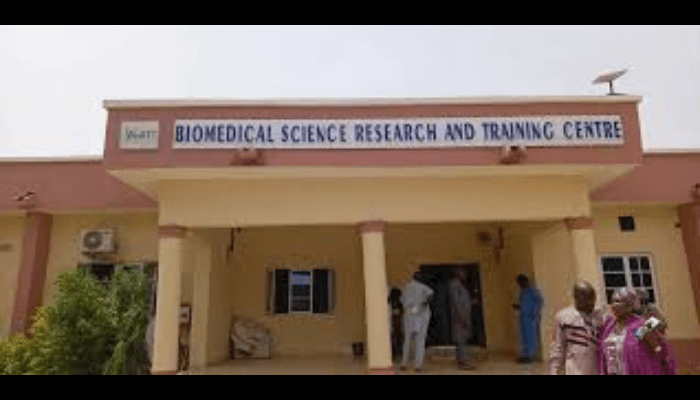
...As Buni constructs research centre to combat menace Usman Umaru Dgona, 28, shared his heartbreaking experience of how his family of thirteen lived happily until 2019, when his late father Mallam Gambo Kaku Dagona in Gashua town fell ill with a renal disease. The illness shattered their joyful family into a shadow of itself and marked the beginning of a devastating series of chronic diseases that claimed six family members in Gashua Local Government Area, Yobe State. "The chronic kidney failure has taken six lives from my family, including my father, brothers, and sister. It has shattered my happiness," Adamu said. "We tried everything to save them, but unfortunately, they are gone." This is a stark story of renal failure in Yobe and Borno states. The number of patients with kidney diseases in homes, communities, and hospitals is increasing rapidly and alarmingly. "It all started in 2019 when my father fell ill and was rushed to Gashua hospital. Fluids drugs were prescribed for him. Before we knew it, he had started on dialysis, and so were others in the family. Over three years, I lost five family members. The sixth died in 2023. Our family has remained deeply affected by this tragedy," Usman reflected. Increasingly, millions of people, cutting across different ages and genders, have been lost to renal failure, and it is not only threatening a new generation, but it could be described as an epidemiological crisis in the northeast of Nigeria. Even though the federal government has not yet declared it an epidemic, the renal failure has wrecked the finances of thousands of families in Yobe and Borno states. 11% of Nigerians are infected with kidney disease The findings by the Nigerian Association of Nephrology (NAN) states that 11 percent of Nigerians are infected with kidney disease, with the two states having the highest numbers of cases. The findings further show that Nigeria's healthcare infrastructure is inadequate for kidney patients. The country currently operates only about 200 functional dialysis units equipped with approximately 890 dialysis machines nationwide. These facilities fall well short of meeting the needs of millions of patients who require regular dialysis treatment. Recently, speaking at the end of the 38th Annual General meeting and Scientific Conference of Nephrology, held at the University of Maiduguri Teaching Hospital (UMTH), Maiduguri, Jacob Olugbenga, national president of the Association, called on the federal and sub-national governments to declare kidney disease as an issue of national importance. Medical experts have raised the alarm over a growing public health crisis as chronic kidney disease now affects approximately 24 million Nigerians, representing 11 percent of the country's adult population. A healthcare crisis demanding urgent action "During our discussions at the conference, we confirmed that chronic kidney disease affects about 11 percent of Nigeria's adult population," Awobusuyi said. "This figure reflects the scale of the emerging healthcare crisis facing our country," the nephrologist emphasised, adding that early detection remains crucial to managing the disease effectively. Experts are concerned about the sad development, assuring that the association will provide workable solutions to tackle the problem in the country. BusinessDay gathered that the causes of kidney disease in Maiduguri remain unknown. Doctors and community health experts are battling to unravel the mystery. Our correspondents who went round some hospitals in Maiduguri noted that inadequate facilities, health personnel in the area and high cost of treatment contribute to the daily loss of lives from the disease. Read also: We're committed to finding solution to kidney disease in Yobe - Buni Relations narrate their pain, despair Survivor, Benson Ayuba, said his wife abandoned him when he was battling for his life to survive, adding that he was drained financially and now broke. "I sold everything I had, my savings were emptied; my office where I worked was supported, but at some point, my wife thought I was not going to survive, she abandoned me and returned to her family in the south. "Luckily, God came in for me, and I sold my land and other assets. I went for surgical operations, and it was successful. I am struggling to get back on my feet now," he said, shedding tears. A 47-year-old mother, Bintu Halidu, narrated how their mother, who was anxious for her son to recover from renal failure, died last year, a few months after she was also diagnosed with kidney disease. She said her mother was so much disturbed by her son's condition, whom she spent years taking care of, that she suddenly started experiencing kidney symptoms. Initially, she was placed on ulcer drugs for a long time, but when the condition kept degenerating, she returned to the hospital and was diagnosed with chronic kidney disease. "One day, she became pale and unconscious, and we took her to the hospital. She was referred to the dialysis unit, but each time she underwent dialysis in the morning, she would be in pain throughout that day; in fact, she would not observe her prayers until around 9pm," she said Bintu said on the day her mother died, a flight was booked for the next day to Abuja so that she would continue with her dialysis there. "She told us that the last time she did it, it wasn't as painful as the one in the University of Maiduguri Teaching Hospital. But as God would have it, she died that night," she narrated amidst tears. However, the most pathetic was the story of a father and three children alongside his grandson, who died between 2021 and 2025, which was a typical dilemma of what people are going through. Adamu Mohammed, another victim said, " I lost five family members in Gashua to chronic kidney failure. I lost my father at first, then two elder sisters, a brother and recently, barely a year ago, I lost my nephew, who died of the same issues. "This disease has hit my family so hard. They passed away within a four-year interval due to kidney failures, and we spent so much to cover their treatment, but unfortunately, they all passed away." He expressed concerns over the death of his family members, "We felt devastated, and we will always be in fear because we don't know who is next in our family. This is a sad reality we are sleeping and waking up with," he lamented. Abdulla Gingu, who could not afford medication, was discharged from the hospital and died helplessly. "We couldn't pay for the dialysis. I watched my mother die in pain three days after we were discharged from the hospital, and four weeks later, my sister also died. "It reached a level that I could not get any money, I couldn't buy the medicine; all I could do was donate my blood. We were discharged on the day I donated my blood. It was excruciating," he lamented. Understanding the risk factors Several common risk factors contribute to the rising prevalence of chronic kidney disease among Nigerians. Hypertension stands as both a major cause and complication of the disease, while diabetes mellitus has become increasingly significant as an underlying cause. Chronic glomerulonephritis, obesity, advanced age, and family history of kidney disease or hypertension also contribute substantially to the growing crisis. According to research, tackling the chronic kidney disease crisis requires confronting long-standing gaps in the healthcare system, strengthening early detection mechanisms, and building a more coordinated national response across all levels of government. Buni constructs a multi-billion-naira research centre to combat kidney disease To address the rising cases of kidney disease, including its causes, prevention, and treatment, Governor Mai Mala Buni recently inaugurated the permanent site of the Biomedical Science Research and Training Centre (BioRTC) at Yobe State University, Damaturu, describing the facility as a strategic measure against the increasing burden of chronic kidney disease across the state. According to him, the centre was established to develop sustainable, science-based solutions to the high prevalence of kidney disease, especially among communities along the River Yobe. Supporting the accounts of local families, Buni noted that the disease has, over the years, claimed many lives, placed heavy financial burdens on families, and strained the state's healthcare system. "This centre represents our resolve to confront kidney disease through evidence-based research rather than assumptions," the governor said, adding that BioRTC will generate locally relevant data to uncover the root causes of the condition and inform effective policy decisions. Buni revealed that the state government invested more than N800 million in building the permanent facility as part of a broader effort to strengthen health research capacity and improve disease surveillance. He shared that preliminary findings from ongoing research at the centre are already pointing to a possible cause of kidney disease in the region, raising hopes for targeted prevention and treatment strategies. The governor praised Professor Mahmoud Bukar Maina for leading the centre's kidney disease research initiatives, noting that the professor donated laboratory equipment valued at over N10 billion to support advanced scientific investigations. Buni explained that BioRTC's research framework is tailored to Yobe State's unique environmental, genetic, and lifestyle factors, emphasising that reliance on foreign medical research often fails to adequately address Africa's specific health challenges. He recalled that in 2023, the state engaged international partners from the United Kingdom to enhance the centre's nephrology research capacity, attracting support from global experts in epidemiology and kidney medicine. According to the governor, BioRTC has since gained international recognition, with scientists from the Janelia Research Campus in the United States describing the centre as a model for building research capacity in underserved regions. To supplement research efforts, the governor reaffirmed his administration's commitment to improving access to treatment for kidney disease patients, revealing that the state currently offers free dialysis support and plans to establish an additional dialysis centre in Gashua this year to reduce travel hardships for patients. He also appealed to the federal government to establish a Federal Kidney Disease Centre in Yobe State, citing the scale and persistence of the health challenge. Beyond research and treatment, Governor Buni stated that BioRTC was also developing low-cost diagnostic tools to support early detection of kidney-related complications at the community level, especially in rural areas. He urged the Federal Ministry of Health to partner with the centre to expand open, low-cost diagnostic innovations, noting that early diagnosis remains a major gap in the management of kidney disease in northern Nigeria. The governor further disclosed that over 1,000 health professionals, researchers, and students from Yobe State and across Africa have been trained through BioRTC's capacity-building programmes, strengthening the local workforce needed to sustain kidney disease research and care. He called on the Federal Government to recognise BioRTC as a national research and training centre, allowing for increased funding for kidney disease research and specialist training. He emphasised that tackling kidney disease requires long-term investment in research, policy, and human capital, noting that BioRTC offers a platform to integrate all three. Buni stated that the fight against kidney disease in Yobe State will remain a top priority for his administration, pledging ongoing support for BioRTC as a hub for research, innovation, and life-saving interventions. The government's provision of free kidney dialysis has been hailed as a commendable initiative to support patients with renal disease. Source: https://businessday.ng/life/article/how-chronic-kidney-disease-saps-in-north-east-families-of-financial-power/
Leave a Reply
Your email address will not be published. Required fields are marked *