
What Nigerians Get "Wrong" About The Igbo
- Super Admin
- 08 Mar, 2026

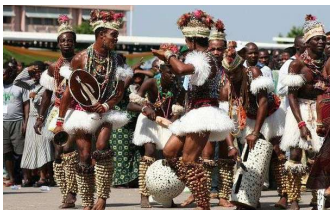
ABUJA - In the crowded electronics markets of Lagos, in the industrial clusters of Aba, in the tech hubs of Abuja, and in farflung African cities where Nigerian traders haggle in Mandarin-laced English, a familiar stereotype follows the Igbo man and woman: ambitious to a fault, money-driven, domineering, obsessed with titles, unyielding in business. It is a caricature repeated so often that it has hardened into conventional wisdom. Yet beneath the stereotype lies a more complex story -- one shaped by history, civil war, migration, exclusion, resilience and a relentless belief in self-determination. To understand what Nigerians often get wrong about the Igbos is to interrogate how narratives are formed in a multi-ethnic state still negotiating its post-civil war identity. CONSTRAINED POLITICAL SPACE The Igbo are one of Nigeria's three largest ethnic nationalities, concentrated in the South-East -- Abia, Anambra, Ebonyi, Enugu, and Imo -- but scattered across every corner of the federation. Since the end of the Nigerian Civil War in 1970, in which the short-lived Republic of Biafra led by Chukwuemeka Odumegwu Ojukwu was defeated by the federal forces under Yakubu Gowon, the Igbo have operated within a political space many of their leaders describe as constrained. They have not produced a Nigerian president since the return to civilian rule in 1999. They often speak of structural imbalance and lopsided appointments. But while political power has proved elusive, economic and technological influence has not. From the bustling Ariaria International Market in Aba to the spare-parts empire of Nnewi, Igbo enterprise is legendary. In recent years, a new generation has also emerged in fintech, e-commerce and software engineering. Critics sometimes interpret this visibility as over-aggression or economic domination. Admirers see it as discipline and communal uplift. To probe the tension between perception and reality, Sunday Independent spoke to prominent Igbo voices, traders, academics and Nigerians from other ethnic groups. For Prof. Chinedu Nebo, former Minister of Power and a respected academic from Enugu, the stereotype of the "ruthless Igbo businessman" is a misunderstanding of survival psychology. "When a people go through dispossession and return with twenty pounds after losing everything, you either collapse or you compete," he said, referencing the controversial post-war policy that limited many returning Igbo to £20 regardless of pre-war savings. "What some call ruthlessness is often focus. What some call selfishness is frequently family responsibility. The Igbo apprenticeship system is one of the most robust indigenous wealth redistribution models in Africa." THE APPRENTICESHIP SYSTEM The apprenticeship system -- known locally as "Igba Boi" -- has drawn international academic interest. Young boys serve masters for years, learning trade secrets before being "settled" with startup capital. In markets across Onitsha and Alaba, it is common to find millionaires who began as teenage apprentices sleeping under shop counters. That social mobility engine is rarely highlighted in national discourse. Chief Innocent Chukwuma, founder of Innoson Vehicle Manufacturing, has often framed Igbo ambition as patriotic industrialism rather than ethnic triumphalism. "If you look at Nnewi, we did not wait for government," he once said in a public lecture. "We pooled resources, learned from Asia, and built something." His company, Innoson Motors, became a symbol of indigenous manufacturing pride, though not without regulatory and legal battles. EMERGING PERCEPTIONS Similarly, tech entrepreneur, Iyinoluwa Aboyeji, co-founder of Andela and Flutterwave, represents a new Igbo archetype -- globally minded, digitally fluent, less bound by old regional rivalries. "Our generation is less interested in ethnic narratives and more in building scalable solutions," he said when contacted for this report. "But we cannot pretend history does not shape opportunity." Yet on the streets, perception can be less generous. In Wuse Market, Abuja, Musa Abdullahi, a Hausa trader in textiles, offered a candid view: "My Igbo friends are hardworking. But sometimes they don't want partnership. They want control." When asked whether that perception comes from competition, he paused. "Maybe. In business, everybody wants advantage." In Bodija, Ibadan, Adeola Ogunbiyi, a Yoruba civil servant, said the "domineering spirit" stereotype is exaggerated. "I studied with many Igbo classmates. They were serious about grades, serious about life. We teased them about loving money. But is that not what everyone wants -- to succeed?" The notion that Igbos are "all about money" often surfaces in inter-ethnic banter. Yet sociologists argue that visible commercial success tends to attract envy narratives. Dr. Uche Nwosu, a political analyst based in Owerri, believes economic mobility after trauma is frequently misread. "Post-war Igbo society internalized a lesson: the state can fail you; your network cannot. So wealth became security. Titles became validation. Education became armor." The "craze for title" -- the proliferation of chieftaincy honors and the display of red caps -- is another talking point. Critics say it reflects vanity. Supporters argue it reflects communal recognition. In Igbo cosmology, title taking historically signified service and philanthropy. Today, as communities compete for prestige, the symbolism has expanded -- sometimes to excess. But stereotypes are rarely one-dimensional. In Kano's Sabon Gari, where Igbo traders have operated for decades, 62-year-old Alhaji Sani Garba described a more nuanced coexistence. "During crisis periods, we protected each other," he recalled. "Yes, business rivalry exists. But ordinary people understand themselves better than politicians." AGITATION FOR INCLUSION Politics is perhaps where the misreading deepens. The South-East's agitation for inclusion, sometimes expressed through groups like the Indigenous People of Biafra (IPOB), is often portrayed as separatist obstinacy. But many Igbo elites insist it is rooted in a demand for equity within Nigeria rather than disintegration. The detention and trial of Nnamdi Kanu polarized national opinion, with some Nigerians seeing defiance, others seeing desperation. Senator Enyinnaya Abaribe, a vocal federal legislator from Abia, once argued on the Senate floor that "the Igbo question is fundamentally about justice and equal opportunity." Critics dismissed it as ethnic posturing. Supporters saw it as articulation of long-suppressed grievances. Still, not all Igbos agree with confrontational politics. In Enugu, business executive Ifeoma Okoye warned that internal divisions also fuel external stereotypes. "We must admit that intra-Igbo competition can be harsh. We do not always support our own unless there is clear benefit. That feeds the 'selfish' label." There are, however, counter-examples of cross-ethnic solidarity. In Lagos, a real estate consortium led by Igbo, Yoruba and Edo partners has quietly developed housing estates without ethnic branding. "When profit is shared, ethnicity fades," one partner joked. Perhaps the most overlooked dimension of the Igbo story is cultural adaptability. From Accra to Guangzhou, Igbo traders form networks that blend local integration with communal cohesion. That global dispersion sometimes breeds suspicion at home -- the idea of an invisible commercial web. Yet diaspora scholars note that mobility has long been a feature of Igbo society, predating colonial borders. Dr. Okechukwu Ibeanu, a former federal commissioner, believes the misunderstanding is mutual. "Other Nigerians see assertiveness and call it arrogance. Igbos see caution from others and call it exclusion. We are all projecting our fears." GENERATIONAL SHIFT Even within Igboland, generational shifts are evident. In Aba's emerging tech cluster, 24-year-old software developer Chisom Eze said she feels disconnected from old stereotypes. "My parents traded in fabrics. I code. My clients are in Canada. When people say Igbos only chase money, I laugh. We chase impact too." Yet economic drive remains central. In Nnewi, where industrialists turned spareparts trading into manufacturing empires, the culture of reinvestment is intense. Wealth is rarely idle. It circulates -- through apprenticeship, family loans, community levies, church projects. Pastor Emeka Obi of Onitsha framed it spiritually: "Industry is our worship. We believe God blesses diligence. But that does not mean we lack compassion." So why do the stereotypes persist? Part of it lies in Nigeria's zero-sum politics. In a federation where appointments, projects and budgets are perceived as ethnically distributed, visible success by one group can be read as encroachment by another. Economic prominence without commensurate political power creates tension. The Igbo story sits squarely in that paradox. Another factor is media framing. Conflict sells. Stories of aggressive bargaining or viral market disputes travel faster than quiet philanthropy. Few headlines track the thousands of apprentices settled annually with seed capital. Few features profile the Igbo tech founders mentoring young coders in Yaba. There is also the matter of language. Direct communication styles can be misinterpreted across cultures. What one community sees as confidence, another may see as boastfulness. What one sees as frugality, another may see as stinginess. Yet beneath the surface, everyday interactions tell a different story. In Nyanya, Abuja, taxi driver Bala Mohammed recounted how his Igbo neighbor helped fund his daughter's surgery. "If they are selfish, why did he help me?" he asked rhetorically. Similarly, in Port Harcourt, Ijaw fisherman Tamuno Briggs dismissed ethnic stereotypes as elite manipulation. "When politicians quarrel, they use tribe. When we trade fish and spare parts, we use trust." COMMUNAL OBLIGATION The Igbo proverb says, "Onye aghana nwanne ya" -- do not abandon your brother. It speaks to communal obligation. But perhaps Nigeria's larger challenge is extending that ethic beyond kinship lines. As Nigeria grapples with economic hardship and renewed debates over federal restructuring, revisiting entrenched stereotypes may be overdue. The Igbo narrative -- like every ethnic narrative -- contains contradictions: fierce competition and quiet generosity, pride and vulnerability, memory of loss and hunger for advancement. To reduce it to ruthlessness or money worship is to ignore history's imprint and the human stories beneath commerce and politics. In the end, what Nigerians may get wrong about the Igbos is not that they are ambitious. It is mistaking ambition for hostility. It is overlooking how trauma forged tenacity. It is forgetting that every thriving spare-parts shop, every tech startup, every title ceremony, is also a bid for dignity in a federation still learning to balance inclusion with merit. The Sunday market will open again next week. Bargains will be struck. Apprentices will sweep shop floors, dreaming of their own signboards. And across the federation, Nigerians of all tribes will continue to trade, argue, collaborate and coexist -- sometimes uneasily, often profitably. Between stereotype and reality lies conversation. Perhaps that is where the real investigation begins. Source: https://independent.ng/what-nigerians-get-wrong-about-the-igbo/
Leave a Reply
Your email address will not be published. Required fields are marked *