
EXCLUSIVE: CBN directs banks to conduct stress test
- Super Admin
- 08 Mar, 2026

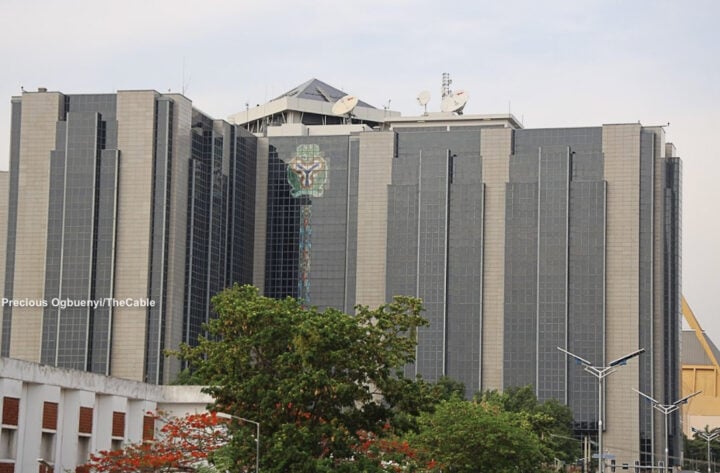
The Central Bank of Nigeria (CBN) has directed all commercial banks to stress test as it continues to monitor the industry for potential vulnerabilities. The instruction, expected to take effect from April 1, 2026, was conveyed in a letter seen by TheCable on Saturday. Addressed to all banks, the letter was dated March 6, the same day the CBN announced that "the Nigerian banking system remains stable and sound". The regulatory directive comes when banks are undergoing a recapitalisation programme with just weeks to the CBN March 31 deadline. A stress test aims to determine the resilience of financial institutions by evaluating how a bank could handle extreme economic conditions, such as a severe recession or market crash. In the letter, the apex bank said the latest directive aligns with the provisions of Sections 13 and 63 of the Bank's and Other Financial Institutions Act (BOFIA) 2020, which requires banks to maintain capital that it considers adequate to cover the risks arising from the activities of each bank. "This is without prejudice to the contents of the CBN "Guideline on Stress Testing for Nigerian Banks" issued in March 2019," the letter reads in part. "Banks are expected to stress the resilience of their credit portfolio over a 12-month period by simulating deterioration in asset quality, governance risk and significant change in industry dynamics such as fall in commodity prices, foreign exchange rate movement, structural shift in obligor operating market dynamics (supply chain disruption, contracting demand, etc.), portfolio variables, among others." The stress testing, according to the CBN, intends to estimate the impact on banks' non-performing loans (NPLs), loan loss provisions, and capital adequacy ratio (CAR). Speaking on the methodology of the test, the CBN asked banks to apply the credit exposures (on and off-balance sheet), including director/insider-related exposures and assume staged migration of credit exposure to the next risk classification in line with the provisions of the prudential guidelines (PG) issued in July 2020, with additional stress for specific sector deterioration and insider-related credits. The regulator said in conducting the stress test, banks are required to establish a baseline, which should be based on the last examiners' communicated assessment of credit portfolios (risk asset assessment or risk-based supervision examination). "However, where a bank's FinA returns indicates a deterioration in specific exposures as at stress testing date, these should be adopted as the baseline amount and performance status," the CBN said. "In addition to classification of credit portfolio across performing, watchlist (specialized loans), substandard, doubtful and lost, baseline position shall include exposure at default, current provisioning level, collateral value and risk weighted position." BANKS TO RAISE 100% OF REPORTED STRESSED CAPITAL SHORTFALL The CBN said the primary stress scenario should assume progressive deterioration of credit portfolio within a 12-month period, along the PG provisioning cycles. The organisation also said each exposure category should migrate to the next stage and appropriate provisioning in line with the provisions of the PG applied. Where there are signs of potential deterioration in industry dynamics, the bank said exposures shall be further stressed and deteriorated with at least an additional 10 percent provisioning applied. "Director/lnsider-Related Credits: To appropriately address governance and insider-related risks, all insider-related exposures shall be treated under a severe stress assumption and assumed to be in default. These shall be fully provided for in the banks' stress scenarios," the CBN said. "Following the conclusion of stress testing, banks are expected to report: pre-stress CAR, post-stress CAR, and, capital shortfall (if any). "It is pertinent to note that banks shall be required to raise 100% of their reported stressed capital shortfall or 50% of the shortfall computed from CBN stress analysis of the banks (whichever is higher), within an 18-month period. "Once communicated, this level of capital shall become the risk-based capital requirement of the bank until the next cycle of stress testing, which would take place 6 months after the end of the capital raise to close the shortfall in stressed CAR." The regulator noted that for all banks without a shortfall in CAR from the stress-testing exercise, "a cycle of 12-month stress testing will apply". The CBN said all banks are required to submit the results of their board-approved stress-testing reports on or before the close of business on April 30. Source: https://www.thecable.ng/exclusive-cbn-directs-banks-to-conduct-stress-test/
Leave a Reply
Your email address will not be published. Required fields are marked *