
Electoral Act 2026: Matters arising - The Nation Newspaper

- Super Admin
- 08 Mar, 2026

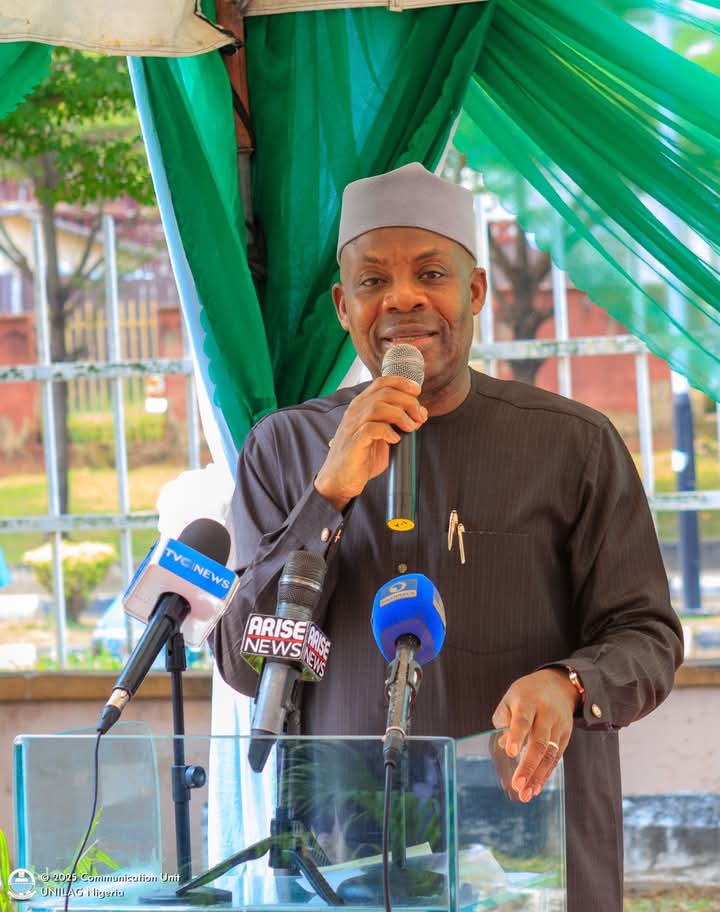
On 18 February, 2026, President Bola Ahmed Tinubu signed the Electoral Act, 2026 into law as a guide to various aspects of the 2027 general elections. Section 60(3) of the Act has been particularly controversial. Specifically, Section 60(3) states: "The Presiding Officer shall electronically transmit the results from each polling unit to IREV portal and such transmission shall be done after the prescribed Form EC8A has been signed and stamped by the Presiding officer and/or countersigned by the candidates or Polling agents where available at the Polling Unit. Provided that if the electronic transmission of the result fails as a result of communication failure and it becomes impossible to transmit the result contained in form EC8A signed and stamped by the Presiding Officer and countersigned by the candidates or polling agents where available at the polling unit, the form EC8A shall remain the primary source of collation and declaration of the result." Some opposition parties (such as the African Democratic Congress [ADC]), civil society organisations (such as ActionAid in Nigeria) and labour unions (such as the Nigeria Labour Congress), among others, demanded "mandatory real-time electronic transmission of results" purportedly to make the votes of Nigerians count and make the results credible. They organised public demonstrations for the purpose, claiming that there is enough internet coverage across Nigeria to make the exclusive electronic transmission of election results optimally possible. This position is countered by some members of the National Assembly, some members of the opposition Peoples Democratic Party (PDP), some former contestants and some senior journalists. Their argument is that limiting the transmission of results to electronic means would disenfranchise very many Nigerians. In fact, in a 3 March, 2026 interview on TVC News, the Managing Director/Chief Executive Officer (MD/CEO) of the Federal Housing Authority (FHA), Hon. Oyetunde Ojo, noted that, by virtue of his official assignments which carry him round the country, he knows that there are very many places where phone network is unavailable, but where polling stations and voters exist. Moreover, Vice-President Kashim Shettima remarked, sarcastically, on 4 March, 2026 at the interfaith breaking of fast hosted by President Tinubu: "The same alliance for democratic confusion that were adamant that we should have electronic transmission of votes ... opened their portal for the registration of new members and it was overwhelmed by the avalanche of fake names, fictitious identities and so on." In its 3 March, 2026 issue, The Punch newspaper reported that when it drew the attention of the National Publicity Secretary of ADC, Mallam Bolaji Abdullahi, to such problems, his response was: "It happened during APC registration as well." This is an implicit admission that mandatory real-time transmission of results is multiply risk-prone. Meanwhile, as a safeguard against results manipulation, Section 60(1) of the Act stipulates: "The Presiding Officer shall after counting the votes at polling unit, enter the votes scored by each candidate in a form prescribed by the Commission," and Section 60(2) provides: "The form shall be signed and stamped by the Presiding Officer and countersigned by the candidates or their polling agents where available at the polling unit." Moreover, to enhance the credibility of election results, Section 62 of the Act provides: "A candidate or a polling agent may, where present at a polling unit when counting of votes is completed by the Presiding Officer, demand to have the votes recounted provided that the Presiding Officer shall cause the votes to be so recounted only once." In addition, Section 71(1) states: "Every result form completed at the ward, local government, state and national levels in accordance with the provisions of this Act or any guidelines issued by the Commission shall be stamped, signed and countersigned by the relevant officers and polling agents at those levels and copies given to the police officers and the polling agents, where available." Furthermore, Section 62(2) provides: "The Commission shall compile, maintain and update, on a continuous basis, a register of election results to be known as the National Electronic Register of Election Results which shall be a distinct database or repository of polling unit by polling unit results, including collated election results, of each election conducted by the Commission in the Federation, and the Register of Election Results shall be kept in electronic format by the Commission at its national headquarters." To enhance transparency, Section 62(3) stipulates: "Any person or political party may obtain from the Commission, on payment of such fees as may be determined by the Commission, a certified true copy of any election result kept in the National Electronic Register of Election Results for a State, Local Government, Area Council, registration area or Electoral Ward or Polling Unit and the certified true copy may be in printed or electronic format." The kind of electoral safeguards provided by Sections 71(1) and 62(2) & (3), quoted above, seems to be what facilitated Senator Hope Uzodinma's successful legal challenge of his declaration as having come 4th in the 8 March, 2019 governorship election in Imo State. In the election, the PDP candidate, Rt. Hon. Emeka Ihedioha, was declared 1st and sworn in as governor on 29 May, 2019. On the strength of the copies of Form EC8A and associated documents which he tendered as evidence at the election petition tribunal, the witnesses he called and the arguments which his lawyers advanced, the Honourable Judges of the Supreme Court were convinced that hundreds of Senator Hope Uzodinma's legitimate votes were unjustifiably excluded from the collation of the results of that election. Following a recalculation of his legitimate votes, it became evident that Senator Uzodinma was the true winner of the governorship election. Rt. Hon. Ihedioha was therefore removed from office as governor and Senator Uzodinma was sworn in as his lawful replacement. More specific details of the Uzodinma-Ihedioha case were provided in the article titled "The judiciary and electoral fisticuffs" in this column on 10 December, 2023. However, mischief-makers, including senior lawyers, who want to denigrate the judiciary or derogate Uzodinma, often cite the Uzodinma-Ihedioha case, and formulaically render it cynically as "No. 4 becoming No.1." After the signing of the Electoral Act, 2026 into law, some opposition parties began to object to parts of Section 77 which states: "(2) A party shall maintain a digital register of its members containing the name, sex, date of birth, address, State, Local Government, ward, polling unit, National Identification Number and photograph in both hard and soft copies. (3) Upon registration, a membership card shall be issued to the member. (4) Each political party shall make such register available to the Commission not later than 21 days before the date fixed for the party primaries, congresses or conventions. (5) Only members whose names are contained in the register shall be eligible to vote and be voted for in party primaries, congresses and conventions. (6) A political party shall not use any other register for party primaries, congresses and conventions except the register submitted to the Commission." Section 77(2) & (3) would facilitate the collection of membership dues by parties and Section 77(4) & (5) would facilitate the monitoring of party primaries by the Independent National Electoral Commission (INEC) and make INEC a more valuable witness in case of litigation. Moreover, Section 77(6) addresses the problem of multiple voters registers or delegates lists which in the past has enabled the manipulation of party primaries and has caused confusion and disaffection among party members. Probably the scariest provision for the opposition parties which object to the Act is Section 77(7) which states: "A party that fails to submit the membership register within the stipulated time shall not be eligible to field a candidate for that election." In a 27 February, 2026 press statement, ADC's Bolaji Abdullahi declared that the party rejected the updated INEC electoral timetable and noted: "According to the timetable, party primaries are to be conducted between 23 April and 30 May 2026, just 55 to 92 days from today. ... [W]hat is more significant is that ... political parties are required to submit their digital membership registers to INEC not later than 2 April, 2026. ... These are ... deliberately constructed barriers to exclude opposition from partaking in the coming election." The following provisions on modes of primaries are also noteworthy: "84. (2) The procedure for the nomination of candidates by political parties for the various elective positions shall be by direct primaries or consensus. 85. A political party shall not impose nomination, qualification or disqualification criteria, measures, or conditions on any aspirant or candidate for any election in its constitution, guidelines, or rules for nomination of candidates for elections, except as prescribed under sections 65, 66, 106, 107, 131, 137, 177 and 187 of the Constitution. 86. All direct primaries shall be conducted in accordance with the guidelines of each political party." The following provisions also deserve attention: "87. (1) A political party that adopts a consensus candidate shall secure the written consent of all cleared aspirants for the position, indicating their voluntary withdrawal from the race and their endorsement of the consensus candidate. (2) Where a political party is unable to secure the written consent of all cleared aspirants for the purpose of a consensus candidate, it shall revert to the choice of direct primaries for the nomination of candidates for the elective positions." The MD/CEO of FHA, Hon. Oyetunde Ojo, a former member of the House of Representatives from Ekiti State on the platform of Action Congress of Nigeria (ACN), noted that while he and some other candidates had been working hard towards the party's primaries, a money-bag showed up, close to the primaries, with tons of cash to overwhelm the existing candidates and influence the powers-that-be in the party. According to Hon. Ojo, the direct primary mode was the saving grace that brought the money-bag's stratagems to naught. Direct primaries prioritise the will of the generality of the members of a political party, and remove or reduce the prospects of buying delegates which is a common feature of litigation-prone indirect primaries. Curiously, as reported in a 5 March, 2026 interview on Arise News, Dr. Yusuf Dantalle, the National Chair of the Inter-Party Advisory Council (IPAC), an umbrella body of all registered political parties in Nigeria, claimed that the body had threatened to boycott the 2027 elections if indirect primaries, among others, are not restored in a revised Electoral Act, 2026. It is hoped that the seemingly malleable Section 87(3) of the signed Act which provides as follows will not, like indirect primaries, be exploited to extort candidates: "A special convention or nomination congress shall be held to ratify the choice of consensus candidates at designated centres at the National, State, Senatorial, Federal and State Constituencies." All in all, the Electoral Act, 2026 is appreciably pro-candidates, pro-voters and democracy-deepening. Source: https://thenationonlineng.net/electoral-act-2026-matters-arising/
Leave a Reply
Your email address will not be published. Required fields are marked *