
Nigerian women should move beyond symbolic gestures
- Super Admin
- 08 Mar, 2026

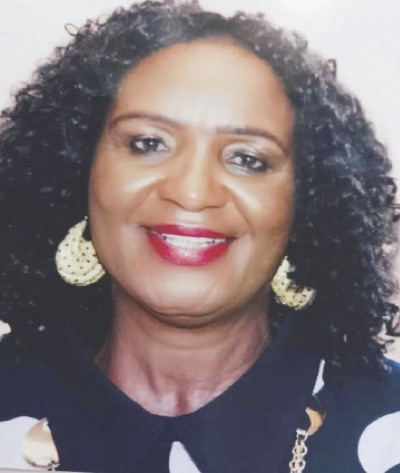
Mrs Nkiruka Ifekwem is an Associate Professor of Strategic Management and Entrepreneurship at the Bells University of Technology, the first private University of Technology in Nigeria. A start-up and small business consultant, she's also a gender expert, a public analyst, always advocating the rights of women and the girl-child. As the world celebrate International Women's Day, Ifekwem, popularly known as Women Leader, spoke with Sunday Sun in Lagos. What does International Women's Day mean to you? Today, March 8, is International Women's Day. It is a global day mapped out to celebrate the social, economic, cultural, and political achievements of women while calling for accelerated action toward gender equality and equity. It marks a call to action to dismantle barriers, challenge stereotypes, and promote a more inclusive, just, and equitable world. The origin of International Women's Day (IWD) was from the early 20th-century labour movements in North America and Europe. The first National Woman's Day was held on February 28, 1909, in New York, organised by the Socialist Party of America but at a national level Later at the International Conference of Working Women in Copenhagen in 1910, Clara Zetkin, a German advocate for women's rights, suggested the creation of a day for women around the world to press for their rights. International Women's Day was first celebrated in 1911 in Austria, Denmark, Germany, and Switzerland. Here in Nigeria, women's activism originated in the pre-colonial era. This was championed by influential women leaders like Queen Amina, Funmilayo Ransome-Kuti, Margaret Ekpo and others evolving into organised resistance against British colonial policies in the early 20th century. This culminated into the 1929 Aba Women's Riot against taxation and the 1940s Abeokuta Women's Union (AWU) protests, which pioneered the fight for political, economic, and social rights. To me personally, International Women's Day means a day women should set aside to reflect on how far they have gone in this journey. How far have we as women closed ranks to look inward and see how we can uplift ourselves? How far we can lend a shoulder for a woman to shed tears without being the cause of our fellow women's misery? How we can come together as women to change the face of the earth. Take a look at wherever women are in the position of leadership; the firmness, compassion, and efficient nature of women cannot be mistaken. In spite of celebrations, women should also use the IWD to reflect how far they have fared, what they have achieved in the area of gender equality in spite of all the advantages they have at their disposal in term of equality in education, access to technology, and shattering of some glass ceilings compared to what was available to our foremothers. During the time of Funmilayo Ransome Kuti or Margaret Ekpo, women were educated not to be professionals but just in preparation for marriage in courses like Home Economics and at most to be a teacher. No woman could aim to be an engineer, doctor or a pilot at that time What's your take on this year's theme and how do you think it would be of great impact to women and the girl child? "Give to Gain," the global theme of 2026 IWD dwells mainly on reciprocity and mutual support within our communities. This brings to fore that old saying that when you train a woman, you train the society. When a woman flourishes, the positive effects extend to all. When we give, we gain! When women flourish, we all benefit. When organisations, communities, and the society at large invest time, resources, and support in women, this leads to and accelerates progress for everyone. This focuses on moving beyond symbolic gestures to actionable, intentional support that changes communities, workplaces, and society. Giving is not just about charity; it is about enabling opportunities, it is about empowerment, supporting education, mentoring, and creating a supportive environment for women everywhere. How can we 'give to gain?' Giving can encourage diverse forms of contribution, including: Mentorship & Sponsorship: Mentoring, guiding, and advocating for women in leadership Resources & Funding: Investing in women-led businesses, education, and health initiatives. Time & Visibility: Sharing expertise, giving time to listen, and increasing the visibility of women's work. Shifting perspectives like moving from competition to contribution and from "mine" to "ours," creating spaces where everyone thrives. This theme will be of great impact to women and the girl-child as it affords them the opportunity to showcase what they actually have to offer that the society will give by reciprocity to gain. The girl child will, as a matter of urgency, know that society is looking up to her to be a valuable asset that will be of benefit and not a nuisance value. The girl-child should be focused and have a mentor. Progressive women should have mentees among the young ones and be good models. Generally, the focus should be on women supporting women, sharing and acquiring knowledge. The question is, we have the godfathers, where are the godmothers? What would you say are the barriers to women leadership? Women in leadership positions encounter so many challenges, which of course should be part of the discourse at this period of Women's Month. To start with, women are new comers in terms of leadership position. Remember, women have to be in the 'other room' and not be part of decision-making even in their homes. So, as newcomers, women need to establish that they actually have something to offer, and a lot of women are proving that in different leadership positions. Lack of proper orientation is another challenge women have. There is always this orientation that 'oh you can't do this, you are a woman' and some women buy that idea. I do ask the young girls in school, 'are there any assignments or duties you are exempted from because you are a girl to obtain your degree as an engineer, a doctor, a business graduate or an accountant?' The answer is No Again, what we call Intra-Gender Animosity, that is, a house divided against itself, is another impediment to women in leadership positions. Women running themselves down, and most times, they fight petty among themselves. This should be discouraged. Women should as much as possible, support themselves Finance is another barrier women have, especially in the area of political leadership. Until and unless the monetisation of politics is minimized, women will find it difficult to attain the rightful position in political leadership. Violence and thuggery in politics are equally a barrier and this is evidenced in the astronomically low representation we have in women in political leadership position. Social Cultural barriers like Biased Female Personality pose a challenge to women aspiring to leadership positions. The Glass Ceiling, which is an invisible, unofficial, and discriminatory barrier that prevents women from advancing to top-level position is equally a barrier. Women in organisations work twice as much as men to prove themselves worthy to attain that position their male counterpart attained. The home-front, if not well managed, possesses a barrier to women in leadership position. A woman leader must ensure her home front is in order for her to succeed outside. She should not lose sight of her role as a mother, wife, daughter, daughter-in-law, cook, home adviser, etc. These challenges are enormous buy quite surmountable through orientation, knowledge sharing, advocacy and empowerment. Could you name a woman who influenced you most in your early/middle years? My late mother Mrs Eunice Nzekwe, who was a woman leader, influenced me a lot in my early years. She taught me quite early in age not to dwell in women's gossip but at any point in time try to make use of your time to plan something that will be of help to the society, something that will make a difference. My mother formed and oversees so many social organisations, the platforms with which she touched humanity. I emulated that and in my age 20s, I formed a great organisation in my community named Decent Ladies International that is existing today and has built a community hospital in my town, has given scholarships and has been involved in numerous developmental activities. Subsequently, I have led and been actively involved in numerous social and professional organisations. So I would say my mother influenced me so much and growing up in my middle age, that foundation made me selective on the type of women I associate myself with, objective high-achieving women and this can provide broader professional network which can be used to touch humanity. Source: https://thesun.ng/nigerian-women-should-move-beyond-symbolic-gestures-to-actionable-points-nkiruka-ifekwem-women-advocate/
Leave a Reply
Your email address will not be published. Required fields are marked *