

Nigeria can end child malnutrition by producing RUTF locally - Experts
- Super Admin
- 08 Mar, 2026

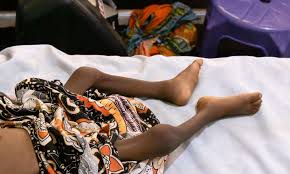
Child health and nutrition experts have urged the Federal Government to begin the local production of Ready-to-Use Therapeutic Food to address Nigeria's high burden of severe acute malnutrition among children. The specialists noted that Nigeria has most of the raw materials required to produce the nutrient-dense therapeutic food but continues to rely largely on imported supplies, due to weak government commitment, poor investment in local processing and structural challenges affecting manufacturing. They identified unreliable electricity supply, high production costs, insecurity and inconsistent government policies as major barriers discouraging investors and hindering domestic manufacturing of the life-saving product. In exclusive interviews with PUNCH Healthwise, the experts stressed that scaling up local production of RUTF would improve access to life-saving treatment for children suffering from severe acute malnutrition, thereby reducing child mortality, adding that it would also reduce dependence on donor support and strengthen the country's nutrition response system. Encouraging local production, the seasoned experts emphasised, would also stimulate the local economy, support farmers and food scientists, and ensure a steady supply of the therapeutic food needed to treat malnourished children across the country. According to the United Nations Children's Fund, RUTF is an energy-dense, micronutrient-enriched paste, made of groundnuts, milk powder, oil, sugar and vitamins and used to treat severe malnutrition in children aged six to 59 months. It requires no cooking or water and allows for 90 per cent of recovery rates in outpatient and home-based care. Already, about two million Nigerian children suffer from severe acute malnutrition, with only two out of every 10 children affected reached with treatment. UNICEF says malnutrition is a direct or underlying cause of 45 per cent of all deaths of children under five. While RUTF is primarily supplied by UNICEF in partnership with the Nigerian government, some state governments are locally producing organic supplements to address malnutrition in children. For example, the wife of the Anambra State Governor, Mrs Nonye Solude, created the Nonye Healthy Living Pap in August 2024 and distributes it for free through Primary Healthcare Centres across 21 Local Government Areas in the state. Borno State also developed "Tom Brown" with locally available ingredients, while Ebonyi State is researching into using local rice, soybeans and groundnut for RUTF. Findings also show that Katsina, Jigawa and Lagos states have developed and implemented locally produced RUTF. Commenting on the matter, a Professor of Paediatrics at the College of Medicine, University of Lagos, Prof Edamisan Temiye, blamed the country's continued reliance on imported Ready-to-Use Therapeutic Food on government policy that discourages local manufacturing. He noted that despite the availability of raw materials in Nigeria, the country still imports several products that could easily be produced locally. Temiye said, "That is a government policy and practice. We are seeing imported toothpicks in Nigeria now. Is the raw material not here? It is a government policy that nothing should be manufactured in Nigeria; everything should be imported."Besides, if you make things in Nigeria, the government does not even patronise them. There are a lot of things that are made in Nigeria that the government does not patronise. But they are very good. So it is a government policy."The paediatrician, however, argued that beyond producing therapeutic food locally, Nigeria should address the root causes of malnutrition by ensuring families can afford nutritious food for their children. He said, "Ready-to-use therapeutic food is supposed to treat people where there is famine, where there is war, where there is displacement of people, and children are suffering from acute malnutrition."Except we all agree that Nigeria is in a state of war, and we are very poor. Improve the policy of the country, make people have jobs to do, make people feed their children appropriately, and we will not even need all this ready-to-use therapeutic food." Temiye further stressed the need for a stronger social welfare system that protects vulnerable families and ensures children have access to adequate nutrition.He said, "What we need is a social safety net that guarantees the life and safety of every citizen and every child born into every home. That is what we need, and that is what we are not doing." He added that if families are able to feed their children adequately, the need for therapeutic food would significantly reduce."If I have enough food to give to my children, why would I need ready-to-use therapeutic food? Feeding your children with nutritious food every day, you will not need any therapeutic food," the child health expert said. Also, a Professor of Public Health Nutrition at the Obafemi Awolowo University, Ile-Ife, Osun State, Beatrice Ogunba, said Nigeria already has the essential ingredients needed to manufacture the therapeutic food but lacks sufficient government commitment to support local production. Ogunba explained that Ready-to-Use Therapeutic Food is a blend of peanut butter, vegetable oil, powdered sugar, and milk powder fortified with vitamins and minerals, noting that the ingredients are readily available in the country. She said, "RUTF is a blend of peanut butter, vegetable oil, powdered sugar, and milk powder, fortified with a vitamin and mineral premix. We have all the ingredients, but most of the challenges we are not attending to because of a lack of commitment from the government."There is a lack of investment in local processing, just as it is done with agriculture. We can invest in local processing by supporting the producers. We can give subsidies, for example, in the importation of equipment used in production."Structural barriers like power shortages are a major one, which will impact the cost of production when equipment and machines are run on diesel. High production costs hinder domestic manufacturing because of the lack of a constant and reliable electricity supply."Insecurity is everywhere, and investors will think twice before locating a production plant close to the source of supply that is plagued with insecurity. There are also inconsistent policies. There must be policies to back up support and production of RUTF."The nutrition expert added that Nigeria's high burden of severe acute malnutrition makes local production of the therapeutic food critical for reducing child deaths."Nigeria has a severe acute malnutrition burden. Most of the children suffering from severe acute malnutrition do not receive RUTF because sometimes it is not available. Local production will reduce reliance on donors, and RUTF will be readily available for children suffering from severe acute malnutrition. It will also help address supply chain bottlenecks and reduce mortality among these children," she said. Also speaking, a Professor of Nursing Science at the University of Calabar, Cross River State, Mary Mgbekem, described RUTF as a nutrient-rich food specifically designed for treating severe acute malnutrition among young children. Mgbekem, who is also a nurse nutritionist, said, "Ready-to-use therapeutic food is an energy-dense, nutrient-rich, paste-like food designed for treating severe acute malnutrition in children between six and 59 months without requiring medical supervision, water or cooking."It is composed mainly of peanuts, oil, sugar, milk powder and vitamins. It is reported to have a 90 per cent success rate and two years shelf life. The raw materials for the preparation of RUTF are available in Nigeria. "The food scientists to formulate this food blend are not scarce, but we have leadership issues and the problem of getting rich quickly when it is my turn in office."Nigeria does not import because it lacks the materials, but because of the mentality of political relationships with developed countries, limited local production capacity, lack of specialised manufacturing technology, insufficient funding to support large-scale and consistent production, quality control and regulatory standards and logistical capabilities." The nutritionist stressed that scaling up the availability of the therapeutic food was necessary to address the country's rising malnutrition burden. She noted, "Scaling up the availability of this ready-to-use food has become a necessity, considering the burden of acute malnutrition and its impact on young child growth and development. "It is now time to look inward to consider price reduction, food availability to reach the target group and utilising and adapting local raw materials, thus improving demand and supply chain within the local economy" "It also reduces dependency on foreign goods while encouraging local food scientists to increase their knowledge into practice. Mistakes may be made initially, but practice makes perfect." According to her, the raw materials for this food are found and consumed by people across the country. "All that is needed is the political will of our leaders to make available the necessary funds for purchases and logistics for standards. Those of us at the bedside have provided this food using our local materials with very good results. Why allow a hungry child to die when something can be done?", she added. She further noted that states introducing nutrition interventions demonstrate that local initiatives can be expanded nationally if properly supported by the government. Source: https://punchng.com/nigeria-can-end-child-malnutrition-by-producing-rutf-locally-experts/
Leave a Reply
Your email address will not be published. Required fields are marked *