
Ministers urge stronger support for women-led businesses to boost AfCFTA participation
- Super Admin
- 07 Mar, 2026

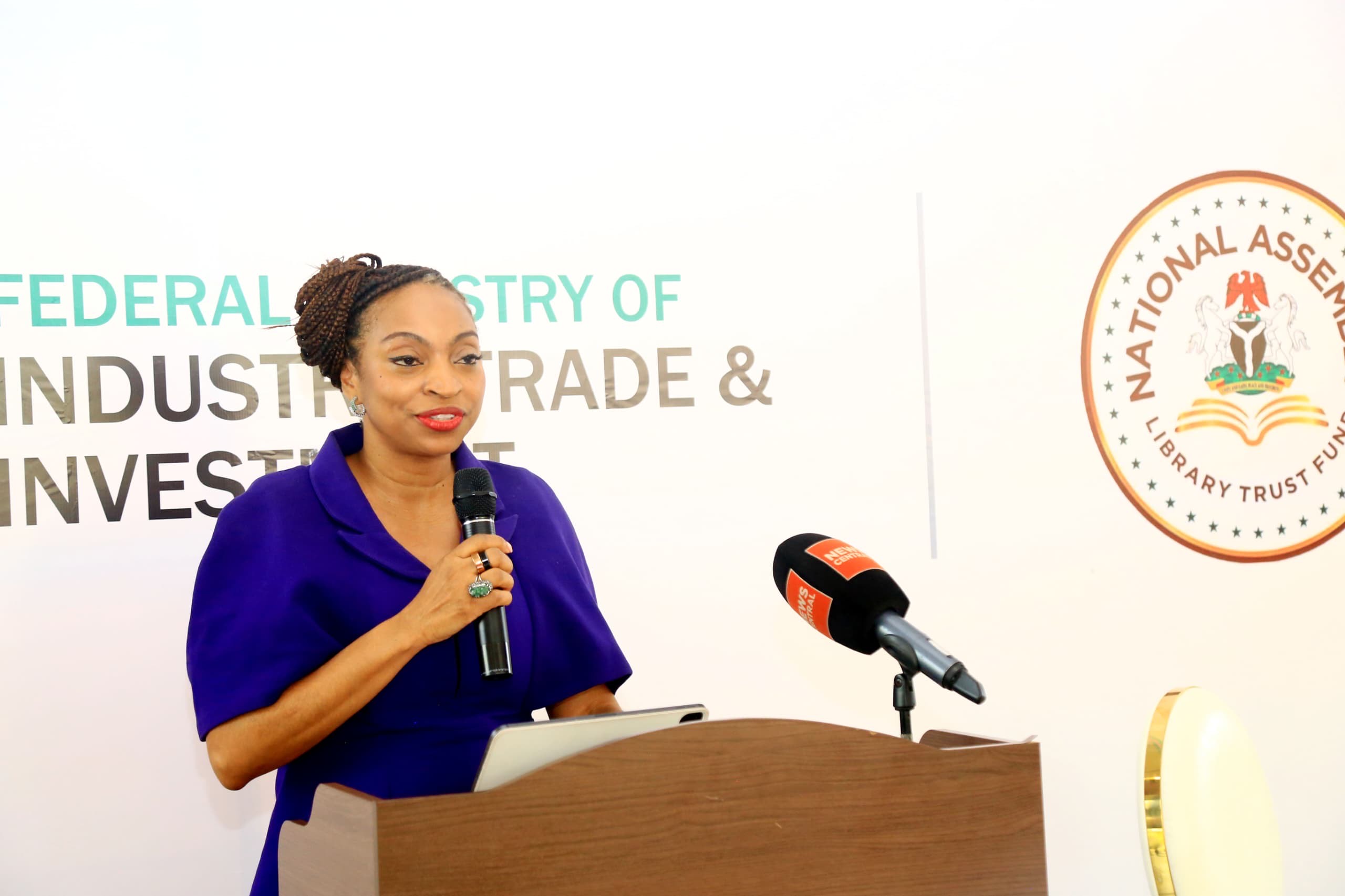
Ministers and economic stakeholders have said Nigeria's ambition to lead intra-African trade under the African Continental Free Trade Area (AfCFTA) will depend largely on unlocking the productive capacity of women-led enterprises and integrating them into formal trade systems. They made the assertion on Friday at a colloquium in honour of women's role in industry, trade and investment held at the National Assembly Library Complex in Abuja with the theme "Positioning Nigeria to Lead Intra-African Trade." Participants stressed that expanding women's access to capital, markets and incentives would strengthen Nigeria's competitiveness and enable the country to maximise the opportunities presented by AfCFTA. In her keynote address, the Minister of Industry, Trade and Investment, Jumoke Oduwole, said Nigeria's industrialisation strategy must confront the reality that women remain a critical but underutilised force in the economy. She noted that while AfCFTA has created a $3.4 trillion market of about 1.4 billion people, the largest free trade area in the world by participating countries, trade agreements alone cannot guarantee prosperity. "Let us be clear: markets do not create prosperity. Production does. Trade agreements do not industrialise nations. Competitive enterprises do," she said. According to her, real economic transformation will depend on building productive and competitive enterprises capable of manufacturing, processing and exporting at scale. "Nigeria's ambition under AfCFTA is not to be a passive consumer market. It is to become a production hub; manufacturing, processing, innovating and exporting at scale," she said. Ms Oduwole explained that manufacturing currently contributes about 13-14 per cent to Nigeria's gross domestic product, far below the 20-25 per cent typical of industrialised economies. She said bridging the gap represents the country's broader industrial policy goals. The minister said women already dominate key segments of Nigeria's real economy, particularly in retail trade, textiles, agribusiness processing and light manufacturing. According to her, Nigeria has more than eight million women-led micro, small and medium enterprises generating over $15 billion annually. Despite their economic contribution, she noted that women-owned businesses still face major structural barriers. "They account for over 40 per cent of MSME employment, yet receive less than 20 per cent of formal MSME financing. Over 90 per cent operate informally, and fewer than 15 per cent have access to structured digital training," she said. She also noted that fewer than five per cent of such enterprises operate formal governance systems, a factor that limits their growth and access to institutional financing. Ms Oduwole added that the federal government, through the Ministry of Industry, Trade and Investment and the Bank of Industry, is working with private-sector partners to strengthen investment readiness and scale up women-led enterprises. The Minister of Women Affairs, Imaan Sulaiman-Ibrahim, also emphasised that Nigeria's economic transformation must be inclusive if the country hopes to compete effectively in African trade. She noted that women form a large share of the nation's workforce, particularly in agriculture and informal commerce. "Women account for about 70 per cent of Nigeria's agricultural labour force, yet they own less than 14 per cent of agricultural land and access less than 10 per cent of formal agricultural credit," she said. According to her, the imbalance shows that many women perform critical economic roles but are not adequately integrated into formal trade structures. She cited international studies indicating that women-led businesses are more likely to reinvest earnings into communities, education and local supply chains. Ms Sulaiman-Ibrahim said closing gender gaps in economic participation could significantly expand global and national economic output. "Supporting women's participation in trade is not simply a matter of social equity; it is a strategic economic imperative," she added. The Head of the Civil Service of the Federation, Didi Walson-Jack, said Nigeria's ability to lead intra-African trade would depend on both effective policy frameworks and the empowerment of economic actors. She noted that women constitute a substantial proportion of Nigeria's entrepreneurial base and that expanding their participation in manufacturing, commerce and cross-border trade would strengthen national competitiveness. Mrs Walson-Jack said the federal civil service remains committed to implementing policies that promote inclusive economic growth and create an enabling environment for businesses and investors. Earlier in his opening remarks, the Permanent Secretary in the Ministry of Industry, Trade and Investment, Nura Rimi, said AfCFTA has introduced several forward-looking frameworks to support inclusive trade. He cited the Protocol on Digital Trade and the Protocol on Women and Youth in Trade as mechanisms designed to expand market access and financing opportunities for women and young entrepreneurs. Mr Rimi explained that the protocol aims to ensure that opportunities created by AfCFTA translate into equitable economic growth across African countries. He added that the memorandum of understanding signed at the event seeks to strengthen collaboration and support the growth of women-owned enterprises participating in continental trade. "Its purpose is to ensure that the opportunities created by AfCFTA translate into tangible and equitable economic growth across the continent," he said. Source: https://www.premiumtimesng.com/?p=862176
Leave a Reply
Your email address will not be published. Required fields are marked *