

Tech fraud: Nigeria's dark-side of digital exams - Businessday NG
- Super Admin
- 07 Mar, 2026

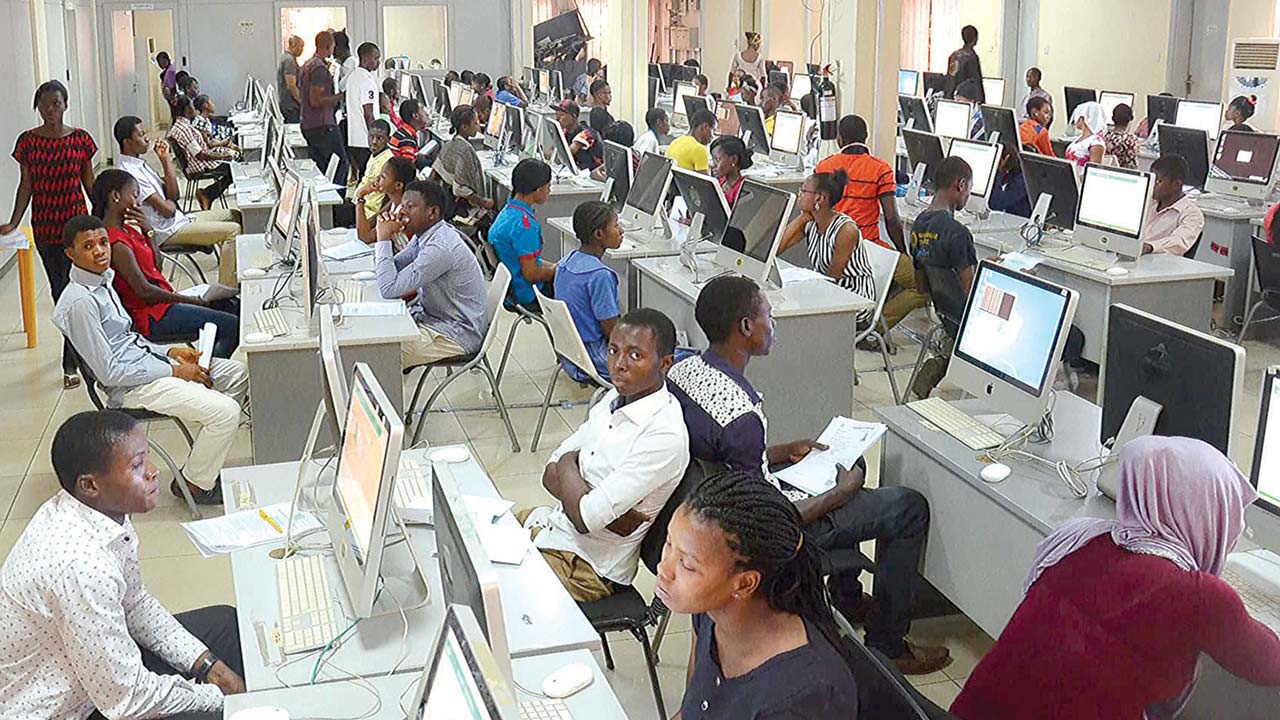
The rapid digitalisation of Nigeria's education sector was meant to signal progress, faster registration, computer-based testing, and improved transparency. Instead, it has opened new pathways for examination malpractice. From hacked computer-based test systems to the use of smart devices for live answer-sharing, technology is reshaping not only how students learn, but also how they cheat. As digital examinations become the norm, Nigeria now faces a troubling question: has innovation strengthened academic integrity, or simply modernised fraud? Recently, BusinessDay reported that the Joint Admissions and Matriculation Board (JAMB) has cracked down on a high-tech scam leveraging artificial intelligence (AI) to target Unified Tertiary Matriculation Examination (UTME) candidates, though the board assured Nigerians of its commitment to safeguarding the integrity of the examination process. In 2025, instances of technical glitches affected the operations of the JAMB and the West African Examinations Council (WAEC), sparking concerns over the credibility and reliability of standardised digital testing systems in Nigeria. Some stakeholders are worried that the rush for digitalisation is significantly fueling new, sophisticated forms of examination malpractice in the country, emphasizing that while digital tools such as Computer-Based Testing (CBT) are designed to improve efficiency and reduce traditional cheating, they have simultaneously created new loopholes that allow candidates, syndicates, and sometimes teachers to manipulate the system. Nubi Achebo, director of academic planning at Nigerian University of Technology and Management (NUTM), believes is situation is worrisome to the system. Besides, he emphasised that the transition to full computer-based test (CBT) for external examinations such as WASSCE and NECO is being questioned by stakeholders such as the National Association of Parent-Teacher Associations of Nigeria, citing inadequate infrastructure and poor computer literacy among pupils. "Students and parents are likely feeling uncertain and frustrated about the whole systematic failures, and the impact on future academic and students' career paths," he noted. In August 2025, WAEC acknowledged technical glitches and errors in the grading of the 2025 West African Senior School Certificate Examination (WASSCE) results, particularly for serialised core subjects. This led the council's temporarily withdrawing access to the result portal to review and correct the errors, apologising to affected students and parents for the issues and the emotional distress caused. Despite a millions of dollar investment in local data infrastructure, roughly 70 megawatts of data centre capacity is available nationwide, much lower than what is needed to support a robust digital economy. Data from industry trackers indicate that Galaxy Backbone, the only Tier III Uptime Institute-certified data centre in Nigeria's public sector, operates less than its 2.5MW capacity. There's no denying the fact that Nigeria lacks sufficient infrastructure to handle nationwide online examinations at the scale the examination bodies are operating. Besides, it is worrisome that Nigeria seems to be in a haste to embrace digitalization when some developed country are working on balancing print textbook and tech-textbooks usages in schools. Sweden, for instance, is committing more than €100 million to a sweeping classroom overhaul: replacing tablets and screens with traditional printed textbooks to help reverse falling student performance and sharpen focus. This is coming after more than a decade of embracing digital-first education, Swedish authorities are now pivoting back to paper-based learning. Official data and recent studies cited by the ministry of education show that prolonged screen use in class has been linked to shorter attention spans, weaker reading comprehension, and reduced critical-thinking abilities. Research consistently finds that reading on illuminated screens requires greater mental effort and invites more distractions compared to the calm, linear experience of physical books, factors believed to have contributed to declining academic outcomes in recent years. Under the new plan, every student will receive printed textbooks for all core subjects, restoring books as the central learning tool. Digital devices and online resources will remain available as supportive tools, but they will no longer dominate daily instruction. Obviously, if Nigerian education policymakers are serious about grooming excellent leaders through schools, they should rethink this rush for digitalisation. How can Nigeria insist on digital examinations when students do not have digital textbooks and the tablets to master what is being taught? Textbooks are key to establishing a crucial connection between instruction and knowledge acquisition in higher education. Students' internal study habits have a major and positive impact on their learning outcomes, particularly in topics related to the natural and social sciences. Nigeria should learn from this €100+ million investment, which signals Sweden's leadership in rethinking the role of technology in education. It underscores a broader, growing recognition worldwide: while screens provide speed and access, the hands-on, distraction-free engagement of physical books supports deeper concentration, stronger memory retention, and more effective long-term learning. By choosing paper over pixels, Sweden is charting a path toward a more balanced, evidence-informed classroom future, one that puts proven pedagogical principles ahead of unchecked digital trends. Nigeria stands at a crossroads. The promise of digital examinations was credibility and fairness, yet unchecked tech fraud threatens to undermine both. If left unaddressed, these sophisticated forms of malpractice could erode public trust in academic qualifications and weaken national development. Confronting this reality requires urgent reforms, smarter security systems, and a renewed commitment to honesty. Technology should elevate standards, not redefine cheating. The integrity of Nigeria's educational future depends on it. Source: https://businessday.ng/bd-weekender/article/tech-fraud-nigerias-dark-side-of-digital-exams/
Leave a Reply
Your email address will not be published. Required fields are marked *